Japanese Osaka Pine: Price, Yellowing Leaves, Care, and Bonsai Pruning Methods
Osaka Pine, also known as Golden-leaf Five-needle Pine, is one of the cultivated varieties (cultivars) of Japanese Five-needle Pine and is one of the more precious types of five-needle pine. It is generally used as bonsai material, and ground-planted specimens are relatively rare. So how much does a Japanese Osaka Pine cost per tree? How do you care for it? How do you make and prune a bonsai? What should you do if the leaves turn yellow? According to the Jiujiang seedling base, Osaka Pine is mostly propagated by grafting, and prices range from just over ten yuan to over a hundred yuan.
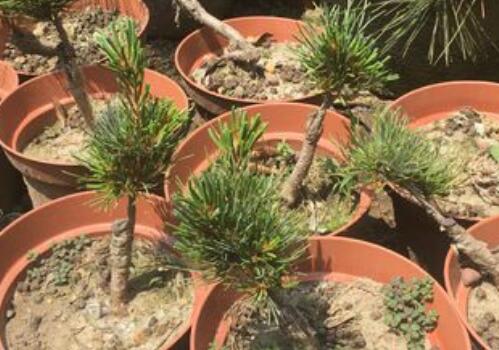
How do you care for Japanese Osaka Pine?
1. Light requirements
Five-needle Pine likes sunlight and tolerates cold, but fears heat and dislikes shade. In hot summer, excessively high temperatures are unfavorable for its growth. It is advisable to provide slight shading to lower the temperature and promote growth. Osaka Pine is less tolerant of sun exposure than ordinary Five-needle Pine, so in summer even more attention should be paid to appropriate shading.
2. Control watering
Five-needle Pine tolerates drought and dislikes waterlogged conditions. Properly withholding water can shorten the needles, and the effect is especially good during the period from bud break to needle emergence. Too much watering will make the needles longer, and water accumulation easily causes root rot and death. It is better for the potting soil to be slightly dry. Of course, watering should differ according to different seasons and different stages.
3. Control fertilizing
Five-needle Pine tolerates poor soil and should not be fertilized heavily. Too much fertilizer or concentrated fertilizer easily damages the root system, and fertilizing in high-temperature seasons is unsuitable; in severe cases it can cause the tree to die. Controlling fertilizer can shorten the needles; too much fertilizer will make the needles longer. Usually in spring, fertilizing 1 to 2 times each is enough. When planted in a pot, fertilize even less in the first year.
4. Use a relatively small and shallow pot
For Five-needle Pine, the pot should be slightly smaller and shallower, avoiding pots that are too large or too deep. A smaller pot helps produce short needles, while a pot that is too large or too deep easily accumulates water and causes root rot. For cascade style, a deep pot may be used, and more broken tiles should be placed at the bottom of the pot to improve drainage and aeration.
5. Planting new stock
When buying an Osaka Pine without a pot, be sure to choose one with an intact root ball; only this can ensure survival after planting. When planting, use acidic sandy soil with good aeration. After planting, water thoroughly once, then place it in a ventilated environment without direct sunlight for care. You must wait until the soil is thoroughly dry before watering the second time. Normally, use a spray bottle to mist the leaves and surroundings to maintain humidity. After half a month, normal care can be resumed.
How do you make and prune a Japanese Osaka Pine bonsai?
Making:
1. Bundle branch
Use plastic-coated aluminum wire (the coating can protect the branches) to wrap tightly around the main trunk and main branches of the Osaka Pine. The winding direction should form a 45° angle with the cross-section of the main trunk. Choose aluminum wire of suitable thickness according to the thickness of the branch. The thickness of the aluminum wire should be such that the branch can be bent freely and the shape fixed; if too thick, it easily injures the bark, and if too thin, it is weak and easily springs back, failing to meet the shaping requirements. Bend the main branches according to the styling design plan so that they generally conform to the intended orientation, pending final detailed adjustment.
2. Coil bundle branch
After the Osaka Pine branches have been wrapped, use thin iron wire in the same way to wind the coil into a coil. We must choose aluminum wire coils of corresponding thickness to bind each branch on the tree; only then can it be carefully adjusted and freely worked.
3. Repotting
The Osaka Pine is taken out of the original pot, the old roots are removed so the roots can spread freely, and the old soil is removed before repotting. A purple sand pot is a good choice. Use a plastic mesh pad at the bottom to prevent erosion of the potting soil, and fill the bottom of the pot with a small amount of new nutrient soil to improve the drainage area. Cut off long roots and retain as many fibrous roots as possible, then place the Osaka Pine in the pot at the left of the 1/3 position (because its overall growth tendency is toward the right, so the correct position is to leave a large space in the pot to meet other requirements, fill in) and compact the aged nutrient soil. At the same time as placing tile moss on the pot surface, pour water and place it in half shade, as half of daily maintenance and management.
Pruning:
Osaka Pine can be pruned during the dormant period from late November to late February of the following year. Because Five-needle Pine only sends out terminal buds and does not send out adventitious buds, heavy pruning is unsuitable. If pruned too heavily, the wounds easily exude resin, and excessive resin flow will affect the growth and development of Five-needle Pine. The pruning period is best from early winter to before the sap begins to flow in early spring of the following year. After pruning, the wounds are best sealed with wax, wood adhesive, tape, etc., to prevent resin from flowing out.
What should you do if the leaves of Japanese Osaka Pine turn yellow?
The causes and treatment methods for Five-needle Pine leaves turning completely yellow are as follows:
1. Too much watering, or too much rain, keeps the soil in an excessively wet state for a long time, causing a lack of oxygen in the soil, leading to root rot and yellowing needles. Suitable soil moisture is best between 15% and 30%; below 10%, the plant grows poorly and easily withers; above 35%, it easily rots the roots and dies.
2. In hot summer, exposure to scorching sun and direct strong light causes rapid water evaporation, resulting in scorched, yellowed leaf tips. This is especially true after a rainstorm, when the sky clears and the plant is again exposed to direct sunlight; the imbalance between water supply and demand causes physiological drought and leads to withering.
3. Violating its living habits. Keeping Five-needle Pine indoors for a long time, with insufficient light and insufficient ventilation, violates its habit of growing best outdoors; or suddenly moving it outdoors where it is exposed to sun, will cause the needles to wither and yellow. To avoid yellowing of Five-needle Pine needles, corresponding preventive and rescue measures should be taken for the above causes.