Spearmint (Mint) Seed Planting Methods, Value and Price per Jin
Spearmint prefers moist conditions and light, and is suited to slightly acidic soil. Its stems and leaves can be distilled to extract spearmint oil, and it can be used both as medicine and as food, giving it high cultivation value. So do you know what the seed planting methods for spearmint are? What value does it have? How much do the seeds cost per jin? From a spearmint grower we learned that spearmint seeds cost around 200 yuan per jin, with prices varying by region and quality.
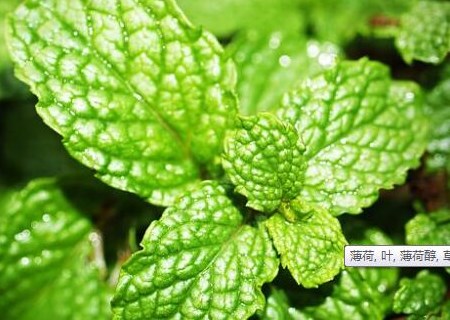
I. Spearmint Seed Planting Methods
1. Propagation Methods
Because seed propagation produces greater variation, vegetative propagation is mostly used in production.
① Rhizome propagation. In early spring in March, dig up the underground rhizomes of spearmint, select fresh rhizomes that are vigorous, white in color, with dense nodes and free of pests and diseases, cut them into root segments 6-8 cm long, and place them in prepared planting furrows 6-8 cm deep with a furrow spacing of about 25 cm. When placing them, each rhizome segment should be connected end to end; after placing, cover with soil immediately, press firm, and water thoroughly. Each mu of field requires 100 kg of rhizomes for planting, and the rhizomes from each mu of stock nursery field can be transplanted to 8 mu of field.
② Division propagation. In early spring, in the spearmint field from the previous year, wait until the new spearmint shoots grow to about 8 cm, then dig them up together with the rhizomes and transplant them as divided plants, planting 2 plants per hole, with a row spacing of 25 cm and a plant spacing of 10 cm.
③ Cutting propagation. In May-June, select vigorous aboveground stems, cut them into small sections 6 cm long, and insert them into a seedbed for rooting; after they root and survive, transplant them. Regardless of which propagation method is used, the soil must be finely prepared before planting and sufficient base fertilizer applied. The field beds should be about 1.3 m wide to facilitate drainage, irrigation and management.
2. Cultivation Techniques
① Opening drainage furrows
Reduce moisture and eliminate waterlogging by opening furrows and digging ditches to lower the groundwater level, ensuring every bed connects to a ditch and every ditch connects to a river, with smooth drainage so the field dries after rain stops, reducing humidity and eliminating waterlogging damage, creating an environment favorable to crop growth and unfavorable to disease occurrence. For a field, water should exit from both ends, with three sets of ditches, and all four sides separated. The bed furrow spacing is 2.4 m, the waist furrow interval is 30 m, and the field furrow spacing is 50 m. After the first and second crops of spearmint emerge, the ditches must be cleared and the beds earthed up in time.
② Density
Rational close planting. Spearmint has strong branching ability, with many branches and low node positions. The suitable density for the first crop is about 10,000 plants/mu, with a row spacing of about 0.4 mm and a plant spacing of about 0.17 m; the suitable density for the second crop is 40,000-45,000 plants/mu. If too dense, manual thinning or mechanical thinning must be carried out to control density and enhance ventilation and light penetration.
③ Weed control
During the seedling stage, temperatures are relatively low, so it is necessary to seize the opportunity before the rows close (when seedlings are 15-20 cm tall) to loosen the soil and remove weeds 2-3 times. When loosening the soil, cultivate shallowly near the plants and deeper between the rows; if the soil becomes compacted after rain, loosen it promptly. In addition, weeds should be removed once more before harvest to prevent them from mixing in during harvesting and affecting oil quality.
④ Fertilization
Spearmint has a growth period of more than 250 days and is a crop with a relatively high fertilizer requirement. In addition to applying sufficient base fertilizer before propagation, it must be topdressed appropriately 2-3 times. The first time is around Qingming, when the seedlings are about 7 cm tall, apply 4 kg of urea per mu diluted with water at the roots to promote seedling growth; the second time is in early to mid-May, when both nitrogen and phosphorus should be applied, using 8-10 kg of compound fertilizer or ammonium sulfate per mu, or 25 kg of cake fertilizer, applied in furrows 10 cm away from the seedlings to meet the needs of branching and leaf growth; the third time is around “Grain in Ear,” using a method of fertilizing according to seedling condition, generally applying nitrogen, phosphorus and potassium in combination, about 30 kg per mu.[5]
Scientific fertilization: control nitrogen fertilizer, increase phosphorus and potassium fertilizer, coordinate the proportion of nitrogen, phosphorus and potassium in the plant to enhance disease resistance. Base fertilizer should be mainly organic fertilizer, supplemented by chemical fertilizer; chemical fertilizer should be mainly phosphorus and potassium fertilizer, supplemented by nitrogen fertilizer. Topdressing should be mainly chemical fertilizer, supplemented by organic fertilizer; organic fertilizer should be mainly nitrogen fertilizer, supplemented by phosphorus and potassium fertilizer. The ratio of nitrogen, phosphorus and potassium is 1:0.65:0.15.
II. What Value Does Spearmint Have
① Medicinal use
The plant contains aromatic oil, with an oil content of 0.6-0.7%. Its oil is called spearmint oil or green mint oil, and its main component is carvone
(content 60-65%); it also contains limonene, phellandrene, and others. It is mainly used as a fragrance in candy and toothpaste, and is also used in medicine. The leaves, tender branches or the whole plant are also used medicinally to treat cold and fever, cough, cough due to consumptive disease, common cold, headache, sore throat, nervous headache, gastrointestinal bloating, traumatic bruises and pain, red and stinging eyes, nosebleed, dark sores, general numbness, and children's sores and boils.
Whole plant (spearmint): pungent, sweet, slightly warm. Dispels wind and disperses cold, relieves cough, reduces swelling and detoxifies. Used for colds, cough, stomach pain, abdominal distension, nervous headache; externally for traumatic swelling and pain, red and painful eyes, and children's sores and boils.
② Edible use
The tender branches and leaves are often used as a seasoning spice. They can be added to condiments to increase the flavor of dishes, and can be used alone or mixed with other herbs as a refreshing tea. Native Americans also used mint to repel insects and kill fleas.
③ Chemical industry
It contains about more than 190 components, mainly carvone (up to 50%-70%), limonene (20%-30%), and dihydrocarvone, dihydrocarveol, neodihydrocarveol, dihydrocarvyl acetate, cis-carvyl acetate, menthone, neryl acetate, geraniol, isobornyl acetate, pulegone, pinene, etc. The produced oil has a relatively low carvone content but contains higher eucalyptol and linalool. It is obtained by steam distillation of the fresh stems and leaves of the Lamiaceae plant spearmint (green mint). Both China and European and American countries produce it. Spearmint oil is often used for flavoring toothpaste, soap, chewing gum, and in medicine.