Is Dracaena Poisonous When Grown at Home? Detailed Guide to Watering and Forked Pruning Methods
Dracaena, also known as: the bleeding tree, the holy medicine for invigorating blood, the plant longevity star. Also called horse-mule sugarcane tree, narrow-leaf dracaena, long-flower dracaena, bucai tree, bamboo-wood ginseng, etc. So can you grow dracaena at home? Is it poisonous? How do you water it when growing it? How do you prune it for forking?
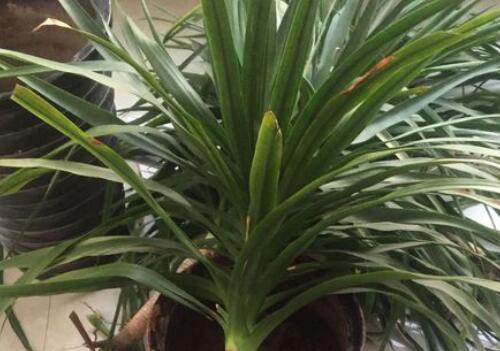
Can you grow dracaena at home?
1. Dracaena is a common indoor ornamental plant, so it is very well suited to being grown at home. However, when growing it, there are some points to pay attention to.
2. Dracaena can be used as a medicinal material, and the so-called toxicity of dracaena only applies to its medicinal use. So when grown at home, the toxicity of dracaena can be ignored.
But for the sake of safety, it is best to place dracaena in places like the living room or balcony; it is not recommended to put it in the bedroom, because the sap of dracaena can cause allergic reactions in some people.
3. Placed in the living room or on the balcony, dracaena can also absorb dust and such from the air, purifying the air and making your breathing cleaner, so it is very well suited to being grown at home.
Is dracaena poisonous?
1. Dracaena is poisonous, because dracaena can be used as a medicinal material. And it can treat pain in the muscles and bones. It can invigorate blood and dissolve stasis, and is a very precious medicinal material. For such a precious medicinal material, having a little bit of toxicity is perfectly normal.
2. If the bark of dracaena is accidentally cut, it will flow with a liquid like blood. This liquid is actually its resin, dark red, and it can not only treat illness, but also be used as a preservative and as paint.
How do you water dracaena when growing it?
1. Amount of watering
Dracaena is a plant from tropical regions, and it can withstand overly dry environments. For daily watering, you should not water too much, otherwise it will cause dracaena to rot. After watering thoroughly, you can simply water once every 10 days.
2. Water according to actual conditions
Because everyone's environment for growing dracaena is different, you should not water according to their watering schedules. Watering itself is inherently irregular. We can often observe the condition of the soil: if it is too dry, you can water less; if it is too wet, you can temporarily stop watering.
3. Water quality for watering
Not just dracaena, all plants are not recommended to be watered directly with tap water. Tap water is also called “hard water”, and using hard water to water plants for a long time easily causes the plants to turn yellow and their leaves to fall off. You can use well water, or rice-washing water, etc. instead of tap water to water the plants.
4. Watering in winter
Dracaena goes dormant in winter. During dormancy it does not absorb a large amount of water, so its watering amount must be controlled. You can water once every ten-plus days, and it is best to keep the soil relatively dry; this way it can safely go through dormancy.
How do you prune it for forking?
There are two pruning and shaping methods for dracaena:
1. Prune into a “T” style plant shape. In the “T” style plant shape, leaves only grow at the top of the main stem, with no leaves kept below the top, and the whole plant shape resembles the English letter “T”, hence the name. Specific operation: make the lower part of the main stem, which has lost its leaves, into the main stem of the “T” style shape, cut flat at an appropriate height on the plant, keep the new side branches and leaves growing from the top of the main stem, and remove the side buds on the main stem at any time; after a period of time it will take shape.
2. Short trimming to build up branches. This method is suitable for some slender and weak species of dracaena, such as fine-leaf, seven-color, and golden (silver) edge lucky bamboo, etc. These varieties are more than soft and graceful but lack masculine stiffness, and are not suitable for the “T” style shape, so the “short trimming to build up branches” method can be used. That is, for plants that have lost their lower leaves for many years, select and keep 2~3 side buds at appropriate positions on the left and right for cultivation, and these buds should be at different heights. At the same time, strengthen fertilizer and water management, and before long a full, well-arranged plant shape can be formed.
Forking:
1. Although dracaena grows slowly, it is not to the point of showing no change in a year. A dracaena that has grown taller has slender branches and looks delicate and weak, not as sturdy as when it was young. In spring, you can pinch the top of the dracaena, cut off the main stem, and let it sprout new branches.
2. The tool for topping and pruning must be relatively sharp, so that the wound will be flat and smooth, and the cut will heal relatively quickly. When pruning, it is fine whether you keep the leaves or not; dracaena has very strong vitality and will not easily kick the bucket. The cut top can also be taken for cuttings, with a very high survival rate. Generally after two weeks you can see a ring of new buds around the wound; keep as many sturdy buds as you want, and simply remove the others.