What to Do When a Poinsettia (Euphorbiaceae) Turns Yellow and Drops Its Leaves? Toxicity and Bedroom Placement Explained in Detail
The poinsettia (Euphorbia pulcherrima) has emerald-green leaves and brightly colored bracts in white, pale yellow, pink, and bright red, among which the large red double-flowered bracts are considered the finest; it is an important potted indoor ornamental plant for autumn and winter, so what should you do when a potted poinsettia turns yellow and drops its leaves? Is it toxic? Can it be placed in the bedroom?
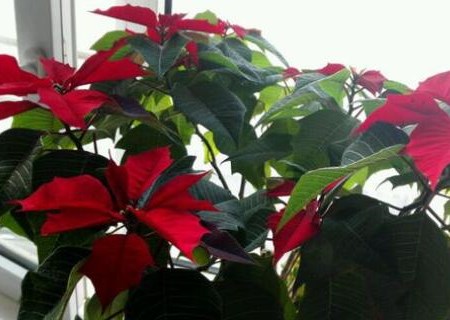
I. What to Do When a Poinsettia Turns Yellow and Drops Its Leaves
1. Excessive Light
If a poinsettia is exposed to scorching sun for a long time, its leaves may drop due to dryness, and this situation is most common in summer.
Solution: During seasons with intense sunlight, place the poinsettia indoors and water it more according to the room temperature, or increase the indoor air humidity, so the leaves will not drop easily.
2. Temperature Too Low
The poinsettia is not cold-tolerant and should not be grown in an environment where the room temperature is too low; if the room temperature falls below 5°C, the leaves tend to drop.
Solution: In cold winter, it is best to grow the poinsettia in a warmer place; if you cannot find such a place, it is recommended to turn on the heating to adjust the indoor temperature.
3. Overwatering
The poinsettia is afraid of waterlogging; if it is watered too much and the potting soil is too wet, photosynthesis is poor, and the leaves tend to drop due to a lack of nutrients.
Solution: Water the poinsettia appropriately; try not to water it too much, and ensure good drainage on rainy days.
4. Underwatering
When a poinsettia lacks water, its leaves curl and may even drop in large numbers; if you notice this, pay attention to the amount of water given.
Solution: Water the poinsettia once every 2 days in spring; in summer, when the branches and leaves are lush and growth is fast, the amount of water should be greater, and sufficient moisture must be provided.
5. Improper Fertilizing
The poinsettia likes fertilizer and needs more nitrogen fertilizer during the growing period; if nitrogen fertilizer is insufficient, the lower leaves of the plant will drop.
Solution: Do not apply too much fertilizer, especially during the flowering period, otherwise the leaves will scorch due to excessive nutrients; in addition, in winter, it is recommended to apply fermented human manure and urine.
II. Is the Poinsettia Toxic?
There are two views on whether the poinsettia is toxic. Some people believe that the whole poinsettia plant is toxic, that the milky sap in its stems and leaves easily irritates human skin, and that ingesting the stems and leaves may, in severe cases, cause poisoning and death. Another view holds that the poinsettia is not toxic, and experiments have shown that laboratory mice did not show symptoms of death or poisoning. The poinsettia is also called ivory red, laolai jiao, Christmas flower, Christmas red, and chimpanzee tree; it is a color-changing foliage plant native to Central Africa. The two views on the toxicity of the poinsettia are analyzed as follows:
Some people believe the poinsettia is toxic mainly because it belongs to the Euphorbiaceae, and most plants in the Euphorbiaceae are toxic. These people believe that the whole poinsettia plant is toxic, that the white milky sap in its stems contains a variety of toxic alkaloids that irritate the skin, and that after skin contact it easily causes allergic symptoms such as redness, swelling, fever, intense itching, and localized papules; if the stems and leaves are ingested, mild cases cause gastrointestinal reactions and neurological disorders, and severe cases very easily lead to poisoning and death.
Another view holds that the poinsettia is not toxic. In 1971, Ohio State University in the United States conducted a special study on the toxicity of the poinsettia. But the poinsettia has been proven non-toxic, and no part of the poinsettia poses a danger to humans or animals. There were only a small number of cases in which laboratory mice showed symptoms such as reddened skin and a runny nose.
III. Can a Poinsettia Be Placed in the Bedroom?
Here it is not recommended that flower lovers place a poinsettia in the bedroom, because:
1. Although the poinsettia is a short-day plant, it likes light, while bedroom light is generally weak; the bedroom is suitable for placing some shade-tolerant plants, such as asparagus fern, copper coin grass, and Swiss cheese plant.
2. The poinsettia is brightly colored and easily attracts children and pets at home; after children or pets accidentally eat it, allergic symptoms will appear, so it absolutely must not be placed in a child's room.
3. Bedroom plants require simplicity and easy care, while the poinsettia is not easy to care for and needs frequent watering, fertilizing, and temperature and humidity control; the most suitable plants for the bedroom are succulents, which are small in size, take up no space, and are very cold-tolerant and easy to care for.