How to plant Aptenia cordifolia seeds? Answers on why it does not bloom and whether it is edible
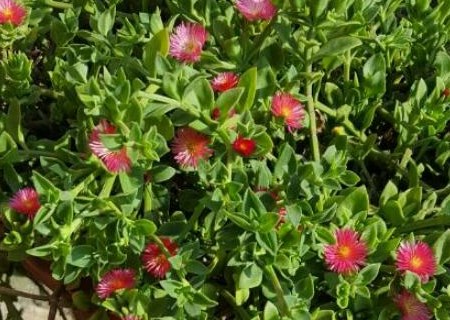
Aptenia cordifolia belongs to the Aizoaceae family and is a perennial evergreen herbaceous plant. Its leaf shape and color are rather attractive, and its flowers are brightly colored, making it suitable for outdoor landscaping and indoor greening. People very much enjoy growing it. So do you know what methods there are for planting Aptenia cordifolia seeds? What to do if it does not bloom? Can it be eaten?
I. Methods for planting Aptenia cordifolia seeds
1. Cuttings
Cuttings can be taken in spring, summer and autumn, with summer and autumn being best. They are generally taken during the rainy season or on cloudy days, and the survival rate of cuttings is relatively high. For the cuttings, choose robust plants free of pests and diseases, cut robust, well-filled branches, take the middle-to-upper stem segments, and cut them into small sections of about 12 cm. The upper cut should be made about 1 cm above a bud, and the lower cut 1-3 mm below a basal bud. After the cuttings are cut, they should be dried for about 1 day, and once the cut surfaces are dry, dip them in rooting powder and insert them into the prepared substrate. The cutting medium uses garden soil, humus soil and perlite mixed at a ratio of 6:3:1. When inserting the cuttings, insert them obliquely into the seedbed or nutrient bags, with the insertion depth being 1/2-2/3 of the total length, and a planting density of 3-4 cm between plants and rows is suitable. After insertion, press firm and water thoroughly, then carry out routine management and care. Generally after 3 weeks the wounds heal and roots gradually form.
2. Sowing
Cover the drainage hole at the bottom of the seedling pot with a piece of tile, and spread a 2 cm thick layer of coarse river sand and fine gravel below to facilitate drainage. Put the prepared sowing culture soil in the upper layer, tamp it firm and scrape it level for later use. When selecting seeds, first observe and record whether the name matches the actual item, so as to determine the purity of the seed type or variety. Then select seeds that are plump, fresh in color, pure and free of pests and diseases, soak them in 52°C warm water for 20 minutes while stirring constantly, take them out and then soak them in clean water for 4-5 hours, with the amount of water being at least 5 times that of the seeds. Then wrap the seeds in a wet cloth and place them under conditions of 28-30°C for germination, or mix them with 2-3 times their amount of fine sand, put them in an earthenware pot, cover with a wet cloth and germinate. Turn them over once a day from top to bottom; if the sand is not dry, there is no need to rinse it. Keeping them at 25°C, they can sprout smoothly within 2-3 days.
Before sowing, first water the flower pot thoroughly from the bottom using the bottom-soaking method to provide sufficient base water. After the water seeps down, sow the seeds, cover with 1 cm of nutrient soil, and cover the mouth of the pot with newspaper or glass to prevent water evaporation and sunlight exposure. Remove the covering at night to allow ventilation. Always keep the surface of the potting soil moist without becoming compacted.
II. Reasons why Aptenia cordifolia does not bloom and solutions
1. Watering too frequently
If watering is too frequent, the plant will absorb large amounts of nitrogen and phosphorus elements that are beneficial to stem and leaf growth, while potassium fertilizer is difficult to dissolve in water and hard to absorb, resulting in Aptenia cordifolia growing only leaves and not blooming. At this time we only need to reduce the watering frequency and water as needed.
2. Insufficient light
If light is insufficient, it may also cause Aptenia cordifolia to be unable to bloom. At this time we need to move the potted Aptenia cordifolia to a place with sufficient light that is relatively warm and ventilated.
If neither of the above two situations applies, then fellow flower growers should pay attention to whether they are usually too neglectful in caring for the plant, and should put a little more care into their potted plants.
III. Can Aptenia cordifolia be eaten
Although Aptenia cordifolia is a flower with excellent ornamental value, it is not toxic and can be planted boldly and with peace of mind. In addition, Aptenia cordifolia is also edible. It is rich in many nutritional elements. The antioxidant in Aptenia cordifolia—lutein—has a good health-preserving effect on the various organs of the human body. If eaten in spring, it is very suitable, and lutein is also very good for the eyes. As a vegetable, Aptenia cordifolia tastes bitter but has an obvious effect in reducing internal heat. The method of eating it is simple: blanch it in boiling water until cooked, after which it is suitable both for cold dressing and for stir-frying, and in winter it can also be used as a hot pot vegetable.