How to Grow Night-blooming Jasmine (Cestrum nocturnum) from Seed and Why It Blooms at Night: Characteristics
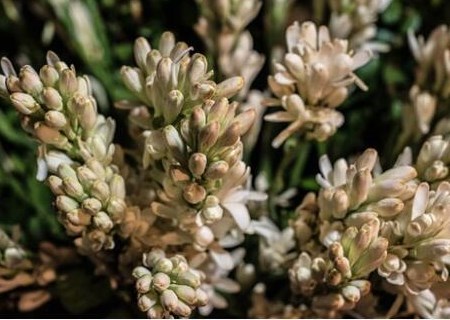
Night-blooming jasmine (Cestrum nocturnum) is a slender, vine-like shrub, also known as night-scented flower, night orchid fragrance, night lilac, and thousand-mile fragrance. It is native to southern China and is now cultivated in all provinces and regions of southern China. So do you know how to grow night-blooming jasmine from seed? Why does it bloom at night? What are its characteristics?
I. How to Grow Night-blooming Jasmine from Seed
Sowing time: In warm regions, sowing can be done in both spring and autumn;
Seedbed preparation: Before sowing, level and rake the seedbed fine, then apply a small amount of superphosphate to promote strong seedling roots. Then water the seedbed to keep it consistently moist, and sow only after the water has completely soaked into the seedbed;
Sowing method: Once the seedbed is prepared, sowing can begin. Do not cover the seeds with too much soil; just enough to barely cover the seeds is best;
Maintaining moisture: After sowing, spread a layer of rice straw evenly over the seedbed to reduce water evaporation. Pay attention to soil moisture regularly; if the soil becomes dry, you can water directly onto the straw;
Maintaining temperature: The temperature for raising seedlings should be kept at 15-25 degrees C. Generally, seedlings will emerge in about 1 week;
Timing for potting: When the seedlings have grown 2-3 true leaves, transplant them once to achieve stronger seedlings. When they have grown 6-7 true leaves, pot them for final planting;
Potting method: Because these are seedlings, they should be transplanted into pots immediately after being lifted. When potting, be careful not to damage the roots, and while planting, plant, water, and firm the soil at the same time. Then plant the entire root system into the soil without exposing any part of the root crown.
II. Why Night-blooming Jasmine Blooms at Night
Why does night-blooming jasmine bloom at night? This is actually related to its place of origin.
Night-blooming jasmine originally grew in subtropical regions. According to its growth habits, night-blooming jasmine needs flying insects to help with pollination. However, in subtropical regions, daytime temperatures are very high and flying insects are rarely active; they come out at night to forage. To pollinate more effectively, night-blooming jasmine blooms at night and releases fragrance to attract flying insects. After a long period of reproduction, night-blooming jasmine developed the habit of blooming at night.
Night-blooming jasmine generally blooms between 8——10 p.m., when the temperature is very suitable.
III. What Characteristics Does Night-blooming Jasmine Have
Night-blooming jasmine (Cestrum nocturnum), also known as night orchid fragrance and night-scented flower, is suitable for planting in courtyards and in pots. Its flowers can be enjoyed and are strongly fragrant. At the same time, its fresh flowers and flower buds are also used as food, as a kind of semi-wild vegetable. It has the effect of clearing the liver and improving eyesight, and can treat red swollen eyes, measles affecting the eyes, corneal opacity, and so on. Night-blooming jasmine has a relatively developed root system and many lateral roots. The stem is trailing, without tendrils. The leaves are simple, opposite, long ovate to broadly ovate, and green. The inflorescence is a cyme, and the flowers are pale yellow-green. The fruit is a legume, lanceolate-cylindrical, with a gradually pointed tip. The seeds are broadly ovate, with white silky seed hairs at the top. Night-blooming jasmine mostly grows in woodland or thickets. It likes a warm, humid, sunny, well-ventilated environment with loose, fertile soil. It is drought-tolerant and poor-soil-tolerant, not waterlogging-tolerant, and not cold-tolerant. After leaf drop in winter, growth stops; after spring warms, branches and leaves grow, and each node has an axillary bud or flower bud. As it grows, lateral branches and inflorescences are continuously produced, and it generally blooms successively from May to October. When blooming, it is fragrant, and even more strongly fragrant at night. It bears fruit in winter.