Pot-grown Goji Berry Seed Planting Methods and Wintering Tips
Goji berry has low soil requirements, tolerates salinity and alkalinity, prefers dry heat, tolerates cold, has wide adaptability and strong stress resistance, making it suitable for home pot cultivation. So do you know what the seed planting methods for pot-grown goji berry are? How do you overwinter it?
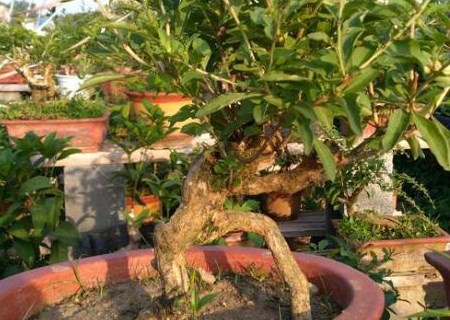
I. Pot-grown Goji Berry Seed Planting Methods
1. Growing Environment
Goji berry prefers a sunny, well-lit environment; for indoor pot-grown goji berry, choose a sunny spot for care. Goji berry has low soil requirements, with well-drained calcareous sandy loam being best; avoid clayey and waterlogged soil.
2. How to Water
Water goji berry by the "water when dry, water thoroughly" principle. During the high-temperature dormancy period in summer, the plant's growth stalls and most leaves drop, so watering should be restricted; goji berry tolerates drought and fears dampness, so never let water accumulate.
3. Fertilization Method
Usually apply a liquid fertilizer mainly of phosphorus and potassium once about every week; in winter apply well-rotted base fertilizer; during peak flowering, apply 2-3 top-dressings of nitrogen fertilizer. Each year when repotting, apply sufficient base fertilizer, and add phosphorus and potassium fertilizers such as superphosphate as base fertilizer.
4. Bonsai Making
Goji berry bonsai styling is mainly based on coarse wiring and fine pruning. The trunk can be wired into various forms, and the branches are mostly wired into sheet shapes and coil shapes. Use metal wire for wiring; loosen it when the wire starts to bite in. If the trunk has not set its shape by then, it can be wired again. Generally, one year of wiring can set the shape. Wiring is mostly done before buds appear on the branches or after the sprouted branches have become semi-lignified. Once the shape is formed, pruning is mostly used to maintain the tree form. During vigorous growth, leggy branches can be cut off at any time to ensure sufficient nutrition for fruiting. In late summer and early autumn, remove leaves and apply several more rounds of dilute liquid fertilizer containing phosphorus and potassium, so that flower buds and new leaves grow out at the same time; flowering and fruiting accompanied by new leaves is good for viewing.
5. Propagation Methods
Goji berry propagation is mainly by cuttings and division, both simple and easy to do. Cuttings can be taken in spring and autumn; choose vigorous leggy branches or healthy vegetative branches, cut them into 12-15 cm lengths, with the top end cut flat and the base cut into a horse-ear shape. The seedling success rate generally reaches over 80%-90%. The division method is mostly done in early spring by peeling off root sprouts and transplanting them, with adequate watering; the seedling success rate is very high. Seeding can also be used; seedlings grown from seed can flower and fruit in 2-3 years.
6. Pest and Disease Control
The disease goji berry is prone to is powdery mildew; spray with 70% thiophanate-methyl at 1500 times dilution, or apply 50% sulfur powder in the early morning before the dew has dried. The main pest is aphids, which can be killed by spraying with 40% dimethoate at 1000 times dilution.
II. How to Overwinter Pot-grown Goji Berry
1. Watering Treatment
When goji berry is about to overwinter, preparations must be made in advance, starting with watering treatment; goji berry has a 4-month dormancy period in winter;
and in summer, during the hottest time in July, goji berry also enters dormancy, lasting as long as one month;
A dormant goji berry is essentially sleeping, and the plant generally stops growing, so during its dormancy period be careful not to water, because overwatering will disrupt its dormancy and thereby trigger new branch growth, which will then freeze to death.
2. Control Water Amount
When watering, you can judge whether the potting soil is dry; if the potting soil is dry, you can water, and if it is not dry, do not water;
When watering, once you see the potting soil is slightly moist, you can stop watering.
Goji berry is a relatively drought-tolerant plant, so absolutely do not let water accumulate, otherwise the plant's roots will rot, which will affect its normal growth. Especially with overwatering in winter, the plant cannot keep itself warm and can easily freeze to death.
3. Temperature Management
In the first month before winter arrives, start keeping it warm; you can place the pot in a sunny spot to ensure sufficient light;
If it gets very cold, you can use plastic film to wrap the pot together with the plant, taking care to ventilate regularly; this way it can be kept warm;
Once the temperature rises again, just remove the plastic film.
Be careful not to place the plant next to a heater, to avoid the heater scorching the plant, causing it to stop growing or die.