Kidney Bean Prices Per Jin, Planting and Harvest Times, and Planting Prospects
Kidney bean, also known as common bean, sword bean, hyacinth bean, and jade bean, is a legume commonly found in temperate and tropical high-altitude areas of China, and is widely cultivated because it can be used for pickles, canned goods, and more. So how much does kidney bean cost per jin on the market? When is it planted? When is it harvested? What are its planting prospects?
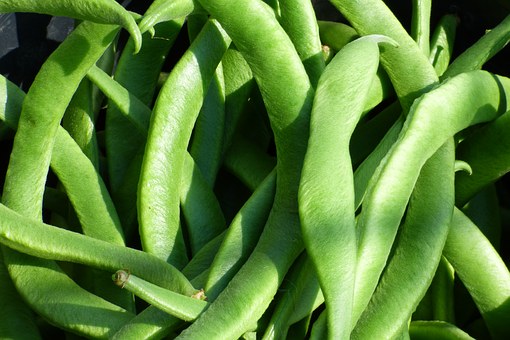
Market price:
The market price of kidney beans is about 4 to 5 yuan per jin, with specific prices varying by time and region.
Planting time:
1. Spring: late March (with sprouting and seedling raising plus protected cultivation, it can be advanced to early March)
Autumn: mid to late August
The above reflects the situation in the Chengdu area and is for reference only
2. In areas where the winter soil temperature is above 10°C and the maximum temperature does not exceed 35°C, sowing can be done year-round (in winter, be sure to choose variety types that are insensitive to day length)
Harvest time:
From sowing to harvesting pods generally takes about 50 days. The harvest period mostly begins in late May
Cultivation techniques by region:
In China, kidney beans are mainly grown in Shanxi, Inner Mongolia, Heilongjiang, Sichuan, Guizhou, Yunnan, ** and other high-cold, cool areas with short frost-free periods. To give full play to the advantages of kidney beans in planting structure adjustment and increasing farmers' income, and based on natural ecological conditions, market demand, and the production characteristics of kidney beans in various regions, the Minor Grain and Bean Expert Guidance Group of the Ministry of Agriculture and Rural Affairs, together with the National Agricultural Technology Extension Service Center, proposed the 2018 guidance opinions on kidney bean production technology.
I. Northeast kidney bean production region
This region includes Hulunbuir and Ulanqab in Inner Mongolia, and Heihe and Qiqihar in Heilongjiang, among other places. It is dominated by mechanized ridge cultivation and is China's main kidney bean production area and major export base.
(1) Crop rotation and stubble change. Continuous cropping of kidney beans is severe in this region, leading to heavier occurrence of diseases such as root rot, causing large-scale yield reduction and quality decline. In production, crop rotation and stubble change should be strengthened, implementing rotation of kidney beans with broomcorn millet, foxtail millet, buckwheat, corn, potato, oil crops, and other crops.
(2) Select superior varieties. In response to export requirements, and according to local production conditions and product sales markets, choose kidney bean variety types with a moderate growth period and strong disease resistance. White kidney bean types are mainly medium white kidney bean, white kidney bean, and small white kidney bean; black kidney bean types are mainly small black kidney bean; red kidney bean types are mainly dark red kidney bean (British red), small red kidney bean, and large red kidney bean; speckled kidney bean types mainly include long speckled kidney bean and round speckled kidney bean.
(3) Land preparation and ridging. Choose flat terrain or gentle slopes with good drainage, with a pH of 6.5—7.0, and black soil, chernozem, or sandy loam is suitable. Autumn land preparation should achieve a level, fine, and crumbly surface, with no large clods after ridging. Small ridges should be 65—70 cm wide, and high-platform large ridges should be 105—110 cm wide and 20—25 cm high.
(4) Formula fertilization. Apply fertilizer based on soil testing according to soil fertility. For generally fertile plots, apply 1.5 kg of pure nitrogen, 2.5 kg of phosphorus pentoxide, and 1 kg of potassium oxide per mu.
(5) Timely sowing. Generally sow when the temperature in the 10 cm soil plough layer steadily reaches 12°C, which is in mid to late May, and early-maturing varieties can be delayed until around June 10. Mechanical precision dibbling is mostly used: double rows of staggered seedlings on three-ridge cultivation, and four rows of staggered seedlings on high-platform large ridges, ensuring uniform soil covering. After sowing, press promptly according to soil moisture; after pressing, the sowing depth should be 3—4 cm.
(6) Reasonable close planting. Planting density varies by variety: red kidney bean about 8,000—10,000 basic seedlings per mu, white kidney bean 10,000—12,000 plants, black kidney bean 12,000—15,000 plants, and speckled kidney bean 12,000—13,000 plants.
(7) Pest and disease control. Common kidney bean diseases include root rot, anthracnose, angular leaf spot, bacterial blight, ring spot, sclerotinia, and gray mold. For anthracnose, root rot, and bacterial blight, measures such as seed disinfection, chemical seed dressing, and seed coating should be strengthened for control. Common underground pests of kidney beans include white grubs, mole crickets, and cutworms, which damage kidney bean seedlings and have the habit of moving between plants to cause damage, mostly active at night, and are mainly controlled with poisoned bait.
(8) Timely harvest. Adopt staged harvesting: the first stage is cutting and pulling (mechanical root cutting), and the second stage is threshing. Mechanical cutting should not be too late, otherwise pod shattering will increase and field loss rates will be high. Choose early morning when pods are moist and more flexible to operate, avoiding the hot midday period, to reduce pod shattering. After harvest, dry for about one week, and thresh after the pods are dry; otherwise, seeds are easily damaged and commodity value is reduced.
II. North China kidney bean production region
This region includes Zhangjiakou in Hebei; Xinzhou, Shuozhou, and Datong in Shanxi; and Ulanqab and Hohhot in Inner Mongolia, among other places. The kidney bean varieties grown are mostly upright and semi-vining types, and flat planting is generally adopted. Among them, dark red kidney bean is the main variety in this region and also the main export product.
(1) Land preparation and fertilization. Choose dry slope land or river terrace land with good soil fertility and deep soil layers. In autumn, carry out deep ploughing and harrowing to achieve a level surface. In spring, apply organic fertilizer and seed fertilizer all at once together with sowing. On the basis of applying organic fertilizer, generally apply 1.5 kg of pure nitrogen, 5 kg of phosphorus pentoxide, and 1 kg of potassium oxide per mu. Where irrigation conditions exist, additional fertilizer can be applied as appropriate.
(2) Timely sowing. Begin sowing when the temperature in the 5 cm soil plough layer steadily passes 10°C. In Shanxi and Inner Mongolia, sowing is generally in mid-May, and early-maturing varieties can be delayed until early June. Sowing depth is 5—7 cm, and press promptly after sowing; after pressing, the depth is 4—5 cm, maintaining uniform soil covering.
(3) Planting density. For dark red kidney bean planting, reasonably determine density according to local precipitation, soil fertility, and irrigation conditions. For fields with irrigation conditions, 7,000—9,000 basic seedlings per mu; for dry land and poor-fertility fields, 5,000—6,000 basic seedlings per mu. Row spacing is 40 cm, hole sowing plant spacing is 16—25 cm, and two plants are retained per hole.
(4) Timely harvest. Kidney beans should not be harvested too late, otherwise pods will shatter. Generally choose early morning for harvest, avoiding the high-temperature midday period. After harvest, gather the plants together and dry them in the field for 7—10 days before threshing. If kidney beans are threshed directly in the field with a threshing machine, it easily causes massive seed breakage, increases imperfect grains, and reduces commodity value. Some kidney bean varieties cannot be exposed to strong sun after harvest and threshing, otherwise they lose their inherent color or produce hollow grains, reducing commodity quality.
III. Southwest kidney bean production region
This region includes Liangshan and Ya'an in Sichuan and the cool mountainous areas of northern Sichuan; Bijie and Liupanshui in Guizhou; and Zhaotong, Qujing, Lijiang, and Dali in Yunnan, among other places. Among them, Lijiang and Dali in Yunnan are China's main production areas and export bases for large white kidney beans and large black speckled kidney beans. The kidney beans grown are of two types, common bean and runner bean, mostly vining types, with rich variety types.
(1) Variety selection. Choose large white kidney bean or large black speckled kidney bean varieties that meet export requirements and are suitable for planting in mountainous areas at an altitude of 2,300—2,700 m. It is advisable to choose marketable varieties such as slender kidney-shaped red-purple speckled bean, slender kidney-shaped speckled kidney bean, and slender kidney-shaped white kidney bean. Kidney bean varieties should have a moderate growth period and be suitable for intercropping with corn.
(2) Sowing at the appropriate time. In the Yunnan-Guizhou-Sichuan plateau region, sowing is generally carried out from late April to early May, with a sowing depth of 10—15 cm and about 6 cm of soil covering.
(3) Reasonable close planting. In this region, corn is mostly planted on mountainous land, and kidney beans are generally intercropped or relay intercropped according to the planting density required by the corn planting strips. Large white kidney bean and large black speckled kidney bean are mostly monocropped, following the principle of sparse sowing on fertile land and dense planting on poor land: fertile land uses soil fertility to give play to the advantage of individual plants to achieve high yield, while poor land uses population advantage to increase yield. For single-row ridge planting, row spacing is 100 cm and hole spacing is 60 cm, with 1,000 holes per mu and 3 plants sown per hole, ensuring 2,400—2,600 effective plants per mu. For double-row large and small ridge planting, large ridge row spacing is 100 cm, small ridge row spacing is 60 cm, each bamboo pole is 30 cm apart, two plants are planted, and average plant spacing is 15 cm. For equal-row planting, row spacing is 65—75 cm and plant spacing is 15 cm.
(4) Field management. Set up trellises in time; begin setting up supports when the main stem has 5—6 leaves. Top at the appropriate time; pods set after August mostly cannot mature, so the growing tips of the main and side vines should be removed to make the plant form a short bushy growth habit, reduce height, increase the number of flowers and pods, concentrate nutrients in the pods, and promote early maturity. Pay attention to water control, appropriately deepen the depth of furrows between ridges, keep furrow depth greater than 25 cm, or increase ridge height, to facilitate drainage and prevent waterlogging. For foliar topdressing, apply foliar fertilizer at the flowering stage, spraying once every 10 days for 3 consecutive times, to extend the functional period of leaves and increase pod set rate.
(5) Pest and disease control. At the full flowering stage, close attention must be paid to the occurrence of pests and diseases, and early-stage prevention and control should be carried out. For specific methods, refer to the Northeast kidney bean production region.
(6) Harvest in stages. Follow the principle of picking each batch as it matures to ensure increased yield and income.
Planting prospects:
Kidney beans are nutritious and rich in protein, fat, carbohydrates, dietary fiber, vitamin A, carotene, thiamine, riboflavin, nicotinic acid, vitamin C, vitamin E, calcium, phosphorus, sodium, and other components.
Kidney bean is the champion of calcium supplementation. Every 100 grams of kidney beans with skin contains 349 mg of calcium, nearly twice that of soybean. Its protein content is higher than that of chicken, its calcium content is more than 7 times that of chicken, iron is 4 times, and B vitamins are also higher than chicken. Kidney beans are also rich in dietary fiber, and their potassium content is even higher than that of red beans. Therefore, eating kidney beans in summer can supplement minerals well.
Tender pods contain about 6% protein, 10% fiber, and 1-3% sugar. Dry bean seeds contain about 22.5% protein and 59.6% starch. Fresh tender pods can be eaten as a vegetable, and can also be dehydrated or made into canned goods.
Kidney bean is a rare high-potassium, high-magnesium, low-sodium food. This characteristic is very useful in nutritional therapy and is suitable for patients with heart disease, arteriosclerosis, hyperlipidemia, hypokalemia, and those who need to avoid salt.
Modern medical analysis believes that kidney beans also contain unique components such as saponins, urease, and various globulins, which have functions such as improving the body's blood and immune capacity, enhancing disease resistance, activating lymphatic T cells, and promoting the synthesis of deoxyribonucleic acid, and have an inhibitory effect on the development of tumor cells, thus receiving attention from the medical field.
When planting kidney beans in 2018, it is necessary to rely on the many effects and values of kidney beans to realize the species effect of kidney beans and let more people recognize the benefits of eating kidney beans.