Detailed Guide to Tea Flower Chicken Prices, Chick Purchase Channels, Market-Ready Time and Breeding Techniques
Tea Flower Chicken is commonly known as red junglefowl, red jungle fowl, wild chicken, or zhuye. It is famous in southwest China and is produced in the deep mountains and old forests around Xishuangbanna. So how much does a Tea Flower Chicken cost on the market? Where are chicks sold? How many months until they grow to market-ready size? What are the breeding techniques? From Yunnan live poultry markets, it is learned that there is no unified price standard; it depends on the local market, and purebred red junglefowl generally fetch higher prices. Generally, breeding chickens cost 300 yuan each. In some areas they are also sold for more than 20 yuan per jin, can only be sold after one year of raising, and each grows to about three to four jin, so one is only seventy or eighty yuan.
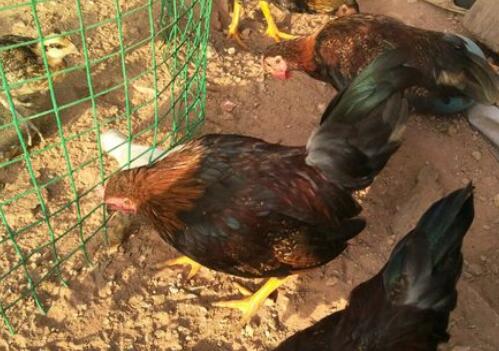
Where are Tea Flower Chicken chicks sold?
Tea Flower Chicken chicks are generally sold in Yunnan, Guangxi, Hainan and parts of Guangdong, because red junglefowl are mainly distributed in these places in China. In general, however, they are also sold in chick markets, so you can go to the local chick market to ask, and you can also choose reliable merchants online to buy them.
How many months does it take for Tea Flower Chicken chicks to grow up?
1. Free-range chickens reach sexual maturity relatively late and are greatly affected by the season. Free-range chickens raised in spring mature early, while those raised in autumn start laying late. The general age at first laying is 150 to 180 days. Generally speaking, Tea Flower Chickens are raised for one year before being market-ready.
2. Under natural conditions, the egg-laying performance of free-range chickens is highly seasonal, mainly affected by nutrition, temperature and light. Spring and autumn each year are periods with relatively high laying rates. In winter, when light duration shortens, temperature drops and nutrient supply is insufficient, they stop laying. Therefore, the annual egg production of free-range chickens is low, generally only 100 to 130 eggs.
What are the breeding techniques for Tea Flower Chickens?
Feeding and management for large-scale breeding of Tea Flower Chicken chicks
1. Brooding period (35 to 40 days after hatching). Nutritional requirements: according to the growth characteristics of the Tea Flower Chicken, which belongs to the semi-wild chicken type, local feed should mainly be used in principle, combined with scientific feeding. During the brooding stage, complete pelleted feed is given, with pellet diameter of about 0.3 cm. The feed for the brooding period is made by crushing the pellets again to make fine crumbles that are convenient for chicks to eat.
2. Chick rearing methods. There are two types: floor rearing (ground rearing and raised-bed floor rearing) and cage rearing. In most areas of Xishuangbanna, May to September is the rainy season, so multi-tier three-dimensional cage rearing (three-dimensional net bed) is recommended. Floor brooding uses the ground or a raised platform, with chopped straw, bran, sawdust, dry leaves spread on the ground, or a raised-bed floor rearing setup made with appropriately sized wire mesh, plastic netting or wooden strips.
3. Feeding management during the brooding period. Create the best environmental conditions for chicks and ensure appropriate temperature, humidity, ventilation, lighting and stocking density. Frequently observe the chicks' mental state, appetite, activity and feces, promptly isolate, observe and treat sick and weak chicks, and properly dispose of dead chickens in a harmless manner. When preventing or treating chicken diseases, try to use Chinese herbal preparations and microecological preparations. The requirements are: 1) suitable environmental temperature and humidity; 2) supplementary lighting; 3) first feeding and first drinking; 4) timely grouping; 5) grazing; 6) fencing for grazing areas.
Feeding and management of Tea Flower Chickens during the growing and fattening periods
1. Nutritional requirements during the growing and fattening periods (40 to 180 days of age). At this stage, the feed can be mixed yourself to supplement the insufficient part of free foraging in the wild. Feed formula: corn 9.5%, rice 8.2%, bran or wheat 8%, tuber crops 7.5%, soybean meal 9%, imported fish meal 7% (fish meal is prohibited in the feed within 15 to 20 days before release), shell powder 1.3%, multivitamins 25 grams, trace elements 40 grams, while adding bran, blighted grain and green feed, (www.nczfj.com) among which corn and wheat can be fed after germination. You can feed artificially bred earthworms, fly maggots, insects and other animal foods to increase protein nutrition and maintain the original flavor of the red junglefowl.
2. Feeding method. Mainly grazing. Feed grain feed such as rice and corn three times a day in the morning, noon and evening, plus green feed such as vegetable leaves and forage grass. During the day, they forage and play freely in woodland, hillsides and grassland. At night they return to the shed and perch on the racks.
3. Feeding management during the growing and fattening periods. 1) Reasonable stocking density. 2) Set up a sand bath pool. 3) Clean drinking water. 4) Deworming. 5) Strictly implement the epidemic prevention program. 6) Do a good job in disinfection; set up disinfection pools at the entrances of the chicken farm and chicken house, and always keep fresh disinfectant available.