Four o'clock flower, also known as the "landmine flower": seed planting methods and potted benefits
Four o'clock flower (Mirabilis jalapa) is native to tropical America. It is commonly cultivated across northern and southern China as an ornamental flower, and sometimes escapes to grow wild. So do you know what seed planting methods exist for four o'clock flower? Can it be grown in flower pots? What benefits and effects does it have?
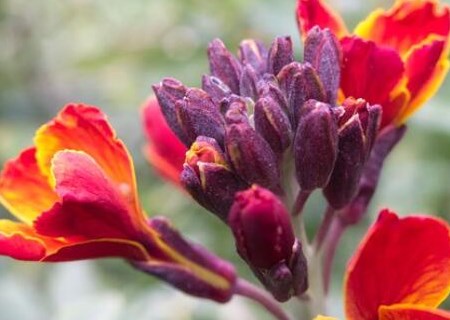
I. Seed planting methods for four o'clock flower
1. Sowing time:
Sow in early spring; it blooms and sets seed in summer and autumn. It tolerates transplanting, grows fast, and is robust. South of the Yangtze River it can be grown as a perennial. In North China it is mostly grown as an annual, or in late autumn the old roots are dug up and kept indoors at 5°C over winter, then planted in the open the following spring, where they can still bloom in the afternoon and wither by the next morning.
Four o'clock flower is naturally vigorous, highly adaptable, and requires only minimal care and management. When cultivating it, note the following:
(1) Propagation. Four o'clock flower is commonly propagated from seed. You can sow directly in the open ground in spring and thin the seedlings after they emerge; or you can raise seedlings first, and when the seedlings have 3 to 4 true leaves, transplant and set them out at a spacing of about 50cm, taking care to provide appropriate shade and watering after transplanting.
(2) Care and management. Four o'clock flower grows easily and requires only minimal care; just fertilize and water appropriately during the growing period.
(3) Collecting seeds. Because four o'clock flower is wind-pollinated, varieties cross easily. To ensure the harvested seeds keep their good characteristics, different varieties should be grown in isolation.
Four o'clock flower Four o'clock flower likes a warm climate; the soil should be loose, fertile, deep, and rich in humus, with loam or sandy loam being better. Daily management of four o'clock flower is fairly simple: spray some water in the evening on sunny days, and apply a dilute fertilizer 1 to 2 times a week in the evening, which favors normal growth. It has few pests and diseases, though dry weather makes it prone to aphids; keeping it moist normally can prevent aphids. Grown in flower beds and courtyards, it has shown no pests or diseases for many years. Daily management is fairly simple: spray some water in the evening on sunny days, and apply a dilute fertilizer 1 to 2 times a week in the evening, which favors normal growth. Grown in flower beds and courtyards, it has shown no pests or diseases for many years.
II. Can four o'clock flower be grown in flower pots?
As long as you know four o'clock flower's habits well and create a suitable growing environment for it, we can grow four o'clock flower in flower pots.
Four o'clock flower does not belong to the jasmine family, so its growing habits are very different from those of jasmine. It likes a mild climate, and a slightly humid tropical climate suits its growth best. Because its cold tolerance is not very good, when winter comes the parts exposed above ground dry up and die; if it is grown in the Jiangnan region of China, the parts buried deep underground can safely survive the winter.
At the same time, four o'clock flower does not much like overly abundant sunlight. When growing four o'clock flower, you should provide it with an environment with relatively little direct sunlight, otherwise it will drop its leaves. Another thing to note is that a well-ventilated environment is also an important factor in ensuring four o'clock flower grows healthily.
III. What benefits and effects does four o'clock flower have?
1. Ornamental value
Four o'clock flower requires minimal management and fairly simple care; it is a landscaping plant with high ornamental value and good greening effects.
Four o'clock flower blooms small purple flowers in summer and autumn, and also blooms yellow, white, and multicolored flowers, like lively little trumpets. Four o'clock flower has oval or nearly heart-shaped leaves that are glossy green and quite interesting.
The small flowers of four o'clock flower always open in the evening and close in the morning, giving off a faint fresh fragrance, and it also bears round little fruits, just like tiny landmines. However, what is most ornamental about four o'clock flower is its flowers and leaves.
Four o'clock flower can be planted in the ground or in pots. Planted in groups along fences, in front of and behind houses, or beside open woodland, when the flowers bloom they look like a sky full of stars and give off fragrance. Grown in pots it is also very beautiful to look at, and it can also be used for landscaping.
2. Medicinal effects
Besides its ornamental value, four o'clock flower also has a certain medicinal value.
The roots, leaves, and flowers of four o'clock flower can be used medicinally; they have heat-clearing and detoxifying effects, and can invigorate the blood, regulate menstruation, and nourish. Four o'clock flower can also treat strangury with turbid urine, pulmonary tuberculosis with coughing of blood, carbuncles and deep-rooted sores on the back, and acute arthritis and other diseases; it can promote urination and reduce edema. It also has a certain effect on some gynecological diseases.
3. Other effects
Another effect of four o'clock flower is that it can repel mosquitoes. Four o'clock flower prefers a well-ventilated growing environment; when kept at home, whether planted in the courtyard or in a pot, it gives off fragrance and can have a mosquito-repelling effect in summer.
Four o'clock flower's seeds can also be ground into powder to make cosmetic powder; the effects of removing acne and pimples are quite good.