Peony Seed Planting Methods, Flowering Period Care and Symbolism Explained
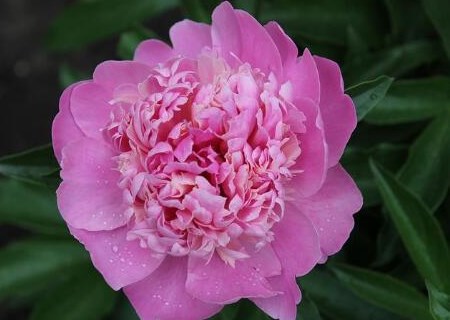
The peony flower has brilliant colors, a jade-like smile and pearl-like fragrance, and a magnificent appearance, and has long enjoyed the reputation of the “king of flowers.” It is a precious woody flower unique to China and is widely cultivated there. So do you know what the methods for planting peony seeds are? How should they be cared for during the flowering period? What symbolism do they carry?
I. Peony seed planting methods
1. Seed collection: Generally in early August, peony seeds mature one after another. When the fruit turns crab-yellow, pick it and place it in a cool, damp place indoors so the seeds can after-ripen inside the pods, and turn them frequently to prevent heating, until most of the fruit splits open and the seeds fall out. Never dry them in the sun, otherwise the seeds often fail to germinate.
2. Seed treatment: After the seeds come out, they should be sown immediately. If sowing is delayed, they will not sprout the following year, and may not even germinate until the spring of the third year. Before sowing, soak the seeds in 50°C warm water for a full day and night, so the seed coat deglutinates and softens, absorbs water and swells, and is easy to activate and germinate. If there is no time to sow, they can be stored in moist sand, with a seed-to-sand ratio of 2:8. After about 30 days of this sprouting treatment, once the sprout tips slightly protrude, sow them in the ground, and they will still germinate normally the next spring.
3. Sowing: The best sowing time is to sow immediately after collecting the seeds, and at the latest no later than September of that year. Before sowing, apply plenty of base fertilizer, and dig the seedbed deeply and level it. If necessary, disinfect the seedbed soil to eliminate soil pests such as mole crickets and white grubs. Sowing is divided into hole sowing and drill sowing. For hole sowing, sow 7 to 8 seeds per hole, with one hole every 20 cm; for drill sowing, the row spacing is 15 cm, open a 4 cm to 5 cm furrow, sow the seeds in the furrow one every 3 cm to 5 cm, then cover with 2 cm to 3 cm of soil.
4. Management: To prevent soil moisture from evaporating, shade the seedbed. It is best not to water too much, because too much watering will make the soil compact. After November, the shading material can be removed. Before frost, cover the seedbed with straw, millet straw or leaves to protect against cold and preserve soil moisture, and only remove the covering in February of the following year.
5. Transplanting: Spring planting of peonies is not easy to survive. Well-managed seedlings can be transplanted in the autumn of the same year, while poorly grown seedlings must be transplanted after two more years. The transplanting site also needs plenty of base fertilizer. With a plant-to-row spacing of 40 cm × 40 cm, dig pits 30 cm deep, and plant 1 to 2 plants per hole.
II. How to care for peonies during the flowering period
1. Wind protection
The peony flowering period coincides with the windy season in the north. In some areas there are 360-degree gales with no blind spots, and even people cannot stand them, let alone flowers. If peonies are battered by strong winds during this period, they easily become top-heavy, and the branches break off. Therefore, when in bloom, the plants must be placed in a sheltered spot, and the branches must be secured well to prevent them from swaying and causing the flowers to drop.
2. Sufficient light
Peony blooms need plenty of sunlight. If the light is insufficient, the branches tend to grow leggy, causing the leaves to turn yellow, and normal photosynthesis cannot take place, so the flowers cannot get enough nutrients. Not only will the blooms be small, but the flower color will also be less brilliant and fragrance-free.
3. Moderate watering
Peonies need more water during the flowering period. In April and May, although the temperature is not high, it is windy and water evaporates quickly, so sufficient water is very necessary. Usually water to keep the potting soil slightly moist. On clear days, spray water around frequently, but do not spray it on the flowers, to avoid the flowers fading too early.
III. What symbolism do peonies carry
1. From the perspective of historical origins, peonies flourished in the prosperous Tang Dynasty and are the flower of a prosperous age. With large blooms and beautiful colors, it is the king of all flowers, and by that time it was already a household name. During the Qing Dynasty, a prince went to Jile Temple to admire peonies and inscribed a plaque reading: “National Flower Temple,” showing that in the Qing Dynasty the peony had already been crowned the national flower.
2. Historically, there has long been the saying of "national beauty and heavenly fragrance," and its graceful magnificence has been fully expressed in many literary and artistic works. Taken a step further, it can symbolize the prosperity of the motherland and is a symbol of material civilization. In addition, in terms of integrity, symbolic meaning, historical origins and many other aspects, the peony is outstanding, so the peony is fully deserving of being our country's national flower.
3. The peony is the king of flowers and a symbol of spirit, meaning national unity and the prosperity of the country, and an atmosphere of jubilation. As for character, the peony's character is not domineering, which is consistent with China never seeking hegemony; it is also pluralistic, which better reflects China's pluralism. China has always regarded the peony as a symbol of wealth and auspiciousness, and it still does today. In summary, the peony symbolizes wealth, auspiciousness, nobility and elegance.