Ficus Bonsai Shaping and Pruning Methods with Market Price Reference
Because the Ficus bonsai has its growth and development controlled over the long term, it becomes a potted Ficus bonsai with a unique artistic shape. So do you know how to shape a Ficus bonsai? How should it be pruned? How much does one pot cost?
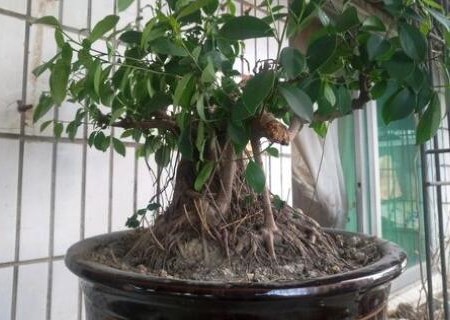
I. How to shape a Ficus bonsai
1. Approach grafting method. Choose small seedlings with well-developed young roots and approach-graft them onto suitable parts of the Ficus stump. After the graft has taken, cut off the upper part of the scion, and gradually remove the soil from the pot so that the root system is gradually exposed.
2. Hanging bottle method. When aerial roots grow on the branches and trunk of the Ficus, fill a water bottle with water and hang it below the roots, and use gauze to guide the water from the bottle to the aerial roots. As the aerial roots grow downward, lower the position of the bottle until the aerial roots have grown to a suitable length.
3. Wire hoop method. At the part where you want aerial roots to grow, wrap a ring of wire around the main trunk and tighten it with pliers. After that, increase fertilization and spraying water on the leaves to raise air humidity, so that aerial roots grow at the wire-wrapped area, and then remove the wire.
4. Bark scoring method. During the growing season, use a knife to peel off a strip of bark about 0.5 cm wide on a suitable part of the branch or trunk, with a length of about 1/4 of the branch circumference, and apply a layer of rooting powder to the wound, then wrap it with moss or leaf mold. While keeping it moist, aerial roots can emerge in about 1 month.
5. Soil mounding method. Use sheet metal or plastic sheets to enclose the main trunk, with the height depending on need. Put cultivation soil in the middle and keep it moist. After 2-3 months, the tree body will send out roots. Then gradually remove the added cultivation soil so that the inner root system is slowly exposed.
II. How should a Ficus bonsai be pruned
1. How often to prune
Pruning the Ficus, or more figuratively speaking, shaping it, should focus mainly on pruning, with binding as a supplement, and once a year is best.
The Ficus has a strong sprouting ability, and pruning can be done throughout the year, but early spring is generally best. Cut off unnecessary forked branches, overlapping branches, dead branches and diseased branches.
In routine care, you can cut off leggy branches at any time to keep the tree shape attractive. For vigorously growing branches, you can prune 1-2 times a year, repeatedly. Within no more than 4 years, a beautiful Ficus bonsai will appear.
2. Pruning methods
Pruning is mainly divided into the following five parts:
① Pinching: This is a method to inhibit the Ficus from growing taller, promote flat spreading growth of lateral buds, and cut off the tender tips at the ends of branches.
② Bud removal: During the growth of a Ficus bonsai, many adventitious buds will grow on the branches and trunk. Remove buds at any time to avoid excessive sprouting of branches and cuttings, which affects appearance.
③ Leaf removal: The ornamental period of the Ficus is often the period when new leaves sprout. Proper pruning of newly grown leaves helps them sprout new leaves multiple times, and the leaf color will also be bright and pleasing, improving the ornamental effect.
④ Branch pruning: A Ficus bonsai often grows many new branches. The pruning method should be decided according to the tree shape and your own aesthetic sense. If you think the growth of a branch hinders the overall shape, you can cut it off.
⑤ Root pruning: When repotting, prune the roots in time. If the root system is too long or too dense, it should be pruned. If the root system has not filled the bottom of the pot, you can use the original pot and do not need to prune the roots; if the root system has already filled it, change to a slightly larger pot, and thin out the dense root system, remove old roots, retain a few new roots, and replant.
III. How much does a Ficus bonsai cost per pot
Bonsai category Product specifications Reference price
Ficus bonsai 30 cm * 15 cm * 25 cm 25-30 yuan/pot
Ginseng Ficus bonsai 35 cm * 20 cm * 40 cm 30-40 yuan/pot
Ginseng Ficus bonsai 40 cm * 25 cm * 45 cm 40-50 yuan/pot
Aerial-root Ficus bonsai 80 cm * 45 cm * 35 cm 100-120 yuan/pot
Ginseng Ficus bonsai 100 cm * 50 cm * 40 cm 150-180 yuan/pot
Ginseng Ficus bonsai 120 cm * 55 cm * 45 cm 200-250 yuan/pot
Note: Ficus bonsai usually come in two types, aerial-root Ficus bonsai and Ginseng Ficus bonsai. They are generally sold in large quantities at flower markets. Their prices are determined by bonsai size, degree of rarity, aesthetic value, and so on. Better ones cost more, but usually within one thousand yuan.