How to Grow and Care for Buddhist Pine (Podocarpus macrophyllus): Methods, Precautions, Uses and Prices
Buddhist pine, also known as tu shan, is an evergreen coniferous tree in the family Podocarpaceae, genus Podocarpus. It is distributed across many provinces and regions of China and is cultivated in gardens as an ornamental tree. So do you know what the growing methods and precautions for Buddhist pine are? What uses does it have? How much does one sapling cost? We have learned the latest prices from the Buddhist pine trading market: a ground diameter of 5cm sells for 100 yuan, a ground diameter of 8cm sells for 1300 yuan, and a ground diameter of 15cm sells for 2700 yuan.
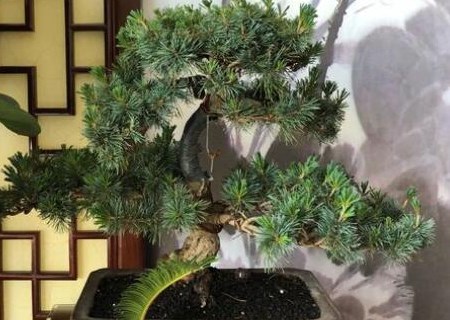
I. Growing Methods and Precautions for Buddhist Pine
1. Growing Methods
Soil Selection
For pot cultivation, humic acid soil should be used; never use alkaline soil. Buddhist pine prefers loose, fertile, slightly acidic soil with good drainage, and it does not tolerate salinity, alkalinity or poor soil.
Water and Fertilizer Management
Watering: Buddhist pine is relatively drought-tolerant, so during the growing season watering should follow the principle of rather dry than wet, keeping the potting soil alternating between dry and moist. If watered too much and the potting soil stays waterlogged for a long time, it will cause root rot and yellow leaves, and in severe cases a large number of leaves will drop and the plant will die. In the high-temperature summer season, water evaporates quickly, so watering should be more generous; if the potting soil is too dry, the leaves are prone to scorching and the ornamental value is also affected.
Fertilizing: Potted Buddhist pine also needs nutrient supplementation. Buddhist pine does not like concentrated fertilizer. During the growing season, decomposed organic liquid fertilizer can be used at concentrations of 1:6, 1:8 and 1:10, applied once every ten days to half a month; on the second day after fertilizing, water once, which helps the root system absorb nutrients.
Temperature and Light
Temperature: Buddhist pine likes warmth and has weak cold hardiness. When the winter temperature drops to 13°C, it enters a dormant state, and at this time the minimum temperature should not be lower than 10°C.
Light: Buddhist pine can tolerate shade, but during the growing season it should not be kept indoors for a long time. This is because indoor light and air humidity are not as good as outdoors, and the growth and development of Buddhist pine also need sunlight and rain.
Propagation Methods
Seed propagation: This can be done in August. It is generally carried out in open-ground seedbeds. Sow as soon as the seeds are collected. Cover with straw, pay attention to shading, and keep the substrate moist. In winter, cover with plastic film to protect against frost.
Cutting propagation: This can be done in spring and autumn. For spring cuttings, in mid-March, select 1-year-old robust dormant branches as cuttings; for autumn cuttings, in July to August, select semi-lignified green branches as cuttings. The cuttings should all have a heel, and attention should be paid to shading. Transplanting in March is most suitable.
2. Precautions
Preventing leggy growth
During the growing period, pay attention to pruning and pinching the already shaped plants to prevent leggy growth of branches and leaves and to maintain the graceful form of the Buddhist pine. When repotting, pay attention to cutting off excess roots and rotten fibrous roots, and also cut off overly dense branches and leggy branches.
Preventing frost damage
When the outdoor temperature drops to 5°C in winter, it should be moved indoors; after moving indoors, control watering and stop fertilizing.
Preventing pests
For potted Buddhist pine, usually place it on a high platform or stone pedestal; this can reduce ants, earthworms and other insects crawling into the pot through the drainage hole at the bottom and harming the plant.
II. What Uses Does Growing Buddhist Pine Have?
1. Ornamental use
Because the Buddhist pine has an elegantly ancient tree form and an unusual combination of seeds and seed stalks, it is attractive and lovely, and it is widely planted in temples and courtyards in southern China. It can be planted in pairs in front of a gate, planted alone in a central courtyard, or placed in a corner of a wall together with rockery and lake stones.
Buddhist pine varieties are rich and diverse, and each variety has its own unique beauty; it can be grown as a specimen tree.
Variegated Buddhist pine can be planted in flower platforms, and can also be used in flower beds or potted for indoor appreciation. Small-leaved Buddhist pine can also be planted as a courtyard hedge.
2. Medicinal value
The Buddhist pine can be said to be treasure throughout: from roots, stems and leaves to bark and fruit pulp, all can be used as medicine, making it a plant greatly loved by families of medicinal herb growers. If Xu Xian or Ning Caichen had encountered a wild variety on the mountain, they would have been overjoyed.
According to the record in Gui Yao Bian, the fruit of the Buddhist pine can treat lung diseases and relieve cough.
The root bark of the Buddhist pine is sweet in taste and slightly warm in nature. It invigorates the blood, relieves pain and kills parasites; for external use it treats bruises and scabies.
The leaves of the Buddhist pine can also be used as medicine and can stop bleeding.
The seeds and receptacles of the Buddhist pine are sweet in taste and neutral in nature; they tonify qi and strengthen the middle, tonify the kidneys and benefit the lungs. They are used for heart and stomach pain and for blood deficiency with sallow complexion.
3. Economic value
The wood of the Buddhist pine is fine and even in texture and easy to process. It can be used for furniture, utensils, stationery and farm tools, and is a superior timber. However, wild varieties are rarely seen, so everyone can only look at the varieties grown at home to "quench thirst by thinking of plums."
The Buddhist pine has a clear, elegant and upright spirit, with a vigorous and powerful, proud momentum of its own. Combined with meanings in Chinese culture such as "longevity" and "keeping wealth and auspiciousness," owners pursuing high-grade courtyard landscaping often like to plant one or two Buddhist pines, adding a touch of genius to their own "garden-style tale."