How Much Does a Smoke Tree Cost and a Detailed Guide to the Best Planting Season and Methods
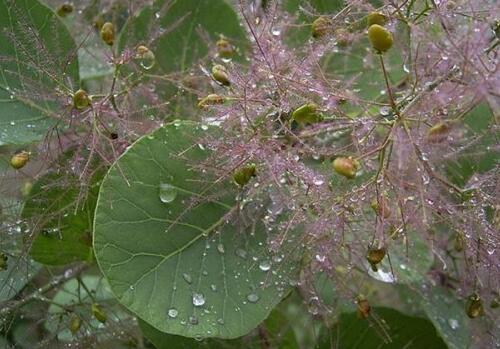
The smoke tree generally refers to Cotinus coggygria, also known as smoke bush, smoke tree, Cotinus, mokurinro, yellow boxwood, black tooth wood, and smoke tree; it is a good afforestation species. So roughly how much does a smoke tree cost per plant? In which season is the survival rate highest when planting? What are the planting methods? How should a bonsai be pruned and cared for? Learned from the Jiujiang nursery stock base, the smoke tree is an important red-leaf ornamental tree species in China; its leaves turn red in autumn, bright and eye-catching, and the famous Fragrant Hills red leaves in Beijing are of this tree species. In gardens it is suitable for group planting on lawns, mounds, or hillsides, and can also be mixed into other tree groups, especially evergreen tree groups. After the smoke tree blooms, the pedicels of the sterile flowers that remain for a long time without falling are pink and feathery, forming a cloud-like or mist-like spectacle at the branch tips. The smoke tree is also a good afforestation species; it varies by region, generally around 75.
In which season is the survival rate highest when planting a smoke tree?
1. The smoke tree is generally best transplanted in early spring or late autumn, when the survival rate is relatively high. Before transplanting a large tree, generally 3-5 days in advance, first give the large tree a heavy watering; when digging it out, keep as large a soil ball as possible and keep the soil ball intact, retain as many main roots as possible, treat root wounds promptly, and spray the roots with Zhongwei Kuaihuolin rooting liquid; remove dead and diseased branches and prune as much as possible, and spray Kuaihuolin antitranspirant to reduce water loss.
2. After the large tree is dug out, it must be transplanted quickly; during transport it must be secured to prevent bark damage, and Kuaihuolin hanging needle liquid should be used to supplement water and nutrients. Upon reaching the transplant site, disinfect the soil, and decide the planting depth of the transplanted tree's soil ball according to the local climate and weather conditions.
After transplanting, use Kuaihuolin Fushengling for root treatment, and use Kuaihuolin rooting liquid for root irrigation; stabilize the tree to prevent it from swaying in strong wind, as a swaying tree will surely die. 3. Spray the trunk and branches with Kuaihuolin antitranspirant to reduce water loss, and at the same time give the large tree a transfusion of Kuaihuolin hanging needle liquid. Special reminder: the first watering must be thorough, and then there will basically be no problem with the large tree's survival.
What are the planting methods for the smoke tree?
The smoke tree is mainly propagated by sowing, and division and root cuttings can also be used.
1. In June-July, after the fruit matures, the seeds can be collected and sown after 40~60 days of storage in wet sand. The seedlings have poor cold resistance, and before winter they need to be covered with leaves and straw to protect against the cold. The seeds can also be stored in sand after collection to overwinter, and sown in the following spring.
2. Choose a nursery site with higher terrain, convenient irrigation, deep and fertile soil layers, and well-drained sandy loam. When the soil is relatively clayey, an appropriate amount of fine sand or vermiculite can be added during land preparation for soil improvement; never choose plots with heavy, clayey soil prone to waterlogging.
3. The land preparation time is preferably early to mid-March. During land preparation, apply sufficient base fertilizer: about 3000 kg of decomposed organic fertilizer per 667 sq m, plus 30~50 kg of compound fertilizer, then deep plow and harrow finely, and pick out grass roots, debris, etc.
4. 3~4 days before sowing, disinfect the soil with 40% formalin diluted 50 times with water, or 50% carbendazim wettable powder at 1.5 g per sq m; alternatively, apply 50~100 kg of ferrous sulfate per 667 sq m to prevent seedling damping-off. In addition, use 50% phoxim 800-fold solution at 200 kg per 667 sq m to eliminate underground pests.
5. Smoke tree seedling raising generally uses low beds; for convenient light exposure, make the beds in a north-south direction, with a bed width of 1.2 m, length depending on terrain conditions, and the bed surface 10~15 cm lower than the walkway. The sowing time is preferably late March to early April. 3-4 days before sowing, disinfect the soil with formalin or carbendazim and irrigate with sufficient bottom water. After the water drains, open furrows along a line at a row spacing of 33 cm, and broadcast the seed-sand mixture sparsely, using 6~7 kg of seed per 667 sq m. After sowing, cover with about 1.5~2 cm of soil, press lightly, level, and then cover with plastic film. At the same time, open drainage ditches around the seedbed to facilitate autumn drainage. Note: do not irrigate before the seeds germinate. Generally 2~3 weeks after sowing, the seedlings emerge completely.
6. The smoke tree has strong sprouting ability. Before spring germination, select well-grown root-sucker seedlings from the outer part of the trunk, dig them up with fibrous roots, plant them in the nursery to grow, and then set them out.
How should a smoke tree bonsai be pruned and cared for?
Smoke tree pruning methods:
1. Regular and reasonable pinching
In order to inhibit the growth of the smoke tree bonsai and promote the balanced development of other side buds, the tender tips at the branch ends can be removed. That is, pinch off or cut off the top of its main stem or side branches by hand, breaking its apical dominance, so that the axillary buds below can emerge, preventing branch growth, letting it develop more branches, and gradually forming a beautiful tree shape.
2. Bud removal
Bud removal means using the hand to remove newly grown small buds. Only by removing its small tender buds and saving more good nutrients can the smoke tree bonsai grow better. When removing buds, be sure to remove one of them at the stage when new small buds appear, and also pay attention to the position of bud removal; if inappropriate, it will affect the tree's shape.
3. Leaf removal
For the smoke tree bonsai, when we remove leaves we should remove the old leaves, so that they continuously sprout new tender leaves. In this way we can appreciate their newly sprouted tender leaves at all times.
Autumn smoke tree bonsai
4. Pruning branches
Bonsai-style smoke trees often grow many new branches. In order to maintain a good shape, they must be pruned frequently. When pruning, decide according to the tree's shape; generally, dead branches that affect the appearance, parallel branches, and crossing branches should all be cut off promptly.
5. Root repair
When you repot the smoke tree bonsai, you should properly prune its roots. For root systems that are especially dense, more pruning should be done, cutting off excess old roots; after cutting, the roots should also be properly loosened and fertilized, which can promote better growth of newly grown roots.
Care:
1. Site selection. They like light and should be placed in a place with sufficient sunlight and good ventilation; generally they can be placed outdoors. However, in hot summer or in winter when the temperature is relatively low, they generally need to be moved indoors.
2. Watering and moisture retention. The smoke tree is not tolerant of wetness. When watering it, be sure not to accumulate too much water in the pot; just keep the soil moist. In addition, be sure to keep the air around the bonsai moist.
3. Fertilization points to note. The smoke tree likes nutrients, so pot cultivation must not use heavy fertilizer, otherwise it will accelerate its growth and affect the visual effect of appreciation.
4. Shaping and pruning. The smoke tree has strong growth ability. Every spring when it sprouts, it needs pruning to ensure its branches and leaves are not too lush and dense; at the same time, the branches should also be properly wired to ensure the overall beauty of the potted plant.
5. Pest and disease control. For common smoke tree pests and diseases such as damping-off and aphids, they must be discovered early in advance and the pests controlled promptly.