Detailed Guide to Potted Lotus Planting Methods, Pest and Disease Control, and Uses
Lotus is also known as lotus flower, water hibiscus, and so on. It is a perennial aquatic herbaceous flower of the genus Nelumbo. There are many kinds of lotus, divided into two major categories: ornamental and edible. China had records of cultivation as early as the Zhou Dynasty. So do you know what the methods for planting potted lotus are? How do you prevent and control pests and diseases? What uses does it have?
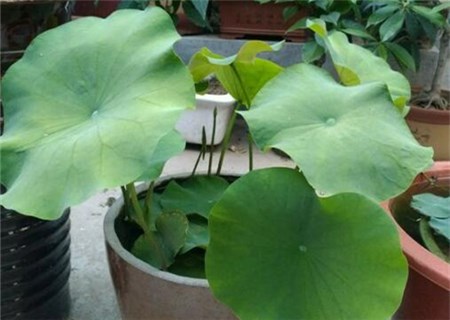
I. Potted lotus planting methods
1. Superior variety
It is best to choose highly ornamental varieties such as Manjianghong, Little Fairy, and Table Lotus. These varieties have a smaller plant form, bloom more, and have brilliant flower colors, and they are already suitable for cultivation. If using seed lotus rhizomes for planting, choose rhizomes that are undamaged, growing well, and have intact terminal buds.
2. Choosing a container
The choice of flowerpot is very particular. Usually, choose a flowerpot with a diameter between 30 and 60 cm and a height not exceeding 50 cm.
3. Soil requirements
For planting lotus, it is best to choose soil rich in humus, usually pond mud. You can also use garden soil, loess, and sandy soil mixed evenly in a 4:3:3 ratio for preparation. Never use sewage sludge.
4. Planting time
Because our country has a vast territory, the difference in latitude between north and south is quite large. Therefore, when choosing the planting time, you must also adapt to local conditions. Near the Yangtze River basin, planting around Qingming Festival is most suitable. In the higher-latitude north, the time should be postponed to late April, and cultivation can begin once the temperature rises to about 15 degrees.
5. Cultivation method
Place the seed lotus rhizome flat or with the top end slanting downward at an angle of 20 degrees to 50 degrees, and bury the seed lotus rhizome into the soil along the inner wall of the container. Be careful to leave the tail end exposed outside the mud. Only one seed lotus rhizome needs to be placed in one flowerpot.
6. Watering
In the early stage of lotus growth, do not water too much; just keep the water depth at 3-5 cm. As the temperature continues to rise, after the lotus emerges from the water, keep the water depth at 16 cm. In winter, after the lotus enters dormancy, keeping shallow water is enough, and there is no need to add water frequently. Do not underestimate this management step; whether the lotus grows well depends entirely on it!
II. How to prevent and control lotus pests and diseases
1. Black spot disease: In the early stage, irregular brown spots appear on the leaf surface, with slight concentric rings. Later, black mold-like substances grow on the spots, and several spots often join together to form large patches. In severe cases, the entire plant dies. Control method: In the early stage of the disease, promptly spray 50% carbendazim or 75% chlorothalonil at 500-800 times dilution for control.
2. Rot disease: In the early stage of the disease, blue-green wilt-colored patches appear on the leaf edges, then join into strips and spread inward, and finally the whole leaf turns brown. After the rhizome becomes diseased, the central part turns brown and gradually necroses longitudinally toward the rhizome nodes and lotus stems. Control method: In the early stage of the disease, spray 50% carbendazim at 500-600 times dilution for control.
3. Tobacco cutworm: Newly hatched larvae gather on the underside of leaves and chew the leaf mesophyll, leaving the epidermis and veins. The damaged leaves look like window screens and appear grayish white. After the larvae grow slightly larger, they disperse to feed, bite the leaves into notches, and can also bite and feed on flower buds and flowers. The damage is most severe from June to October each year. Control method: Promptly remove and destroy infested leaves, and when the larvae are gathered and causing damage, spray methamidophos at 1000 times dilution in the evening for control.
4. Aphids: Aphids have strong adaptability to climate and are widely distributed. They mainly pierce and suck the stems and leaves of plants, especially the young and tender parts. Aphids have strong reproductive and adaptive abilities, and their population numbers are huge. Therefore, all kinds of methods find it very difficult to achieve a complete cure, and it is necessary to regularly use 80% dichlorvos emulsifiable concentrate diluted 500-1000 times for spraying.
III. What uses does lotus have?
1. Edible value
The unique fragrance of lotus leaves cannot be matched by other plants, so they can be used as a cooking ingredient to enhance flavor and cut greasiness. Therefore, many restaurants now have lotus leaf rice, which is a very distinctive dish, and steaming meat with lotus leaves also tastes very fresh and delicious.
2. Medicinal value
Lotus has quite a few uses. For example, lotus leaves steeped in water can dilate blood vessels, clear heat and relieve summer heat, and have a good blood pressure-lowering effect. At the same time, they are also a good medicine for weight loss. Teas made from lotus leaves are very popular among people. They are not drugs and will not have side effects, so those who are excessively overweight can give them a try.
3. Bonsai ornamental value
Lotus has extremely strong adaptability to its growing environment. It can not only show red blooms and swaying green in large and small lakes and ponds, but can even appear graceful in very small pots and bowls, decorating the world. In the history of Chinese lotus culture, when the form of potted lotus first appeared, it was only used for viewing in private courtyards. Today, in gardens across China, potted lotus is used very widely. The arrangement technique combining potted cultivation and pond cultivation improves the ornamental value of potted lotus, and it often appears in garden waterscapes and garden vignettes. Lotus water-and-stone bonsai is a new type of bonsai that appeared in Hangzhou. It is an organic combination of potted lotus and water-and-stone bonsai, embodying both the firmness and uprightness of mountain stones and the delicate charm of lotus. For lotus bonsai, materials such as coral stone, sand-accumulated stone, ax-cut stone, and Ying stone can be chosen as mountain stones.
4. Flower arrangement art
Flower arrangement in China began in the Six Dynasties and originated from offerings before Buddha. As a holy flower of Buddhism, it can be said that when flower arrangement arose, it formed an indissoluble bond with lotus. During the Tang and Song dynasties, offering flowers was still a major form of flower arrangement. By the Ming and Qing dynasties, the art of flower arrangement had made great progress. At this time, lotus flower arrangement, whether in artistic depth or technique, had risen to a new level and can be called the peak period of ancient Chinese flower arrangement art. As people conducted deeper research on lotus flower arrangement, not only were materials such as lotus flowers, lotus leaves, lotus rhizomes, and lotus seeds used more and more commonly in flower arrangement, but scientific comparisons were also made of the ornamental effects of these materials. For lotus flower arrangement, it is generally suitable to choose small and medium-sized varieties, and appropriately pair them with the branches, leaves, and fruits of other plants, striving for clear and beautiful colors and a bright composition. The viewing effect can be maintained for 3-4 days.