Peace Lily, also known as Spathiphyllum: How to Grow It from Seed, Its Benefits and Effects, and How Many Times It Blooms a Year
The peace lily (Spathiphyllum) is widely cultivated around the world. It is very beautiful when in bloom, and even when not flowering it is an excellent indoor potted foliage plant. It is a new generation of indoor potted flowers. So do you know what the methods are for growing peace lilies from seed? What benefits and effects do they have? How many times do they bloom a year? From a peace lily grower we learned that the peace lily has a fairly long flowering period, with May to August being the flowering season, during which it blooms continuously; the number of times seems to be fairly random, depending on nutrients and growth vigor.
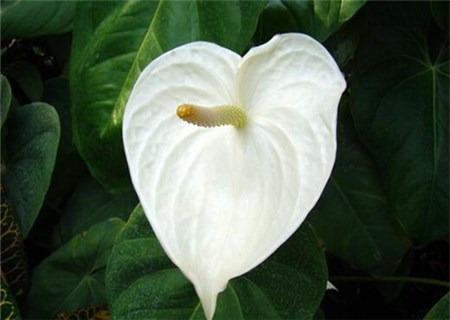
I. How to Grow Peace Lilies from Seed
1. Soil
Potted peace lilies require loose soil with good drainage and aeration; heavy clay soil must not be used. Generally, a mix of leaf mold, peat soil and a small amount of perlite can be used as the growing medium; when planting, add a small amount of organic fertilizer as a base fertilizer.
2. Time
Carry it out in spring from March to May in combination with repotting, or in autumn.
3. Division
Select vigorous two-year-old plants for propagation by division. Lift the entire peace lily out of the pot, cut the rhizome apart from the base of the clump, and make sure each division has at least 3 to 4 leaves.
4. Potting Up
Replant the divided plants back into the pot, and after planting place them in a semi-shaded spot to recover. Wait for them to take root. Note here that when cutting, you must include a section of stem, then apply charcoal ash to the wound to prevent rot. Once the root system has returned to normal, proceed with regular care.
5. Light
Light is very important for plant growth. Peace lilies need fairly good light in winter and early spring. The peace lily is relatively shade-tolerant; about 60% scattered light is enough to meet its growth needs, so it can be kept indoors year-round in a spot with bright, scattered light. In summer, 60% to 70% of sunlight can be blocked out; direct strong light should be avoided, otherwise the leaves will turn yellow and, in severe cases, sunscald will occur. In northern regions, greenhouse cultivation in winter can be done without shading or with little shading. If the light is too dim for a long time, it will be difficult for the plant to bloom.
6. Temperature
The peace lily is a heat-loving species and should be cultivated in a high-temperature greenhouse. In winter, the nighttime minimum temperature should be 14 to 16°C, and the daytime temperature should be around 25°C.
7. Watering
During the growing period, the peace lily should be kept with moist potting soil at all times, but it must not be watered too much; overwatering will keep the potting soil wet for a long time, which easily causes root rot and yellowing, withered plants.
8. Fertilizing
Do not apply concentrated fertilizer or raw fertilizer. After applying solid fertilizer, water once with clear water. It is best to use dilute fertilizer solution instead of clear water for watering; this generally will not cause fertilizer burn, and the peace lily will grow very lushly.
9. Pests
Plants are most attractive to pests during the growing period. Spider mite-specific pesticides should be sprayed regularly for prevention and control, such as dicofol, hexythiazox, pyridaben, etc.
10. Repotting
Repot once every 1 to 2 years. In combination with repotting, prune the root system, remove some old roots and overly long roots, pick out the old soil, and replace it with fresh growing medium, which helps the peace lily bloom.
II. What Benefits and Effects Does the Peace Lily Have?
1. A Fine Gift
The peace lily is a beautiful flower with pure white blooms, and its flower meaning is "smooth sailing." It can represent nobility, beauty and warmth. Once made into cut flowers, it is a fine gift that can express many kinds of feelings between people.
2. Ornamental Value
The peace lily is a beautiful flower with particularly outstanding ornamental value. It has more than thirty different varieties, and currently in our country there are only five. Fragrant peace lily, Green Giant and large-leaf peace lily are relatively common in our country. It can be made into potted plants and placed in many different environments for people to enjoy, and while beautifying the environment it can also delight people's body and mind.
3. Air Purification
The peace lily is a beautiful foliage plant. It is suitable for placement indoors and can purify the air. During respiration, it can decompose and absorb harmful substances in the air such as trichloroethylene and benzene, making the air purer and purifying indoor air. It is especially suitable for placement in newly renovated houses.