How many jin of peanuts can one mu of land produce, and what is the net profit income?
Peanut is a nut with abundant yield and wide consumption in China, also known as the “longevity fruit.” So how many jin of peanuts can one mu of land produce? What is the net profit income?
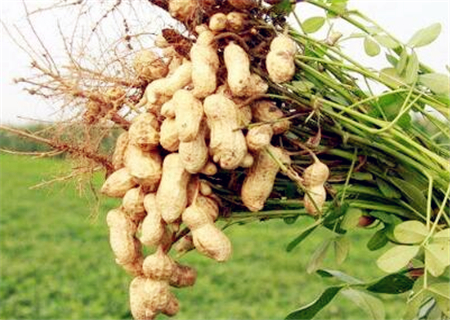
The yield of peanuts varies under different geographical conditions; fertile soil plots can produce 800-1000 jin per mu, while poor land generally produces 600-800 jin per mu.
Peanut is hailed by people as “plant meat,” with an oil content of up to 50%, excellent quality, and a fresh fragrance. Peanut is nourishing and beneficial, helping to prolong life, so it is also called “longevity fruit” among the people, and like soybean, it is praised as “plant meat” and “the meat among vegetables.” Besides being used for food, it can be used as a raw material for soap and hair oil and other cosmetics.
The characteristics of the peanut strain are as follows:
I. Variety Source
After 8 years of selection and breeding by the Chinese Academy of Agricultural Sciences, followed by 3 years of yield comparison experiments and resistance and adaptability trials, the first new black peanut variety at home and abroad - black peanut - was finally bred. Black peanut was developed based on genetic variation in peanuts, selecting advanced-generation materials after radiation and through sexual hybridization and systematic breeding; its traits are stable and it can be used as seed year after year.
II. Characteristics and Traits
This variety is a medium-early maturing peanut, with black seed coat, a 100-pod weight of about 200 grams, a semi-upright plant habit, good lodging resistance, a plant height of 39 cm, 5-7 effective fruiting branches, dark green leaves, continuous flowering, a relatively large number of flowers, more than 70% double-seeded pods, a shelling rate of more than 70%, an average yield of about 300 kg per mu, and a whole growth period of 110-135 days.
III. Key Points of Cultivation Techniques
This strain has strong drought resistance and disease resistance, and is suitable for planting in sandy loam soil with medium or higher fertility. It can be sown in spring or summer. In the north, it can be directly sown after wheat harvest. The usual sowing rate is 9000-10000 hills per mu, with 2-3 seeds per hill. The cultivation method and other management measures can refer to local peanut varieties.
IV. Quality Analysis
Peanut has remarkable medicinal value in lowering blood pressure and alleviating bronchitis. Medical experts recommend eating 9 black peanut kernels raw each day (in 3 portions), which can turn white hair black, normalize blood pressure, and prevent various diseases caused by a lack of **trace elements.
What is the net profit income of one mu of peanuts?
The dry product yield of peanuts from one mu of land is between 300-700 jin, and the purchase price is more than 3 yuan per jin. Calculated this way, it can barely offset the labor cost. For retail, it can reach more than 7 yuan. However, if operations can be adjusted, fresh peanuts from one mu of land can yield between 500-1200 jin, and retail can reach 5 yuan per jin, with a cost of about 3 yuan, so then there is some profit to be made.