When is the best month to plant Schizonepeta? Differences from basil and balcony planting methods
Schizonepeta, one of the commonly used Chinese herbs, also known as: Xiangjingji, Xianji, Silengganhao, Jiasu, is a perennial plant of the Lamiaceae family, Schizonepeta genus. So when is the best time to plant Schizonepeta? Which months can it be planted? What are the differences from basil?
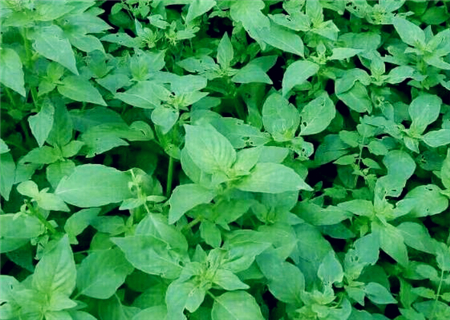
The best time to plant Schizonepeta seeds is from September to November each year. Seeds sown during this period have the highest germination rate and grow best.
How should Schizonepeta seeds be sown for the highest germination rate?
1. Select high-quality, plump Schizonepeta seeds.
2. Choose land with plenty of sunlight and good drainage for sowing.
3. Prepare the soil in advance, remove weeds, apply fertilizer, and water.
4. Keep the sowing depth at about 2~3 cm.
Balcony planting methods for Schizonepeta:
I. Planting steps:
1. Choose a flower pot, lay a layer of crushed stones at the bottom, then fill it with fertile sandy loam, use a small shovel to dig a small hole about 3 cm in diameter, place 3~5 seeds in it, then cover with soil, press lightly with the small shovel, and water thoroughly.
2. When the seedlings grow to 3~5 cm, you can pull out the poorly growing seedlings and keep the vigorous ones. When Schizonepeta grows to about 10 cm, apply a homemade fertilizer once to provide sufficient nutrients for growth.
3. When Schizonepeta grows to 20~25 cm, you can harvest its tender branches and leaves for eating. When harvesting, it is best to start from the bottom, harvesting once every 7~10 days.
II. Care:
Schizonepeta likes a warm and humid environment. Its growth temperature is generally 25~28°C. During the growth period, loosen the soil, remove weeds, and water in time, but do not water too much. Be careful to prevent damping-off disease in Schizonepeta. If it occurs, spray Bordeaux mixture promptly for control. When the temperature is too high and the sunlight is scorching, provide appropriate shade and ventilation.
What are the differences between Schizonepeta and basil?
1. Observe the leaves to distinguish basil from Schizonepeta
Comparing the two, Schizonepeta leaves are relatively small and narrow, while basil leaves are relatively broad. Schizonepeta leaves are relatively smooth, without obvious wrinkles, and are fairly flat, which also makes them appear more upright. By contrast, basil leaves have obvious wrinkles and a very strong bumpy texture.
2. Distinguish basil from Schizonepeta by taste
The taste of the Schizonepeta plant is very strong and very pungent, whereas basil has a relatively milder taste and is not as pungent as Schizonepeta. Therefore, we can also distinguish basil from Schizonepeta by smelling the scent of the two.
3. Distinguish basil from Schizonepeta by the leaf stalks
The leaf stalks of mature basil are darker in color, tending toward purple, and basil leaf stalks are very smooth without fuzz. Schizonepeta leaf stalks, like the leaves, are tender green, but Schizonepeta leaf stalks are covered with fine, soft fuzz. In addition, there are some small white prickles on Schizonepeta leaf stalks. From this point, we can easily distinguish basil from Schizonepeta.
4. Distinguish basil from Schizonepeta by the flowers
The flowers of both basil and Schizonepeta are relatively small, but basil flowers are purple and have a relatively strong scent, which attracts some small insects. Schizonepeta flowers are white. The color of the flowers can distinguish basil from Schizonepeta.