Black Goji Berry Planting Month, Time to Fruit, Yield per Mu and Analysis of the Best Producing Areas
Black goji berry is black-fruited wolfberry (Lycium ruthenicum). Its Mongolian name is “Qonoyin—Harmag” and its Tibetan medicinal name is “Pangma”; it belongs to the genus Lycium in the nightshade family (Solanaceae). So which month is best for planting black goji berry? How many years until it fruits? How many jin can one mu produce? Where is the best producing area?
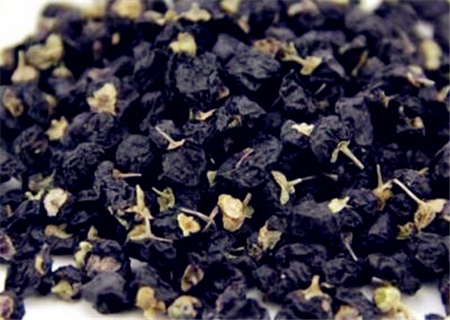
Where is black goji berry suitable for planting?
The producing area of wild black goji berry is in Qinghai, **, Golmud and Tibet. Needless to say, Qinghai, **, Golmud and Tibet are places quite suitable for large-scale planting of black goji berry; the natural climate of these places is quite suitable for the growth of black goji berry. At present, many people in these places grow black goji berry, while in other cities large-scale planting of black goji berry has not yet been done; the environment and climate of other cities cannot reach the environment required for the growth of black goji berry.
Which month is best for planting black goji berry?
Black goji berry is not suitable for planting in the south. The sowing period for black goji berry is from late March to mid-April.
How many jin can one mu produce in the first year of planting black goji berry seedlings
In the first year of planting black goji berry seedlings, one mu can produce about 10 jin of dried fruit.
Because wild black goji berry grows at low density, its yield is also low; one mu yields only about 2 jin of picked dried fruit. The dried fruit yield of artificially cultivated black goji berry is generally between 20 and 30 jin per mu. The first-year yield of artificially cultivated black goji berry is somewhat lower, generally about 10 jin of dried fruit.
How many years until black goji berry fruits after planting
If grown from seed, it can bear fruit in three years; some seedlings bear fruit in the same year.
Black goji berry planting methods
(1) Seed collection, seed and fruit processing and seed storage The seed collection period for black-fruited wolfberry is from July to November. When the fruit turns from green to purple-black, it should be picked promptly and
immediately sealed and transported to the designated location. After seed collection, the seeds are washed and threshed by wrapping them in gauze, and then filtered and washed with a fine sieve. For drying, air-dry or sun-dry in the morning and evening sun; avoid exposure to strong sun. For cleaning, manual seed cleaning is used. After processing, the seeds are stored in fiber bags in a dry, ventilated place.
(2) Determination of seed quality In addition to investigating whether the seed source is good, seed quality also requires testing the seed's purity, thousand-grain mass, germination rate, viability, soundness, moisture content and weight, etc. The most important thing is to test and determine the seed germination rate. The method uses the laboratory sample germination method. Seed soundness is judged by the seed's appearance and internal anatomical condition to determine the degree of seed quality.
(3) Propagation methods Mainly seed propagation, but cuttings and root-sucker propagation can also be used.
(4) Root-sucker seedling propagation In spring, dig up the root-sucker seedlings around the mother plant and cultivate them in the nursery.
Field management
Hoeing and weeding: after the seeds emerge, loosen the soil and remove weeds, 4~6 times within 1 year, combined with irrigation for loosening the soil and weeding.
Irrigation: irrigate at the proper time according to soil moisture conditions, generally 4~6 times within 1 year.
Thinning: in June, when the seedlings are 3~5cm high, thin out weak seedlings and overly dense seedlings. Around mid-July, final thinning is carried out, with a plant spacing of 10~15cm for retained seedlings, keeping the good and removing the poor, removing the weak and keeping the strong.
Topdressing: combined with irrigation, apply quick-acting nitrogen fertilizer 1~2 times in mid-to-late June, and apply topdressing once more in mid-to-late July.
Pest and disease control: insect pests include aphids, goji berry leaf beetle (Lema decempunctata), goji berry powdery mildew, sooty mold, etc., which can be controlled by spraying with 40% omethoate, 0.1% medicinal solution and 0.1% carbendazim medicinal solution and other agents.
Where is the best black goji berry produced?
In China, it is scattered in Jiuquan in Gansu, western Qinghai, Ningxia, **, eastern Huanan County in Heilongjiang Province, western Inner Mongolia and Tibet, and other places. It grows in barren mountains and wild ridges and riverbed sand beaches where humans cannot survive, and has extremely strong vitality. However, with human development of nature, the living space of black-fruited wolfberry is becoming smaller and smaller, which has made black-fruited wolfberry a rare and precious original-ecology high-grade tonic.
It is generally recognized that the black goji berry from the Nomhon production area in the Qaidam Basin of Qinghai is the best; it is a high-cold region with a large temperature difference between day and night, and the soil is saline-alkaline, which is conducive to the accumulation of anthocyanins, so the black goji berry produced here has the highest average anthocyanin content.