Firethorn sapling prices, whether the fruit is edible, and transplanting, propagation timing and methods
Firethorn, also known as torch fruit, famine-relief grain, red-seed thorn and auspicious fruit, is an evergreen shrub or small tree reaching up to 3m tall, flowering from March to May and fruiting from August to November. It is an excellent plant for viewing flowers in spring and fruit in winter. So about how much does a firethorn sapling cost each? Can its fruit be eaten? How do you transplant and propagate it? In which month is it transplanted? According to a Jiangsu nursery company, firethorn with a crown width of 80CM costs 45~55 yuan/plant; with a crown width of 100CM, 55~75/plant; with a crown width of 120CM, 70~90 yuan/plant; and with a crown width of 150CM, 110~140 yuan/plant.
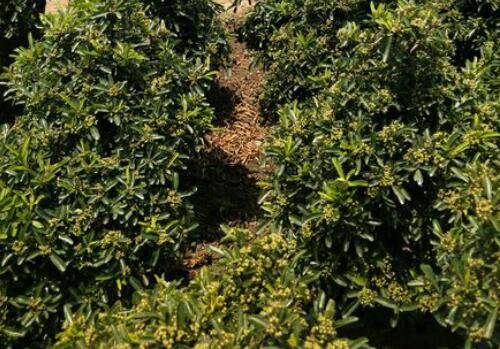
Can the fruit of the firethorn tree be eaten?
1. Firethorn fruit is edible and can be eaten raw directly, and it tastes quite good, somewhat similar to hawthorn, a little sour and a little sweet when eaten, but not that sour, with a soft and glutinous texture. It is said that in old times when grain harvests were reduced by disaster, farmers in mountainous areas often went into the mountains after autumn to pick firethorn fruit, and after bringing it home they dried it in the sun and then ground it into flour to eat in the next year when the previous crop was exhausted and the new one was not yet ripe. Firethorn flour could be cooked into porridge and also steamed together with other foods, helping people get through years of famine.
2. Firethorn fruit has very good pharmacological effects, sweet in taste and neutral in nature, and its fruit, leaves and roots can all be used as medicine. The fruit can remove food stagnation and stop dysentery, invigorate the blood and stop bleeding, and can be used for indigestion, enteritis, dysentery, infantile malnutrition and postpartum abdominal pain and other conditions. Firethorn fruit is rich in water, protein, fat, carbohydrates, vitamins A, B, C and D, and minerals calcium, phosphorus and iron, as well as dietary fiber. It has obvious therapeutic effects on diabetes, hyperlipidemia, arteriosclerosis and constipation. It can clear waste from the body, can promote metabolism and improve internal circulation.
How is the firethorn tree transplanted and propagated?
Firethorn trees are usually propagated by sowing, cuttings and layering.
1. Seeds
Firethorn fruit matures in October and can persist on the tree until February of the following year. The best time to collect seeds is from October to December. After collection, remove the pulp promptly, wash the seeds clean and dry them in the sun for later use. Firethorn is best sown in autumn. Before sowing, the seeds can be treated with gibberellin at a concentration of 2 in 10,000. On a prepared seedbed, open long furrows 5 cm deep at a row spacing of 20~30 cm, broadcast the seeds in the furrows and cover with 3 cm of soil.
2. Cuttings
For 1- to 2-year-old branches, cut them into cuttings 12~15 cm long, with the lower end shaped like a horse's ear. On a prepared cutting bed, open small furrows 10 cm deep, place the cuttings at a 30° slant along the edge of the furrows, with 10 cm between cuttings, leaving 2~5 cm of the upper part exposed above the bed surface, then cover with soil and firm it. Cutting can be done from November to March of the following year, and the survival rate is generally above 90%.
3. Firethorn likes strong light, tolerates poor soil and resists drought, but is not cold-tolerant; it can be grown in the open ground south of the Yellow River, while in North China it needs pot cultivation and overwintering in a plastic shed or low-temperature greenhouse, where the temperature can drop to 0°C, water rubbing. It has no strict requirements for soil, but well-drained, moist, loose neutral or slightly acidic loam is best.
Transplanting:
1. For fruit-producing plantations, choose flat terrain with sandy loam rich in organic matter, dig pits 0.6~0.8 m deep at a plant and row spacing of 2 m×2 m, fill in base fertilizer and topsoil, plant into the holes, firm the soil and water thoroughly to settle the roots.
2. Firethorn fertilization should be carried out according to different growth and development stages. When transplanting and establishing the plants, apply sufficient base fertilizer, mainly organic fertilizers such as soybean cake, oil cake, chicken manure and bone meal; 3 months after successful establishment, apply inorganic compound fertilizer; afterward, to promote the growth and development of branches and trunks and help the plant take shape as early as possible, fertilization should be mainly nitrogen fertilizer; after the plant has taken shape, each year before flowering, appropriately apply more phosphorus and potassium fertilizer to promote vigorous plant growth and benefit flowering and fruiting. During flowering, to promote fruit set and improve fruit quality and yield, a 0.2% potassium dihydrogen phosphate aqueous solution may be applied as appropriate. Stop fertilizing in winter, which will help firethorn pass through its dormant period.
In which month is firethorn transplanted?
Firethorn can be transplanted using seedlings grown from seed or propagated from branch cuttings. Sow from late March to early April, and after emergence strengthen fertilizer and water management to cultivate strong seedlings that can be potted. Hardwood cuttings are done in March. Softwood cuttings are done in June; after cutting, shade the area above the nursery, and remove the shading material after new roots grow. Cuttings need strengthened fertilizer and water management to cultivate strong seedlings that can be potted.