How much is gentian root per jin? Analysis of artificial cultivation prospects and benefits
The roots and stems of gentian can be used as medicine; they are bitter in taste and cold in nature, and are specifically used to clear heat and dry dampness. Their effect of purging excess fire of the liver and gallbladder is very strong, and they can also calm wind, stop spasms, and relieve pain. So what is the market price of gentian per jin? What are the prospects for artificial cultivation? Is it profitable to grow?
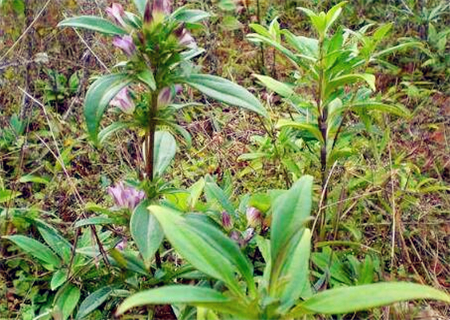
Gentian cultivation prospects
Gentian is a perennial herbaceous plant, also known as Cao Longdan, Ku Longdancao, Didancao, Dancao, Shan Longdan, Siye Dan, etc. Its main production area is Northeast China, and it is also distributed in Hebei, Shaanxi, and other places. It has very high cultivation value!
Gentian prefers a humid and cool climate. In the wild it grows in mountainous areas, on slopes, at forest edges, and in shrub thickets. After being introduced to the Beijing area, it has continued to grow well. Places with high, dry terrain and direct sunlight, as well as areas with overly sticky or poor soil, are not suitable for cultivation. Gentian likes fertilizer. If you encounter problems when growing gentian and do not know how to handle them, you can consult experts on Yunzhongyang, which is the world's largest agricultural technology Q&A platform. It brings together tens of thousands of experts in planting and breeding, and every question raised receives a reply within 2 minutes.
Gentian seed propagation can be divided into autumn sowing and spring sowing. Autumn sowing is generally carried out in November, and the seeds sprout in the following spring. To sow evenly, mix an appropriate amount of fine sand or humus into the seeds and use drill sowing. When planted, gentian sprouts in mid-April each year, blooms in August, with the flowering period from August to September, and the fruit matures in September. The total annual growth period is about 180 to 210 days.
Wild gentian resources are decreasing year by year and are far from meeting market demand. The market gap for gentian is large and the price is high. Since 2000, the price has generally shown an upward trend. The above shows that gentian has large market demand, a high price, and great room for development through artificial cultivation. Using natural green plants for medical treatment and health care has now become a trend, so the development prospects for gentian are very broad.
Artificial cultivation techniques for gentian
(1) Site selection and land preparation
It is advisable to choose a relatively humid area with flat terrain and sufficient sunlight. Soil rich in humus and sandy soil are suitable. Poor and sticky soil is not suitable for cultivation.
Prepare the land before sowing or transplanting. Plow to a depth of about 20 cm, apply sufficient base fertilizer in combination with land preparation, then level and harrow finely, and make large ridges 60-65 cm wide or seedbeds 1-1.2 m wide.