Can apricot trees be grown in pots? How many years until they bloom, price, and cultivation methods
Apricot tree generally refers to the apricot, also called apricot fruit. It is an important economic fruit tree species and one of the common fruits, extremely rich in nutrients, with a flowering period from March to April and a fruiting period from June to July. So can apricot trees be grown in pots? How many years of planting until they bloom? How much does a pot cost? What are the cultivation methods? Learned from a Jiangxi nursery base, the price of an apricot tree with a trunk diameter of 20 cm is around 1,400 yuan; the price of a 5 cm apricot tree is generally 50 yuan per tree.
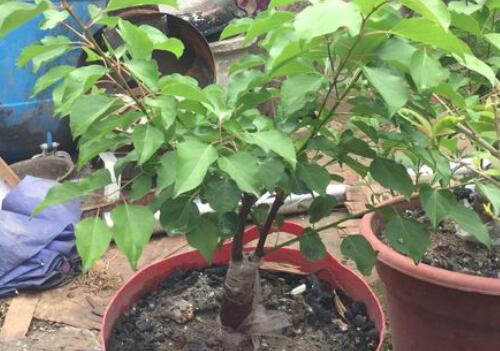
Can apricot trees be grown in pots?
Apricot trees can be grown in pots.
When people reshape and prune large apricot trees, they often saw off many branches and trunks. The ones with good shape can be selected as intermediate rootstock, which allows rapid creation of apricot stump bonsai. There are three points to note.
1. The rootstock root system should be well developed. The number of grafted scions depends on the size of the intermediate rootstock; generally three are grafted, forming a “three-legged tripod” arrangement. If the intermediate rootstock is thick or has many branches and tips, four to five or more can be grafted.
2. Tying should be firm. To ensure the tissue at the graft union matches properly, the saw cut on the intermediate rootstock needs to be smoothed with a sharp blade. Soak it quickly in rooting hormone solution, then wrap it in several layers of paper that has been soaked in rooting hormone solution and dried. To form callus tissue as quickly as possible, the union should be wrapped with thin iron sheet and tightened with wire. The width of the iron sheet is not limited, but the length should be just enough to wrap around once without overlapping. According to different appreciation requirements for ginkgo bonsai, draw the styling design pattern in advance, build the shape according to the stump, and follow the pattern to shape it, bending, tying and adjusting the branches and trunk. Stump bonsai strive for a vigorous and rugged majestic appearance; old tree roots and stumps can be used to develop a proud, aloof character with thick trunks, curved branches and exposed roots.
3. Grafting is mostly done using the “bark flap tongue graft” method. After grafting, plant directly in open ground or in a flower pot. The best results come when done during the tree's “bark slipping” period. If grafting at other times, “cleft grafting” or “whip grafting” can be used, and after grafting, heal the union in sand soil in a greenhouse or arched shed. The ideal healing temperature after grafting is 20 to 30 degrees Celsius. After healing, take it out of the sand and plant it in open ground or a flower pot. When taking it out, be careful not to damage the callus area and new root points.
The finished apricot bonsai should be placed in a sunny, ventilated and humid place for care. In summer, avoid drought and exposure to strong sun; in winter, bury the pot in soil to protect against cold. During the growing season, keep the pot soil moist and apply cake fertilizer or farmyard manure once a week, in small amounts. For the pot soil, choose high-quality nutrient soil as much as possible, and add sand soil and chaff ash. Repot once every two years; when repotting, prune overly long roots, replace half of the old soil, and apply base fertilizer at the bottom of the pot. Ginkgo bonsai grows slowly and has relatively few diseases, so care and management are relatively simple.
How many years of pot cultivation until apricot trees bloom?
1. The apricot tree's flowering period (late March to mid-April) has relatively high humidity requirements; on sunny days, water thoroughly every day to keep the pot soil moist. In early spring and autumn, depending on the pot soil condition, water once every 2-3 days. In winter, watering should be controlled; depending on the overwintering environment, check once every 10-15 days to prevent the pot soil from becoming too dry.
2. Potted apricot trees generally need to be repotted once every 2-3 years. During the dormant period, take the apricot tree out of the pot, remove the root pad, and remove about 1/3-1/4 of the soil around and at the bottom of the roots. At the same time, moderately prune the above-ground part and replant according to the potting method. If repotting is needed during the growing season, be careful not to damage too many roots, and provide moderate shading and misting to protect the leaves.
Appendix: Cultivation methods for potted apricot trees
1. Water and fertilizer for apricot trees
When the plant's new shoots grow to about 15 cm is the best time to fertilize. It is best to apply fertilizer to the soil and to the leaves at the same time, so that the fertilizer effect is maximized. Then water after the apricot tree has stable growth, keep the soil moist, and irrigate an appropriate amount according to the soil moisture condition.
2. Pruning of apricot trees
Around May and June, pruning work should be done on the trees. Select a few shoots with good growth angles to keep, and remove all the rest. Also frequently pinch the apricot trees to ensure healthy plant growth. When pruning, thin out overly dense twigs to ensure nutrient supply.