Sterculia lychnophora seed planting method, effects and functions, and what to know about long-term drinking
Sterculia lychnophora is mostly used for making tea, and it can help lower blood pressure and soothe the throat and resolve phlegm. It is produced in various Southeast Asian countries, and has been introduced and cultivated in China's Guangdong, Hainan, Guangxi, Yunnan and other provinces. So do you know what the seed planting methods for Sterculia lychnophora are? What effects and functions does it have? Can it be drunk long term?
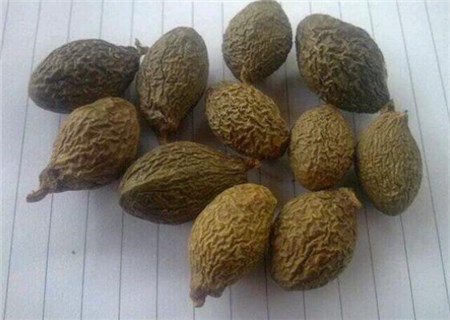
I. What seed planting methods are there for Sterculia lychnophora
1. Growth habits
Sterculia lychnophora is native to the tropics, and in introduced areas the annual average temperature is 21-24.9°C. It likes sunlight, is drought-tolerant at maturity, and has no strict requirements for soil; it grows well in sandy loam, yellow loam and lateritic soil. It is best to choose well-drained, wind-sheltered areas for planting.
2. Site selection and land preparation
① Site selection
(1) Temperature. Sterculia lychnophora originally grows in tropical regions such as Vietnam, India, Malaysia and Thailand. In introduced domestic growing areas, it grows well when the monthly average temperature is 24°C-28°C; when the monthly average minimum temperature drops below 19.3°C, shoot growth stops. At a low temperature of 5°C, leaf tips dry up and yellow leaves increase.
(2) Humidity. Sterculia lychnophora is relatively drought-tolerant at maturity; when monthly rainfall in winter and spring is below 22 mm, it does not suffer drought damage. The suitable monthly rainfall for growth is 100-300 mm; when monthly rainfall exceeds 500 mm, shoot growth is also affected.
(3) Light. Sterculia lychnophora likes sunlight; under sufficient sunlight, buds grow plump and strong, and leaves are broad and deep green.
(4) Soil. Sterculia lychnophora has no strict requirements for soil and can grow well in red soil, yellow soil and sandy loam; it grows even faster in soil with high fertility.
(5) Wind. Sterculia lychnophora has an underdeveloped root system, thin and tall stems, and brittle xylem, and is extremely likely to break or fall over in strong winds, so wind-sheltered places should be chosen for planting.
② Land preparation
Well-drained, wind-sheltered flat land or sloping land can both be used. First cut down shrubs and weeds, dig out tree roots, and then plant; after opening 2 cm wide contour terraces, plant to prevent soil erosion.
3. Propagation methods
① Seed propagation. Harvest mature seeds whose seed coat is dark brown and whose surface has obvious wrinkles, sow them on a clean sand bed, and sow in drills, with a drill spacing of 12 cm, a distance between seeds of about 5 cm, and a depth of about 3 cm. After sowing, cover the seeds with sand, then cover the bed surface with rice straw, water thoroughly, and keep the bed surface moist. The 1000-seed weight is 1270 g, and the sowing rate per 1 hm2 is about 675 kg. After seedlings emerge, move them into nutrient bags for raising; when seedlings are 30-50 cm tall, they can be planted out in the field.
② Layering propagation. Select lignified branches, and carry out girdling 20-30 cm from the top. About 1-2 d after girdling, once the wound is slightly dry, wrap the wound area with wet coconut coir or rice straw plus wet mud, then wrap it with plastic film. After about 2 months, new roots grow; if the new roots have begun to lignify, the branch can be cut off and temporarily planted in a sand bed, or directly planted out in the field.
③ Grafting propagation. Use brownish-green, relatively smooth branches from the upper crown, with full tissue and a diameter of 1-1.5 cm, cut a 12-15 cm section as a scion, and select the same-genus plant Scaphium wallichii Schott et Endl., which has strong compatibility with Sterculia lychnophora, as the rootstock for cleft grafting; bud grafting can also be done by removing bud plates from the scion. After the scion and rootstock heal, cut off the main trunk of the rootstock and regularly remove sprouts from the rootstock.
4. Field management
① Drought resistance and drainage. The root system of Sterculia lychnophora seedlings is underdeveloped, so water management should be paid attention to. Water during drought, and drain during the rainy season to prevent waterlogging from causing root rot.
② Weeding and fertilizing. Within one year after planting out, attention should be paid to weeding to ensure normal plant growth. Fertilize once every quarter, each time applying 1-2 kg urea per mu, and 800-1000 kg decomposed barnyard manure or compost, by hole application, then cover with soil.
③ Top pruning. When the Sterculia lychnophora plant reaches about 1 m tall, the top can be cut for dwarf cultivation. At about 2 cm from the growing point, cut off the upper part with pruning shears; after about 1 month, new branches begin to emerge. Keep 2-3 branches, and after they continuously produce new shoots 2-3 times, carry out a second top cutting. Generally, 2-3 cuttings can be made.
5. Pest and disease control
① Green scale weevil Hypomeces squamosus Fabricius: adults damage young stems and leaves, causing young stems to break and leaves to become irregularly notched. Control methods: manual capture and killing; this insect has a death-feigning habit, so lightly tap the tree leaves with a stick and the insects will fall to the ground, then gather and kill them; spray with 50% phoxim 1000-fold solution, or cottonseed oil soap 50-fold solution.
② Termites: after air-layered seedlings are planted out, the cut openings are easily damaged by termites, causing the air-layered seedlings to die. Control method: irrigate with dichlorvos 1000-fold solution.
6. Harvesting and processing
① Harvesting
From April to June, when the fruit splits, collect mature seeds. Because the outer seed coat of Sterculia lychnophora swells and germinates upon contact with water, it must be harvested promptly when the fruit ripens. Because the plants are tall, producing areas generally harvest the fruit by cutting down the tree.
② Processing
After harvesting, remove the skin and fruit wings, then dry by machine or sun-dry and bag.
II. What effects and functions does Sterculia lychnophora have
1. Purgative effect
The seed infusion of Sterculia lychnophora has a mild laxative effect on rabbits, because it can increase intestinal contents (increasing volume to 8 times that of agar), causing mild laxation through mechanical stimulation. When the outer skin, soft shell and kernel of Sterculia lychnophora are separately water-extracted, for anesthetized dogs, no matter the administration method, all can significantly increase intestinal peristalsis (the kernel has the strongest effect, the soft shell is next, and the outer layer is the weakest); this effect can be antagonized by atropine; a 1:400,000 infusion of the kernel increases the peristalsis of isolated rabbit intestine, while the other two layers show no obvious effect.
2. Blood pressure-lowering effect
A 25% solution made from Sterculia lychnophora kernel (defatted dry powder), given by intravenous injection, intramuscular injection or oral administration, can all significantly lower blood pressure in dogs and cats. Further experiments show that its blood pressure-lowering principle may be related to the central nervous system. The water infusion of Sterculia lychnophora kernel lowers blood pressure in anesthetized dogs, but raises blood pressure in rabbits (the effective dose in rabbits is 10 times larger than in dogs); the different effects on dog and rabbit blood pressure can all be sensitized by histamine.
3. Other effects
The water-extracted products of the outer skin, soft shell and kernel of Sterculia lychnophora all have a certain diuretic and analgesic effect, with the kernel being the strongest; none of the three has a local irritant effect. Sterculia lychnophora kernel (defatted dry powder) used in acute toxicity tests showed labored breathing and movement incoordination in rabbits; after dogs were killed by continuous use of large amounts for 10-15 days, lung congestion and edema, and liver fatty changes were seen; the oral median lethal dose in mice is 12.96 g/kg. When rabbits were intravenously injected with a large amount (1% 2 mL) of Sterculia lychnophora kernel water infusion, breathing stopped first while the heart still beat, and the gastrointestinal surface was very red.
III. Can Sterculia lychnophora be drunk long term
Many people like to brew Sterculia lychnophora to protect their voice. Some do so because the climate is dry and their throat feels uncomfortable; some professionals, such as teachers and singers, also feel throat discomfort after overusing their voice; and some smokers who have smoked long term and developed chronic pharyngitis also like to drink Sterculia lychnophora tea. However, it should be especially pointed out that drinking Sterculia lychnophora tea long term is not necessarily appropriate.
In China's published "List of Items That Are Both Food and Medicine", although Sterculia lychnophora is included, Sterculia lychnophora has medicinal properties and also a certain toxicity, is not suitable for certain constitutions, and is even less suitable for long-term drinking as a health beverage.
If Sterculia lychnophora really needs to be taken, for example for acute tonsillitis, use 3—5 pieces of Sterculia lychnophora and brew in boiling water; for dry and painful throat, dry cough without phlegm, and hoarse voice caused by wind-heat common cold, use 5 pieces of Sterculia lychnophora and 3 g licorice, and brew as tea. Overall, when taking Sterculia lychnophora, observe for two days; once the illness is cured, stop once effective; if ineffective, see a doctor promptly and do not delay.