Is the late-ripening Dongkui bayberry tasty? Sapling prices, planting time and cultivation techniques
Dongkui bayberry belongs to the phylum Angiospermae, family Myricaceae. It is a large-fruited late-ripening variety. This variety has strong tree vigor, an upright tree posture and a tall, large canopy. So, is Dongkui bayberry tasty? Roughly how much does one sapling cost? When should it be planted? What are the cultivation techniques? From a Zhejiang nursery base we learned that Dongkui bayberry saplings cost 2-3 yuan (1-year-old saplings) and 5-30 yuan (2-3-year-old saplings); Heitanmei bayberry saplings cost 2-3 yuan (1-year-old saplings) and 5-30 yuan (2-3-year-old saplings); and Biqi variety saplings cost 2-3 yuan (1-year-old saplings) and 5-30 yuan (2-3-year-old saplings).
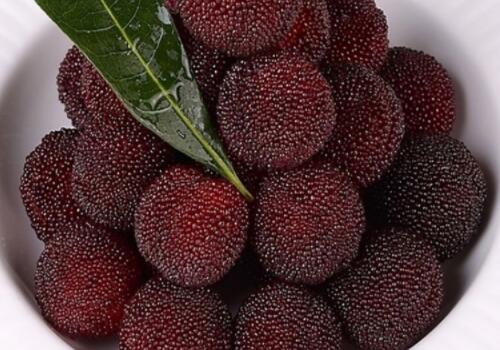
Is Dongkui bayberry tasty?
Dongkui bayberry is very tasty.
1. Dongkui bayberry has large fruit and good flavor, and has won awards year after year. In 1998 it won the “Zhejiang Province High-Quality Agricultural Product Gold Award”, and in 1999 it also won the title of Famous Brand Product at the (Beijing) International Agricultural Expo, and from then on it became a hot-selling item on the market.
2. The fruit begins to ripen in early July. It was introduced to Xiajiang County, Jiangxi Province in the 1990s. At present, the maturity period of Xiajiang bayberry Dongkui bayberry in Xiajiang County is from late June to early July. Its fruit is as large as a table tennis ball, with an average vertical and horizontal diameter (diameter) of 3.66 cm-3.73 cm, and a single fruit weight of 22-25 g. The largest fruit weighs 50 g. Every 500 g of Dongkui bayberry generally has only 20 fruits, and at least 12 fruits. The average flesh column length is 1.15 cm. The flesh is thick, the flavor is rich, and the juice is abundant, with an edible rate of 94.8%. During the maturity period, the fruit does not easily drop, and the harvest period lasts as long as 10-15 days. It is relatively tolerant of storage and transportation, and the fruit is excellent both for fresh eating and for canning. Its 16 grafted progeny trees are also over 100 years old. In 1979, when Zhejiang Agricultural University was compiling "Introduction to Fruit Tree Cultivation", it named it “Dongkui” and listed it separately as a variety.
3. Dongkui bayberry is in great market demand (and can also be exported to Southeast Asia), and its price is high (the local price is about 25 yuan/kg each year, 5 times more expensive than ordinary bayberry). Therefore, cultivating Dongkui bayberry yields multiple benefits at once, and has positive significance for developing mountain resources, greening barren hills, conserving soil and water, and increasing economic income in mountainous areas.
When is Dongkui bayberry planted?
Dongkui bayberry can be planted in autumn and winter, and planting from late February to mid-March is optimal. The planting holes are about 80 cm long and wide and about 60 cm deep. Each hole is given 50-100 kg of compost or 30 kg of poultry and livestock manure, or 5 kg of rapeseed cake or soybean cake, and 30-35 plants are planted per mu. After planting, do the stem-training work well, that is, cut the trunk short 25-30 cm above a plump bud.
What are the cultivation techniques for Dongkui bayberry?
I. Plot selection
Choose sloped land or gentle sloped land with deep soil layers, loose texture, and slight acidity, belonging to red loam or black loam, suitable for the growth of Dongkui bayberry, and build it into terraced fields, trench terraces or fish-scale pits for planting. The width of the terrace surface depends on the growth needs of Dongkui bayberry and is generally 4—6 m. Where the slope is steeper and it is difficult to dig terraced fields, fish-scale pits can be dug for planting.
II. Planting
1. Planting period: divided into spring planting and autumn planting. Spring planting is from early February to late March; autumn planting is from early October to early November. Generally, spring planting is the main method.
2. Digging holes and backfilling: dig the pits 1—2 months before planting. The specifications of the pits are 80 cm in length, width and depth. When backfilling, apply 15—20 kg of decomposed farmyard manure and 1 kg of phosphate fertilizer per pit as base fertilizer. When covering with soil, put the topsoil below and the subsoil above, then wait for planting.
3. Planting density: plant 30—45 plants per mu, with a row spacing of 5—7 m and a plant spacing of 4—5 m. Young trees can also be densely planted to obtain higher economic benefits earlier, and then transplanted later, in which case 50—60 plants are planted per mu.
4. Deep planting and firming the covering soil: because the scion part can grow its own roots and replace the rootstock roots, the sapling should be planted deeply up to the part with leaves (that is, bury both the trunk of the sapling and the leafless lower section of the main branches into the soil). This can reduce sun exposure and improve the survival rate after planting. After placing the sapling into the planting pit, spread the root system in all directions, cover with soil, then tread it firm with the foot, and then cover with loose soil, so that 3—5 leaves at the lower end of the main branches are buried.
5. Arranging pollinator trees: bayberry is dioecious, so when establishing the orchard, 0.1%—1% male plants should be arranged as pollinator trees.
III. Management
1. Shading and mulching: newly planted Dongkui bayberry in the same year has an underdeveloped root system and is easily killed by sun exposure. During the high-temperature and strong-sunlight period from July—September, cover with a shade net or branches for shade, and remove the shading material after entering October.
2. Training and pruning: young trees can be trained into a naturally open canopy with one trunk and three main branches. After planting, cut the trunk short at a height of 60—80 cm, and afterward select 3—4 vigorous branches with evenly distributed directions as main branches. The spacing between main branches is 15—20 cm, and the opening angle is 45°—60°. Overlong branches should be pinched or broken off. Dense, thin-weak and excessively vigorous branches should be appropriately thinned to ensure a solid tree framework, clear hierarchy, balanced growth and thick branches, which is conducive to the formation of side branches. After entering the fruiting stage, light pruning and light leaving should be used, and heavy pruning and short cutting should not be carried out. Dead branches, diseased and pest-damaged branches, weak branches and water sprouts should be cut off, and weak fruiting branch groups can be retracted and renewed. The general requirement is to make the branches of the entire canopy evenly distributed from top to bottom and on all sides, with ventilation and light transmission. Specifically, when retaining branches, the upper part should be sparse and the lower part dense; the fruiting branch groups of the main branches and secondary main branches should be short and small in the upper part and thick and long in the lower part, so that the inner and outer shoots are robust, the green leaf layer is thick, and fruit thinning is noted at the beginning of fruiting.
3. Soil improvement and fertility cultivation: for high quality and high yield, fertilizer must be appropriately increased, mainly organic fertilizer, followed by potassium fertilizer, while phosphate fertilizer should be controlled. For young trees, attention should be paid to improving the soil, with appropriate mid-season plowing and deep turning throughout the year, and removal of miscellaneous tree roots and weeds around the canopy. As the canopy increases, expand the holes and deep-turn year by year, and apply barnyard manure and plant ash to cultivate soil fertility and promote the development of mycorrhizae. Within 2 years after planting, apply topdressing once each before the spring, summer and autumn shoots sprout, each time about 2 kg of livestock manure urine per plant or 0.1 kg of urea, plus 0.2 kg of potassium fertilizer diluted with water and poured on, but urea and potassium fertilizer must be applied separately. For fruiting trees that have entered production, fertilize twice each year, that is, once after fruit harvest and once before spring sprouting. If conditions permit, apply one additional quick-acting fertilizer during the young fruit stage. According to the standard for high-yield trees, the annual fertilizer amount is (per plant): 50 kg of barnyard manure, 30—40 kg of plant ash, and no more than 0.3 kg of phosphate fertilizer. Fertilizing after fruit harvest is especially important, in order to restore tree vigor, facilitate flower bud differentiation, and provide conditions for high yield and good quality the following year. This fertilization should account for 60% of the whole year, and spring fertilizer about 40%.
4. Pest and disease control: (1) Brown spot disease: red-brown spots appear on the leaves, causing a large amount of leaf drop. At the early stage of spring and summer shoot sprouting, spray 70% thiophanate-methyl 800 times or 50% carbendazim 1000 times liquid for control. (2) Leaf roller moth: occurs from May—August, and can be controlled with 50% fenitrothion 1000 times or 20% fenvalerate 4000 times liquid. (3) Bagworm and oyster-shell scale, can be controlled with 40% omethoate 1000 times or 40% methidathion 1500 times liquid.