Summer Peanut Sowing Time and Key Points of High-Yield Cultivation Techniques
Summer peanuts have become the first choice of many growers today because of their high economic returns, easy cultivation and management, and benefits for land recycling. So when should summer peanuts be sown? What are the high-yield cultivation techniques?
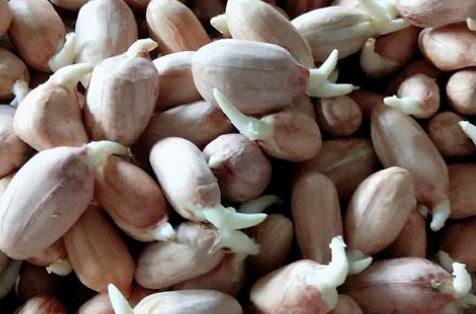
When are summer peanuts sown?
Summer peanuts are generally sown after the wheat harvest. This not only solves problems such as poor sowing quality in wheat-intercropped peanuts, but also facilitates mechanized wheat harvesting and mechanized peanut sowing, and makes it easier to prepare the land, fertilize and sow peanuts, saving time and labor. The best sowing period for summer peanuts begins in early June, and the earlier direct-sown summer peanuts are sown, the higher the yield. Therefore, after the previous crop is harvested, the land should be prepared in time, and sowing should be done as early as possible, no later than June 20.
Peanut sowing conditions and early preparatory work must not be overlooked. Keep the following points in mind:
1. Sun-dry the seeds in the shell for 2 to 3 consecutive days; after sowing, they germinate quickly and emerge evenly. Choose a sunny day, spread the unshelled peanuts on the drying yard at 10 a.m. to a thickness of about 6 to 7 cm, gather them up at around 4 p.m., and sun-dry them for 2 to 3 days depending on the condition of the seeds.
2. Peanuts should not be shelled too early; it is best to do this about one week before sowing.
3. Treating seeds with a seed dressing agent before sowing can effectively prevent peanut stem rot, root rot and other seedling-stage diseases, and can control soil-dwelling pests, seedling-stage aphids, and seedling-stage diseases such as root rot and stem rot.
4. When sowing peanuts, the soil moisture reserve must be sufficient. If moisture is insufficient, irrigate before sowing to create adequate moisture, so as to favor emergence and seedling growth. The suitable moisture level is 60% to 70% of the soil's maximum water-holding capacity; generally, it should be at the stage where soil forms a ball when squeezed in the hand and breaks apart when released. Sowing depth is generally about 5 cm.
5. In addition, rational close planting is crucial. Direct-sown summer peanuts should have their planting density appropriately increased, relying on the population to raise peanut yield. When sowing two seeds per hole, the planting density is 12,000 to 13,000 holes per mu.
High-Yield Cultivation Techniques for Summer Peanuts
1. Site selection is the foundation, increasing fertilizer is the key
Because direct-sown summer peanuts have a short growth period and a concentrated period of nutrient uptake, plots of loam, sandy loam or river silt soil that are fertile, loose in the soil layer, and have good drainage and irrigation conditions should be chosen for planting. Following the peanut's nutrient uptake pattern, and in conjunction with stubble clearing and ridge formation, fertilizer should be applied to the field all at once.
Many years of practice have proven that for a yield of 300 to 400 kg of peanuts per mu, the fertilizer application rate is: high-quality barnyard manure 1000 to 2000 kg, ammonium bicarbonate 20 to 30 kg, superphosphate 45 to 50 kg, potassium chloride 10 to 15 kg, and borax 1 to 2 kg. Where conditions permit, additional zinc fertilizer, calcium fertilizer, etc. may be applied, so as to fully meet the nutrient needs of summer peanuts during their development.
2. Select high-yield, high-quality peanut varieties and plant at a suitable density
Direct-sown summer peanuts are sown in early June and harvested in mid-October. The accumulated temperature above 0°C can basically reach 3100 to 3200°C, so not only early and medium-maturing varieties but even late-maturing varieties may be planted. At present, the varieties mainly selected are: Luhua No. 1, Luhua No. 11, Luhua No. 12, 8130, etc. Because direct-sown summer peanuts have few branches and grow and develop quickly, the density should be appropriately increased. For large-pod varieties such as Luzi 101 and 8130, the sowing density is about 9000 hills per mu; for medium-seed varieties such as Luhua No. 11, 10,000 to 11,000 hills per mu; for small and medium-seed varieties such as Luhua No. 12, about 2000 hills per mu can be sown.
3. Plastic film mulching, sowing in time with sufficient soil moisture
Plastic film mulching cultivation of summer peanuts is a very important yield-increasing measure. It not only warms the soil and preserves moisture, but also increases the rate of double-kernel pods and full pods, generally increasing yield by 10% to 20%. According to experiments, for sowing from June 20 to July 30, mulched plants averaged 50.1 flowers per plant, 12.6 more flowers per plant than unmulched plants, and flowered 3 to 5 days earlier, with the final flowering stage 9 days earlier. Over the whole growth period, the accumulated temperature at 5 cm soil depth was 3098.5°C with mulching, 173.8°C more than the 294.7°C without mulching, an average daily increase of 1.59°C. In terms of economic traits, mulched plants set 12.8 pods per plant, an increase of 1.2 pods over the 11.6 pods per plant of unmulched plants, and the double-kernel pod rate increased by 15.3%, the full-pod rate increased by 12%, and the shelling percentage was 2.4% higher.
As for the sowing time of summer peanuts, it is better early than late. In terms of method, three forms coexist: sowing first and then mulching, mulching first and then sowing, and sowing first and then mulching promptly after full emergence. Sowing first and then mulching is suitable for potato-summer peanut or garlic-summer peanut sowing areas, because at this time the temperature is not yet very high and there are no crop residues to puncture the plastic film. After "Lixia" (the Beginning of Summer), sowing should adopt the method created in mulching cultivation of sowing first, mulching after emergence, and at the same time guiding the seedlings out through the film. Its advantages are:
① Reducing the pressure of the busy "three summers" farming season
② Making it easier to irrigate peanuts against drought, ensuring full emergence from a single sowing
③ Emerging about 2 days earlier than the other two methods
④ Increasing yield by 6.04% compared with sowing first and then mulching under the same conditions.
However, this method must be carried out promptly after the peanuts have fully emerged, so as to avoid the flood season arriving and causing waterlogging in the field, making it impossible to enter the field to lay the film.
4. Vigorously carry out mid-season control and late-season protection to ensure a full harvest
Because summer peanuts grow and develop under conditions of high fertility, high temperature and high humidity, their growth can easily cause the population to become dense and shaded and to grow excessively and lodge, thereby affecting peanut yield and quality. Therefore, at the stage when summer peanuts' vegetative growth and reproductive growth proceed together (late July), if the main stem height reaches more than 40 cm, spraying to suppress growth should be carried out immediately.
The method is: use 50 g of a highly effective strong retardant per mu, dilute with 50 kg of water, and on a sunny day spray evenly on the plant growth points, to control top growth and promote lower growth.
Peanut leaf spot and other diseases are among the main diseases in the late stage of peanuts. Use 50% mancozeb at 300 to 500 times dilution alternately with 1:2:200 Bordeaux mixture to control peanut leaf spot and also control spot disease, spraying once every 10 to 15 days, for 2—3 consecutive sprays.
During the peanut growing period, the Jinbanke peanut high-yield package can also be used. The first application at the seedling stage can promote rooting and growth, prevent dead seedlings and rotten roots, and prevent peanut root rot, southern blight and other diseases; the second application when plant height is 35-40 cm can effectively control excessive growth, promote pegging, promote pod setting, and prevent peanut stem rot, leaf spot, southern blight and other diseases. Moreover, the growth-control components in the three applications of the Jinbanke peanut package are prohexadione calcium and uniconazole, which can effectively prevent premature aging and do not affect the next crop; while peanut growth-control products on the market are generally paclobutrazol. Spraying the third application of the Jinbanke peanut high-yield package before harvest can promote fruit expansion, prevent peanut premature aging, and prevent peanut leaf spot, rust and other diseases.
The insect pests affecting summer peanut yield increases are mainly aphids, white grubs, cotton bollworms, etc. When sowing, using 10% phorate to cover the seed can control damage to peanuts by aphids and white grubs in the early and middle periods. In the middle and late periods, if pests such as aphids and cotton bollworms occur, 40% omethoate or 50% monocrotophos at 1500 to 2000 times dilution can be used for control, to ensure a bumper peanut harvest.
Fertilization Techniques for Summer Peanuts
It is understood that for every 100 kg of peanut pods produced, the amounts of nitrogen, phosphorus and potassium required are 5.5 kg, 1.1 kg and 3.5 kg respectively, with a nitrogen, phosphorus and potassium ratio of 5:1:3. According to the target yield of peanut production, and through soil testing, the amounts of nitrogen, phosphorus and potassium supplied by the soil are known, and then the amounts of nitrogen, phosphorus and potassium fertilizers that need to be supplemented are determined. At the same time, the fertilizer application rate should also be reasonably adjusted and determined according to climatic conditions, soil fertility status and peanut varieties, to ensure precise nutrient supply and reduce waste from excessive fertilization and its impact on the environment. In view of this year's climatic conditions, soil conditions and variety layout in summer peanut production areas, the editor suggests:
First, for plots where the wheat-season fertilizer application was too high, wheat yield was not high due to climate effects, and more fertilizer residues remain, peanuts should appropriately reduce fertilizer, with nitrogen and phosphorus application reduced by 10% to 15% compared with last year or conventional fertilization, making full use of the residual effect of wheat fertilizer.
Second, for plots where peanuts have been continuously cropped for many years, nutrient balance is generally poor and soil-borne diseases are relatively serious. It is recommended to apply organic or biological soil conditioners for soil improvement treatment, and to pay attention to the application of calcium, sulfur and trace elements, so as to achieve balanced nutrient supply.
Third, farmers and plots newly planting peanuts should carry out soil testing and fertilizer application.
Farmers are reminded that for peanut continuous-cropping plots, attention should be paid to scientific seed dressing of peanuts to control soil-dwelling pests and soil-borne diseases and ensure full emergence from a single sowing; for plots newly planted with peanuts, where soil-dwelling pests are relatively light, rhizobium seed dressing can be adopted to reduce nitrogen fertilizer application and give full play to rhizobial nitrogen fixation. Suitable microbial fertilizers can also be selected for application on peanuts to promote soil activation and nutrient release.