Yulan Magnolia (Magnolia denudata) Deciduous Tree: Planting, Harvesting, Blooming Period and Cultivation Techniques
Yulan magnolia (Magnolia denudata) has very high ornamental value; it is an ideal flower form for beautifying courtyards. Also known as white yulan, spring-watching flower, and yulan flower. So when is yulan magnolia (Magnolia denudata) generally planted and harvested? When does it bloom? How long is the blooming period? What are the cultivation techniques? According to Magnoliaceae information, yulan magnolia is also called spring-watching flower, yulan flower, and generally blooms in early spring in March, with a blooming period of about 10 days.
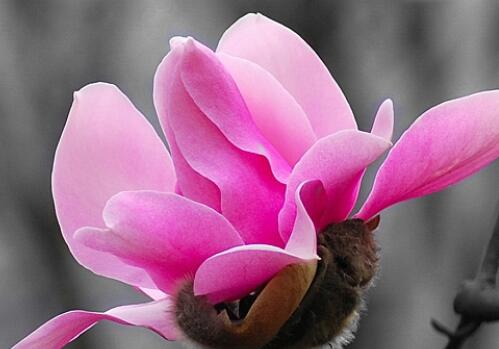
When is yulan magnolia (Magnolia denudata) generally planted and harvested?
Planting:
1. The sowing time for yulan magnolia is generally from mid to late February, and at the latest no later than Qingming. Of course, because the climate varies across the country, and temperatures after Spring Festival can be high or low, southern regions such as South China can start earlier, while northern regions such as North China and Northeast China need to delay somewhat. The specific sowing time should still refer to local climate conditions.
2. Division propagation: around the Beginning of Spring, dig out the root suckers of old plants and transplant them separately. Water to preserve soil moisture, so as to promote survival.
3. Cutting propagation: in summer.
Harvesting:
1. Yulan magnolia is generally best harvested when the buds are about to open; the petals do not fall off easily and the fragrance is strong.
2. Seedling-grown yulan magnolia begins to flower 5-7 years after transplanting. Generally, unopened flower buds are collected from December to February of the following year. After the collected buds are dried in the sun, they can be sold as medicinal material. The general yield is 150-250 kg per mu.
What are the cultivation techniques for yulan magnolia?
1. Yulan magnolia prefers a warm climate and a sunny environment. It is slightly cold-tolerant and can overwinter outdoors at -15°C. It has low requirements for soil and can be cultivated on barren hills and wild ridges, in front of and behind houses, along both sides of roads, and on both banks of rivers. It is better to cultivate it in sandy loam with deep, loose, and fertile soil. Low-lying land, heavy clay, and saline-alkali land are not suitable for cultivation.
2. Choose a field with high terrain and good drainage, and plough and harrow it carefully. In combination with land preparation, apply sufficient base fertilizer: 300 kg of farmyard manure, 20 kg of urea, and 50 kg of phosphate and potassium fertilizer per mu. Then make raised beds 1.5 m wide and wait for sowing.
3. Yulan magnolia is propagated by seed. It can also be propagated by cuttings, division, and grafting.
(1) Seed propagation: before sowing, first mix the collected seeds with coarse sand and rub them repeatedly to remove the red fleshy seed coat. Then carry out sand storage: mix the seeds with moist sand at a ratio of 1:3, spread them evenly in a pre-dug pit, cover with weeds, and maintain humidity. When the seeds show white in the following spring, sow them in rows at a row spacing of 25 cm on the prepared bed surface, and water to preserve soil moisture so as to promote survival. After the seedlings emerge evenly, strengthen field management, and after 1-2 years of cultivation, they can be transplanted.
(2) Cutting propagation: in summer, select robust young branches 1-2 years old, take the middle and lower sections, and cut them into 20 cm long cuttings; each section needs 2~3 nodes. Cut the lower end into a horse-ear-shaped slant, tie every 50 into a bundle, soak the lower part in a 500 ppm rooting powder solution for 15 seconds, then insert them at a row and plant spacing of 20×7 cm into the prepared bed surface, and water to preserve soil moisture so as to promote survival. After the seedlings emerge evenly, strengthen field management, and after 1-2 years of cultivation, they can be transplanted.
(3) Division propagation: around the Beginning of Spring, dig out the root suckers of old plants and transplant them separately. Water to preserve soil moisture, so as to promote survival.
(4) Grafting propagation: the rootstock uses 1-2 year old seedlings of purple magnolia or white yulan; the scion uses 1-year-old branches from excellent mother plants that have already flowered and fruited. In late May, use shoots with xylem, and adopt bud grafting or T-shaped bud grafting; grafting from 2-5 pm gives a high survival rate. After survival, remove the binding rope. After new buds grow, carry out pruning and clipping, wipe off rootstock buds, and manage as usual. Grafting propagation is the main way to achieve early and high yields of yulan magnolia. Transplanting: in spring and autumn, plant yulan magnolia seedlings at a row and plant spacing of 3×2 m on the prepared bed surface, and water to preserve soil moisture so as to promote survival.
4. After yulan magnolia seedlings emerge evenly or after transplanting survives, attention should be paid to intertillage and weeding. Water promptly in dry weather and drain immediately in rainy weather. After transplanting, topdress twice each year. The first time is before spring sprouting, with 25 kg of urea and 50 kg of phosphate and potassium fertilizer applied per mu. The second time is in winter, spreading a layer of farmyard manure on the bed surface. In order to increase income, in the first few years, annual crops such as melons, fruits, vegetables, and medicinal materials can be appropriately intercropped to achieve the goal of using short-term crops to support long-term ones. During the growth of yulan magnolia, shaping and pruning should also be carried out to train the tree into a sparse layered form or a natural open-center high-yielding tree shape.
5. Yulan magnolia has few diseases; if found, they can be controlled by conventional methods. The main pests are bagworms, stinging caterpillars, and wood borers. For control, spray with 500-fold phoxim solution mixed with fenvalerate.