Traditional Famous Flower: What to Do When Osmanthus Leaves Turn Dry and Yellow, Why It Cannot Be Planted at Home, and How to Care for It
Osmanthus is the collective name for many trees in the Chinese genus Osmanthus, also known as rock osmanthus. It is an evergreen shrub or small tree of the Oleaceae family, with a great many horticultural cultivars. So do you know what to do when osmanthus leaves dry up and turn yellow during cultivation? Why can't it be planted at home? How can it grow well?
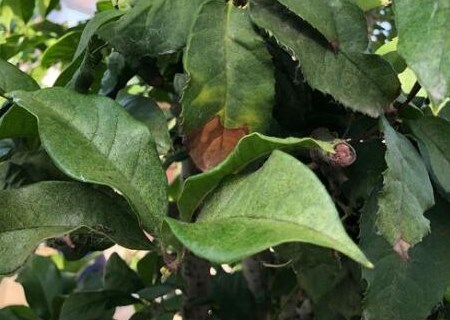
I. What to Do When Osmanthus Leaves Turn Dry and Yellow
1. Neither Too Much nor Too Little Water
The soil in which osmanthus is planted must have good air permeability, and it is very afraid of excess water. For osmanthus care, it is best not to water until the soil is dry, and each time you water, you must water thoroughly. If you water too much, the roots of the osmanthus will turn black and rot, and the tips of the leaves will wither crisp and dry, then the whole leaf will gradually wither, turn yellow and drop off.
2. Sunlight Exposure Is Very Important
Osmanthus is a plant that loves sunlight and cool regions. It needs 6 to 8 hours of sunlight every day, and the temperature of the area where it is planted must not be lower than 14°C. In late summer and early autumn the temperature should remain at 24 to 28°C, and in winter the temperature should be above 0°C in the wind.
3. Adapting to Temperature Makes It Grow Tall
① In winter, osmanthus should be placed in a room with abundant light; this not only lets it pass through winter safely, but also lets it steadily pass through the dormant period. The temperature is best kept at 5 to 8°C, otherwise it will cause the bud and leaf sprouting period to come early and produce a series of bad effects!
② The most suitable temperature for growth should be 25 to 30°C, while the flowering period is in the crisp autumn. Keeping the temperature at 15 to 20°C is best. Below this temperature the flowering period will be delayed; above this temperature the flowering period will come early and shorten the viewing period.
4. Air Circulation Keeps It Free of Disease
Through the free flow of air, osmanthus not only increases the humidity around the pot, but also uses the air to circulate away all the bacteria near the leaves, making it less susceptible to bacterial infection.
5. Getting Nutrients Makes It Strong
Osmanthus is also a delicate plant, and a moment of negligence may make it sick. So in normal times we can provide it with some potassium or decomposed propagation fertilizer, letting it gradually raise its immunity, giving it a kind of resistance to external pathogens, and letting it grow strong and healthy.
As long as you pay attention to the above points, the osmanthus at home will certainly flourish more and more!
II. Why Osmanthus Cannot Be Planted at Home
The idea that osmanthus cannot be planted basically comes from what the old sayings say.
The Classic of Yin and Yang Dwellings says: "Osmanthus in the courtyard, ghosts return outside the house." In ancient and modern times the osmanthus tree has been regarded as an omen of misfortune in the home. It also says: "Osmanthus tree before the gate, a noble person stands within the gate." So osmanthus is not beneficial to plant inside the gate; if planted in front of or behind the gate it is an auspicious sign, but if planted inside the gate and courtyard it leads the evil spirits and imps into the courtyard, inauspicious and unfavorable, and often invites quarrels and disputes.
Although this is a superstitious saying, it just depends on whether a person believes it or not.
Why it cannot be planted at home:
Osmanthus can be planted at home; whether it cannot be planted depends on whether you follow superstition.
Osmanthus is also known as muxi, rock osmanthus and laurel. It is an evergreen shrub or small tree of the Oleaceae family. There are golden osmanthus, silver osmanthus, red osmanthus, laurel and so on. Osmanthus is one of China's ten traditional famous flowers, an excellent garden tree species that combines greening, beautification and fragrance, and is both ornamental and practical.
Osmanthus likes warmth and has strong stress resistance; it tolerates both high temperatures and fairly low temperatures. Osmanthus prefers sunlight but also tolerates shade. Under full sunlight its branches and leaves grow luxuriantly and it blooms profusely; in shady places its branches and leaves grow sparse and its flowers are few. If potted indoors in the north, special attention must be paid to having sufficient light, to favor growth and the formation of flower buds.
Osmanthus planted at home is best placed on a balcony or in a courtyard in a spot with more sunlight, as this favors its normal growth and its flowering.
III. How to Make Osmanthus Grow Well
1. Water at the right time: For potted osmanthus, grasp the principle of not watering until dry and watering thoroughly when you do, but spray the leaf surface with clean water once a day. After Qingming Festival, move the osmanthus into the open air and water it thoroughly once. In summer, water in the morning and evening; in winter, water around noon, so that the water temperature is close to the soil temperature and there is no sudden cold or sudden heat. Be careful not to let water accumulate.
2. Fertilize reasonably: Osmanthus is grown mainly for its flowers, so it should be given sufficient fertilizer. When new shoots emerge, apply nitrogen fertilizer 1 to 2 times; before flower bud differentiation and flowering, apply mainly phosphorus fertilizer. Before fertilizing, the pot soil should be slightly dry, and it is best to loosen the soil first to facilitate fertilizer absorption. On the day after fertilizing, water once.
3. Repot and change the soil: Osmanthus should be repotted and given new soil once every 2 to 3 years. Cut away part of the old roots and dead roots, line the bottom of the pot with a layer of river sand or vermiculite to facilitate aeration and drainage, and place decomposed cake fertilizer as base fertilizer. The soil must be pressed firm when filled in. The soil ratio is not very strict; usually it can be made up of garden soil, composted manure and river sand, each accounting for 1/3.
4. Pruning and shaping: Osmanthus shaping generally adopts a method combining bending and tying with pruning, and is best done after autumn. For plants with a very poor tree shape, the branches of the entire top can be cut off at 2/3 or 3/4. For plants whose branches are too dense, thinning pruning should be carried out. After flowering, leggy branches, dead branches, diseased and pest-damaged branches, and densely growing weak branches should also be cut off.
5. Wintering management: For osmanthus overwintering, the room temperature should be kept at 0 to 5°C and the relative humidity at 50 to 80%. In winter, a cold room should have good light; especially before the buds begin to sprout in early spring, sufficient sunlight is even more required. The following year, after Grain Rain, arrange for the potted osmanthus to be moved out of the room. After moving out, first place them together in a wind-sheltered, sunny spot outdoors so they gradually adapt to the outside environment.
6. Disease control: Common diseases of osmanthus include leaf spot, sooty mold, algal leaf spot, root rot, iron deficiency and so on. Leaf spot, sooty mold and algal leaf spot can be controlled by spraying 0.5 Bordeaux mixture or 5% carbendazim 500 to 1000 times solution. For root rot, care should be taken to keep the soil loose and well aerated, and not to let water accumulate.
7. Pest control: Common pests of osmanthus include sawflies, whiteflies, mites, long white scale insects, yellow stinging moths and so on. Sawflies, whiteflies and mites can be killed by spraying 40% dimethoate 1500 to 3000 times solution. For long white scale insects, besides manual brushing off, during the first and second generations of nymphs they can be killed by spraying 40% omethoate 1000 times solution or 40% fenitrothion 500 times solution.