Is the Chlorophytum comosum 'Picturatum' (spider plant) of the sea grape family toxic? Detailed explanation of flowering, overwintering and cutting methods
Chlorophytum comosum 'Picturatum' prefers a warm and humid environment and can grow normally in both full sun and partial shade, so is it toxic? Does it flower? How to overwinter it? What are the cutting methods? According to information, scientists have found that spider plants have a very strong ability to absorb and purify carbon monoxide, nitrogen peroxide and other volatile gases harmful to human health produced by household stoves, gas, paint and smoking, can effectively remove indoor polluting gases and release oxygen.
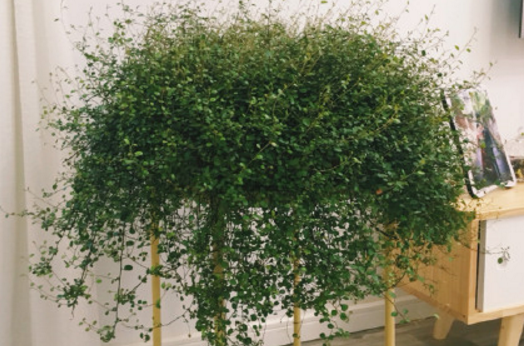
I. Is Chlorophytum comosum 'Picturatum' toxic?
Scientists have found that spider plants have a very strong ability to absorb and purify carbon monoxide, nitrogen peroxide and other volatile gases harmful to human health produced by household stoves, gas, paint and smoking, can effectively remove indoor polluting gases and release oxygen. Moreover, this function of the spider plant ranks among the best among flowers and plants. Therefore, if one or two pots of spider plants are placed indoors, within 24 hours they can completely "eat up" the harmful gases in the room. Not only that, gases such as carbon monoxide, after decomposition by the spider plant's roots in the pot, will instead become the decomposition at the spider plant's roots, and will also become nutrients needed for the spider plant's growth, promoting lush branches and leaves. This can be described as "both people and flowers benefit". It can be seen that in purifying indoor air, the spider plant plays an indispensable role, and is fully worthy of being people's close friend!
Chlorophytum comosum 'Picturatum' is a plant very suitable for indoor cultivation. It can absorb large amounts of harmful gases; it is the best purifier of indoor air pollution, playing an air-purifying role; it can also absorb methanol and formaldehyde.
II. Does it flower?
1. The main function of Chlorophytum comosum 'Picturatum' is ornamental. Many people grow it to enjoy its foliage and form, because its leaves are small and its plant shape is attractive, with good foliage and form viewing functions. But some people who have grown Chlorophytum comosum 'Picturatum' for a long time may not necessarily have seen it flower, and they may even think it only grows leaves and does not flower. In fact, Chlorophytum comosum 'Picturatum' can flower, it is just that its flowering is not very common.
2. The flowers of Chlorophytum comosum 'Picturatum' are very small, light green in color, and have no fragrance. The flowers are very small and dainty, much smaller than the leaves, and cannot be seen at all without careful observation. Therefore, the flowers of Chlorophytum comosum 'Picturatum' actually have little ornamental value, and in home cultivation the main focus is still on the foliage. However, after flowering it can produce seeds and can also be propagated by sowing, though this is not commonly used.
III. How to overwinter it?
Habits and overwintering
First, let us understand its growth habits: during its growth period it needs plenty of sunlight, but the rather intense sunlight of summer should still be properly avoided, otherwise it will be sunburned; the best survival temperature is between 20°C and 24°C, and too high a temperature will also gradually turn its leaves yellow; proper air circulation is also somewhat beneficial to its growth.
Required temperature
In winter, when the temperature drops to 5°C, it will freeze and damage the plant, and may even cause the plant to die. However, when keeping it indoors, also be careful to keep it away from the air outlets of heating equipment.
Required sunlight
Even in winter it should be given proper sun exposure. If it cannot be in the sun all day, you can place it in a sunny spot for a few hours each day for a while, otherwise its leaves will gradually fade from their original color.
Required water
Spring and autumn are its growing seasons, and the soil should be kept moderately moist, but in late autumn, the amount of watering should be gradually controlled to prepare in advance for winter. In winter, the soil should just be kept slightly dry, and waterlogging must absolutely be avoided.
Required nutrients
Likewise, after fertilizing in late autumn, no fertilizing is needed throughout the winter.
Precautions
The south is relatively fine, mainly the north. Indoor conditions in the north are relatively warm, but air circulation is poor, so when placing it, try to choose a position with better air flow.
IV. What are the cutting methods?
1. Cutting propagation time for Chlorophytum comosum 'Picturatum'
When propagating Chlorophytum comosum 'Picturatum', multiple methods can be chosen, and cutting propagation is one of them. When cutting Chlorophytum comosum 'Picturatum', spring cutting, summer cutting and autumn cutting are better.
2. Selection of cuttings for Chlorophytum comosum 'Picturatum'
When cutting Chlorophytum comosum 'Picturatum', choosing suitable cuttings is very important.
The main requirement is that the branches of Chlorophytum comosum 'Picturatum' are substantial, and the length is relatively long, around 5——10cm.
When cutting the cuttings, choose young branches, preferably branches with terminal buds, then remove part of the leaves at the lower end, keeping only a few leaves.
3. Specific cutting methods for Chlorophytum comosum 'Picturatum'
After the cuttings are prepared, cutting can be carried out. Choose a round flower pot with a diameter of about 7.5cm for cutting, and the cutting medium is generally a breathable mixed soil. Usually multiple branches can be cut in one flower pot. Insert the branches into the soil, and the remaining branches should be cut in order from the center outward.
For Chlorophytum comosum 'Picturatum' cuttings, generally cutting in spring and summer results in faster rooting, and in about 2——3 weeks, roots can grow. However, the growth of Chlorophytum comosum 'Picturatum' is relatively slow, so when cutting, choose a small flower pot, and it is best to fill the entire flower pot with cuttings.
Once Chlorophytum comosum 'Picturatum' begins to grow, some fertilizer can be applied to promote growth.