Detailed Guide to Winter Indoor Care Methods and Uses of Cayratia japonica (Vitaceae)
Cayratia japonica is a sun-loving plant that is drought-tolerant, heat-tolerant, and also slightly shade-tolerant, requiring good drainage and sunlight. So how do you care for Cayratia japonica in winter? Can it be grown at home? What uses does it have? According to available information, when planting Cayratia japonica, it is best to choose soil that has water-retention capacity but does not become waterlogged. The soil should have some fertility, be slightly moist, and be a sandy soil rich in organic matter.
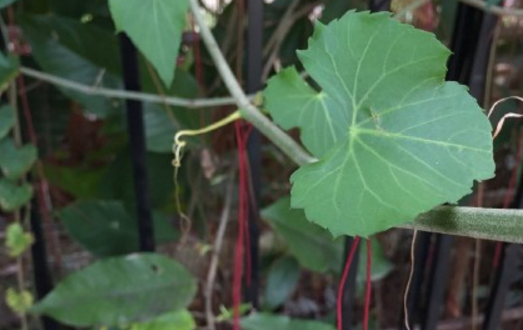
I. How do you care for Cayratia japonica in winter?
Light and temperature
Cayratia japonica is a sun-loving plant, so light must be sufficient. If conditions are suitable, Cayratia japonica can be given full sun. The suitable temperature range for its growth is between 22°C and 30°C, and it is relatively heat-tolerant. In winter, the temperature must be maintained, because Cayratia japonica loses its leaves in winter, and the temperature must not be lower than 10°C. Cold-protection measures should be taken when necessary.
Soil
When planting Cayratia japonica, it is best to choose soil that has water-retention capacity but does not become waterlogged. The soil should have some fertility, be slightly moist, and be a sandy soil rich in organic matter.
Watering and fertilizing
Cayratia japonica has a relatively high water demand, but it can also tolerate drought. Watering is generally done once every 1-2 days in summer and once every 2-3 days in winter. As for fertilizing, do not apply too much fertilizer; applying a light fertilizer once every 2-3 months is enough. In addition, during the plant's growing period, some chemical fertilizer can be applied to promote growth.
Propagation methods
The propagation of Cayratia japonica is mainly through water culture and cuttings. Water culture is relatively quick and can be done year-round, and cuttings are also very quick.
Precautions:
Pests and diseases
Cayratia japonica has relatively few pests and diseases during its growing period, but sometimes anthracnose occurs, harming the young shoots and fruits of Cayratia japonica. It is necessary to ventilate frequently, manage water and fertilizer well, and spray medication for prevention and control.
Pruning and shaping
Cayratia japonica needs to be shaped into different forms based on different landscape uses. Sometimes, support structures need to be built, such as trellises and pergolas, to facilitate the growth of Cayratia japonica. When pruning, the main purpose is shaping, to make Cayratia japonica visually appealing. In addition, diseased branches, dead branches, and overly long branches of Cayratia japonica should be pruned away.
II. Can it be grown at home?
Cayratia japonica is a sun-loving plant that can tolerate drought and high temperatures, but it is not very suitable for indoor cultivation, because Cayratia japonica loves light and cannot tolerate shade; the stronger the light, the better. In addition, Cayratia japonica has very strong spreading ability, so it has relatively large space requirements for planting.
Precautions for indoor planting:
If you really like Cayratia japonica very much and want to grow it indoors, be sure to pay attention to the following points:
1. Choose a smaller Cayratia japonica seedling;
2. Plant it on a sun-facing indoor balcony or on a desk near the balcony;
3. When the branches and leaves of Cayratia japonica begin to spread outward, prune the branches and leaves frequently.
If you can strictly follow the above three points, it is still possible to grow it indoors.
III. What uses does it have?
1. Landscape uses of Cayratia japonica
Cayratia japonica can grow with thousands of hanging tendrils, so it can grow attached along walls. Wait, let me correct that: Cayratia japonica can grow with thousands of hanging tendrils, so it can grow attached to a wall, and in this way it will cover the entire wall, forming a green waterfall wall and increasing the wall's visual appeal.
Cayratia japonica can also grow along corridors, forming a green corridor that is beautiful and spectacular, adding a beautiful landscape. Cayratia japonica can be planted in park corridors or residential building corridors. It not only greens the corridor but also provides people with an ornamental and shaded place to rest.
2. Heat-insulation effect of Cayratia japonica
Cayratia japonica is also an excellent heat-insulating curtain. Because its branches are long and dense, it can block sunlight. If it is planted by a window, it will form a waterfall, both beautifying your window and helping you block sunlight and dispel heat.