Can Osmanthus Trees Be Planted in the Yard? Detailed Guide to Potting Methods and Uses
Osmanthus fragrance carries for ten li; osmanthus has bloomed recently, and walking down the street, the scent of osmanthus fills the whole street. I like it very much, and some people therefore want to plant osmanthus in their yard. So do you know whether osmanthus trees can be planted in the yard? What are the potting cultivation methods? What uses do they have?
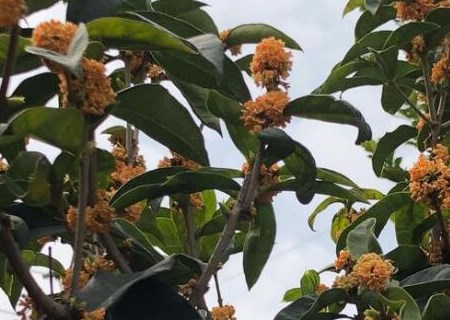
I. Can osmanthus trees be planted in the yard?
The idea that osmanthus cannot be planted basically comes from what old sayings state. The Classic of Yin and Yang Dwellings says: "Osmanthus in the courtyard, ghosts return outside the house." In ancient and modern times, osmanthus trees were all regarded as an omen of misfortune and disaster in the home. It also says: "With an osmanthus tree in front of the gate, noble people stand within the gate." Therefore osmanthus is not beneficial to plant inside the gate; if planted in front of or behind the gate, it is an auspicious sign, but if planted inside the gate and courtyard, it is inviting baleful spirits and little ghosts into the courtyard, which is inauspicious and unfavorable, and often attracts disputes and quarrels.
There is another saying that since the osmanthus tree is a flowering plant, it is best not to plant it too close to the house, and even more so not to plant it in the positions of zi, wu, mao, and you, because zi, wu, mao, and you are called the peach blossom positions. Plants that bloom have pollen, and pollen is something like a stimulant that excites hormones. Under the influence of the Earth's magnetic field and energy field, in a year when the peach blossom influence is strong, it can easily lead to family members having affairs. Although this is a superstitious saying, it depends on whether an individual believes it or not. Osmanthus can be planted at home; whether it cannot be planted depends on whether you follow superstition.
II. What are the potting cultivation methods for osmanthus trees?
1. Placement location for potted osmanthus trees:
Potted osmanthus bonsai is suitable to be placed in a warm, sunny spot, with appropriate shading in summer to avoid direct strong light. In areas north of the Yangtze River, it must be brought indoors to overwinter in winter, and a room temperature kept at 0-5°C is relatively safe. Around the time of Awakening of Insects the following spring, it can be moved outside.
2. Watering methods for potted osmanthus trees:
For potted osmanthus trees, the principle for the potting soil is not to water when it is not dry, and when watering, water thoroughly. Generally, in spring and autumn, water once every 3-4 days; in summer high temperatures, water once a day; in winter, water once every 7-10 days. In summer, water in the morning and evening; in winter, water around noon, so that the water temperature and soil temperature are close and do not cause sudden cold or heat that damages the root system. In autumn, watering should be moderate, and during the plum rain season, prevent the potting soil from becoming too wet or waterlogged.
3. Fertilization methods for potted osmanthus trees:
Potted osmanthus bonsai is mainly grown for its flowers, so it should be supplied with sufficient fertilizer. When new shoots are growing, nitrogen fertilizer can be applied 1-2 times to promote the growth of branches and leaves; before flower bud differentiation and flowering, phosphorus fertilizer should be the main type applied. Before fertilizing, the potting soil should be slightly dry, and it is best to first loosen the soil to aid fertilizer absorption. On the second day after fertilizing, water once. If using compost or manure, it must be fully decomposed before use. If applying the chemical fertilizer superphosphate, its concentration must not exceed 2%.
4. Pruning methods for potted osmanthus trees:
Shaping and pruning of osmanthus trees is suitable after autumn, cutting off overly strong upper branches to balance the tree's vigor. Overly dense branches should be thinned out, and diseased and weak branches removed, so that nutrients are concentrated and flowering is favored. Shaping and pruning combined with water and fertilizer management can improve the healthy growth of potted osmanthus and maintain a beautiful form.
5. Repotting potted osmanthus trees:
Potted osmanthus can be repotted and have its soil changed once every 2-3 years. The new pot should be slightly larger to facilitate root growth of the osmanthus. Along with repotting, cut off part of the old roots and dead roots, remove part of the old soil with a bamboo stick, replace it with loose, fertile new cultivation soil, and place decomposed cake fertilizer at the bottom of the pot as base fertilizer. The soil must be pressed firmly when filling, which can promote abundant flowers and lush leaves in osmanthus.
6. Pests and diseases to prevent and control in potted osmanthus trees:
Common diseases of osmanthus include leaf spot disease, sooty mold, algal leaf spot, root rot, and iron deficiency, and prevention and control should be carried out according to the disease situation.
① Leaf spot disease, sooty mold, and algal leaf spot can be controlled by spraying 0.5 Bordeaux mixture or 5% carbendazim 500-1000 times solution;
② For root rot control, attention should be paid to keeping the soil loose and breathable, and do not let it become waterlogged; if root rot is caused by fungi, drench the root area with 200-300 times solution of amobam.
③ Common insect pests of osmanthus include sawflies, whiteflies, mites, white peach scale, and yellow stinging moths. Sawflies, whiteflies, and mites can be killed by spraying 40% dimethoate 1500-3000 times solution. For white peach scale, besides manual brushing off, during the first and second instar nymph stages, spray 40% omethoate 1000 times solution or 40% fenitrothion 500 times solution to kill them.
III. What uses do osmanthus trees have?
1. Medicinal value of osmanthus
Osmanthus uses its flowers, fruit, and roots as medicine. Flowers are collected in autumn, fruit in spring, and roots in all four seasons, then dried separately. The flowers are pungent in taste and warm in nature, with the effects of dispelling cold, breaking stagnation, resolving phlegm, and relieving cough, and are used for toothache, cough and asthma with excessive phlegm, and abdominal pain with amenorrhea. The fruit is pungent and sweet in taste and warm in nature, with the effects of warming the stomach, calming the liver, and dispelling cold, and is used for deficiency-cold stomach pain. The root is sweet and slightly astringent in taste and neutral in nature, with the effects of dispelling wind-dampness and dispelling cold, and is used for wind-dampness muscle and bone pain, low back pain, and kidney deficiency toothache.
2. Dietary uses of osmanthus
Osmanthus can be made into cakes and candies and can also be used to brew wine. Common preparations include glutinous rice lotus root with osmanthus, osmanthus yellow lin pastry, osmanthus cake, goji berry osmanthus tea, purple sweet potato glutinous rice with osmanthus, osmanthus milk tofu, osmanthus fermented rice wine small round dumplings, braised osmanthus sausage, osmanthus almond tofu, and osmanthus red bean porridge. The ancients believed osmanthus was the chief of a hundred medicines, so wine brewed with osmanthus could achieve the effect of “drinking it gives a lifespan of a thousand years.” Osmanthus tea can nourish the face and beautify, soothe the throat, improve symptoms of excessive phlegm and cough, and treat duodenal ulcers, hives, stomach cold and stomach pain, bad breath, and blurred vision.
3. Landscape uses of osmanthus
Osmanthus is evergreen all year round, with luxuriant branches and leaves, blooms in autumn, and is richly fragrant, which can be called “dominating the three autumns and pressing down all flowers.” It is widely used in gardens, often as a landscape tree, with solitary planting, opposite planting, and also planting in clumps or groves. In classical Chinese gardens, it is often combined with buildings, mountains, and rocks, with clump-forming shrub-type plants placed near pavilions, terraces, towers, and chambers. In ancient Chinese poetry praising flowers, the number of works praising osmanthus is also quite considerable. It has been deeply loved by Chinese people since ancient times, and in Chinese culture it symbolizes loftiness, beauty, auspiciousness, friendship, loyal and upright scholars, upright and unyielding character, immortal friends, and immortal guests.