Cultivation and Propagation Methods, Benefits, Effects and Precautions of Glechoma hederacea (Ground Ivy) from the Lamiaceae Family
Glechoma hederacea grows in shaded and damp places such as forest edges, under sparse woods, in grasslands and beside streams, so what are the cultivation methods and precautions for Glechoma hederacea? What benefits and effects does it have? How is it propagated? According to available information, when cultivating Glechoma hederacea, the soil requirements are actually not high, and a loose, fertile sandy soil with good drainage is preferable; keep the soil moist and add an appropriate amount of base fertilizer to make the soil fertile.
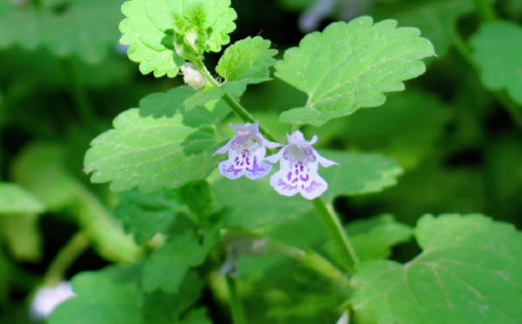
I. Cultivation methods and precautions for Glechoma hederacea?
Soil
When cultivating Glechoma hederacea, the soil requirements are actually not high, and a loose, fertile sandy soil with good drainage is preferable; keep the soil moist and add an appropriate amount of base fertilizer to make the soil fertile.
Light and temperature
Glechoma hederacea prefers a shaded and damp growing environment, and light should be appropriate; during care, giving it partial sun or about 40% sunlight will allow it to grow vigorously. It likes warmth, and the suitable temperature for growth is 15°C——28°C; it is averse to high temperatures, and the overwintering temperature in winter should not be lower than 5°C.
Watering and fertilizing
Glechoma hederacea likes moist soil, and during care it needs watering to keep it moist. As for fertilizing, in addition to applying sufficient base fertilizer at planting time, it also needs to be fertilized once every one to two months, and timely topdressing is also needed after harvesting in summer and autumn.
Propagation
Glechoma hederacea can be propagated by seed sowing, cuttings and division, carried out from spring to autumn. Sowing can be self-seeding, but growth is relatively slow, whereas with cuttings propagation, growth is relatively rapid.
Precautions:
Pests and diseases
Glechoma hederacea has few diseases, but during its growing period snails and slugs sometimes bite and eat the stems and leaves, so they need to be captured and killed in time to eliminate the pests.
Pruning
In fact, Glechoma hederacea has a very strong ability to grow and propagate and does not need pruning; whether in hanging baskets or as ground cover, its form develops naturally.
II. Benefits and effects
1. Choleretic effect
Glechoma hederacea is very beneficial to the human gallbladder and can promote bile secretion, bringing good benefits to the human body.
2. Diuretic effect
Someone once conducted experiments, and the experiments showed that in addition to its choleretic effect, Glechoma hederacea also has a diuretic effect.
3. Stone-dissolving effect
It can make urine acidic, thereby dissolving stones that exist under alkaline conditions.
It can promote diuresis and treat strangury; clear heat and detoxify; dissipate blood stasis and reduce swelling.
It can be used to treat: urinary stones and strangury; damp-heat jaundice; sores, carbuncles, swelling and pain; and traumatic injuries.
III. How is it propagated?
Glechoma hederacea is relatively easy to propagate. Because its creeping stems root at each node, propagation methods such as division, cuttings and layering are usually used.
Division
In spring and autumn, cut off the branches and vines that have adventitious roots and plant them directly.
Cuttings
Each year in spring from March to April, when the temperature reaches above 15°C, carry out cuttings: cut off the creeping stems as cuttings, keeping three to four nodes per section, with a length of about 15~20 cm. Use a seedbed for cuttings, or make your own seedling bed for cuttings; insert the cuttings into the prepared soil at a spacing of about 10 cm, with 2-3 nodes of the cuttings buried in the soil, then cover with a thin layer of soil and water an appropriate amount. About 1 week after cutting, they will root and survive.
Glechoma hederacea can be propagated by seed sowing and by creeping stem cuttings. However, because its seeds are very small and not easy to collect, and the seedlings also grow very slowly, cuttings propagation is mostly used.