When does the rose plum usually bloom, bear fruit, and ripen for market? Benefits and cultivation techniques
The Da Hong rose plum fruit is extra large, with an average fruit weight of 105.2 grams, crisp and refreshing, rich in juice, with a balanced sweet-and-sour flavor, aromatic, and of superior quality. So when does the rose plum usually bloom and bear fruit? When does it ripen for market? What are its benefits and effects? What are its cultivation techniques? From Rosaceae information we learn that the rose plum roughly blooms in April, and in Tai'an, Shandong, the fruit ripening period is mid-to-late August, with extremely high yields.
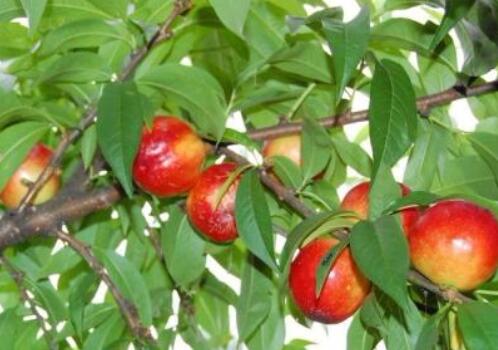
When does the rose plum ripen for market?
1. The rose plum ripens for market in mid-to-late August; the fruit is extremely resistant to storage and transport, with a shelf life of about 25 days; at 0-3°C, it can be stored for 3-4 months.
2. The tree vigor is moderate and slightly vigorous, with a relatively high budbreak rate; young trees can bear fruit well on long, medium, and short fruit branches alike. After entering the full fruiting period, fruiting occurs mainly on short fruit branches and bouquet spurs. The Da Hong rose plum has strong early fruiting and high-yield characteristics, with high and stable yields. Under normal cultivation and management conditions, young trees bear fruit in two years and reach high yield in three years, with an average yield per tree of 12.4 kg and a maximum yield per tree of 23.7 kg, equivalent to 14,000 kg per hectare. In the fourth year they enter the full fruiting period, with a maximum yield per tree of 67.2 kg. The Da Hong rose plum has a strong self-pollinating fruit-setting characteristic; when introduced for cultivation in China, it is still recommended to plant it in combination with other superior varieties. Suitable companion varieties include Black Amber, Victoria, and Santa Rosa. Harvest at the right time, with the suitable harvest period being when more than 85% of the fruit surface is colored and the top part of the fruit turns dark red. Pay attention to harvesting in stages.
What are the benefits and effects of the rose plum?
Plums are nutritious; the fruit contains sugar, trace protein, fat, carotene, vitamins B1, B2, C, calcium, phosphorus, iron, glutamine, serine, glycine, proline, threonine, alanine and other nutrients. Therefore, plums are suitable for the general population to eat, including pregnant women. However, they should be eaten in moderation; pregnant women with weak spleen and stomach should eat plums sparingly.
1. Promoting digestion: Plums can promote the secretion of gastric acid and gastric digestive enzymes, and have the effect of increasing gastrointestinal peristalsis; thus eating plums can promote digestion and increase appetite, making them a good dietary remedy for people with insufficient gastric acid, post-meal bloating, and constipation;
2. Clearing the liver and promoting diuresis: Fresh plum flesh contains various amino acids, such as glutamine, serine, glycine, proline, etc.; eaten raw, it is greatly beneficial for treating ascites due to cirrhosis;
3. Lowering blood pressure, promoting laxation, and relieving cough: Plum kernels contain amygdalin and a large amount of fatty oil; pharmacology has confirmed that it has a significant diuretic and blood-pressure-lowering effect, and can accelerate intestinal peristalsis, promote the excretion of dry stool, and also has a cough-relieving and phlegm-resolving effect;
4. Beauty and skincare. According to the Compendium of Materia Medica, plum blossoms mixed into facial cream have a very good beautifying effect, able to "remove facial blemishes and dark spots" and "make the face radiant," and are highly effective against tinea versicolor and dark spots on the face.
What are the cultivation techniques for the rose plum?
1. Planting
In spring, dig north-south planting trenches 1 m wide and 0.8 m deep. When digging the trenches, place the subsoil and topsoil separately. At the bottom of the trench, apply about 20 cm of wheat straw and corn stalks; per mu, apply 3,500-4,500 kg of farmyard manure and 75 kg of quick-acting special fertilizer. When backfilling, first mix the subsoil evenly with the farmyard manure and quick-acting fertilizer and fill it in, then fill in the topsoil, and then irrigate to settle it. After 3-4 days, plant the seedlings, and after planting, water lightly. Then put plastic bags over the saplings to prevent insect damage, and cover the tree basin with plastic film to retain moisture.
2. Fertilizer and water management
In the year of planting, at the end of May, apply 250 g of diammonium phosphate per tree; in early August, apply 400 g of potassium dihydrogen phosphate per tree; combined with pest and disease control, spray the leaves 2-3 times with 400-times photosynthetic micro-fertilizer. Starting from the second year, before the onset of winter each year, apply 20 kg of farmyard manure per tree; during the growing season, apply a fruit-tree special fertilizer once each before flowering, after petal fall, during fruit enlargement, and after harvest, for a total of 3 kg per tree over 4 applications, and irrigate thoroughly once after each fertilization.
3. Training and pruning
A free spindle shape is adopted, with the trunk set at a height of 45 cm. In the year of planting, in August-September, except for retaining the vigorous central leader shoot that emerges from the pruning-cut bud, pull the remaining new shoots to 75-85 degrees so that they grow spreading and extend in a curved manner; in mid-April of the second year, pull them again, lightly heading the main branches while retaining the outer buds, leaving the other branches unpruned and unharmed, and thinning out overly dense branches. After 2 years, the young tree can basically form a free spindle framework. Pruning is mainly thinning, removing weak slender branches, water sprouts, and competing branches.
4. Flower and fruit management
Methods such as placing bees during the flowering period and artificial pollination are used to increase the fruit-setting rate. When thinning flowers, remove late flowers and weak flowers; when thinning fruit, remove deformed fruit, twin fruit, and small fruit. Leave 3-4 fruits on long fruit branches, 2-3 fruits on medium fruit branches, and 1 fruit on short fruit branches.
5. Pest and disease control
Before budbreak, spray the whole orchard once with 3-5 degrees Baumé lime-sulfur mixture; before petal fall, spray 50% fenitrothion emulsifiable concentrate to kill the plum fruit sawfly; in early June, spray once with thiophanate-methyl or zineb to control plum bacterial shot hole disease and plum red spot disease; in winter, prune out diseased and mummified fruit, diseased branches, and diseased leaves, and destroy them centrally.