Safflower: Economic Benefits of 2018 Cultivation and Main Pests and Diseases and Their Control Methods
Safflower, also known as Honglanhua or Cihonghua, is mainly produced in Henan, Hunan, Sichuan, **, Tibet and other places. It invigorates blood and unblocks menstruation, dissipates blood stasis and relieves pain, and its flowering and fruiting period is from May to August. So what are the economic benefits of cultivating safflower in 2018? What are the main pests and diseases and their control methods?
What are the economic benefits of cultivating safflower in 2018?
1. Safflower, also known as Caohonghua or Chuanhonghua, is an annual or overwintering herbaceous plant. Its flower filaments are used medicinally and it is one of the important fine medicines in gynecology, with functions such as removing blood stasis and relieving pain. It mainly treats conditions such as promoting menstruation, amenorrhea, uterine pain caused by blood stasis, and coronary heart disease with angina pectoris. In addition to medicinal use, safflower is also a natural pigment and dye. The current market price across the country is 100 yuan-105 yuan/kg, and the outlook is promising, making it a good project suitable for development.
2. Safflower is a commonly used bulk variety in the national traditional Chinese medicinal materials market. Since China joined the World Trade Organization, it has been exported in even larger quantities to earn foreign exchange, and safflower oil and safflower seed oil are greatly favored by people around the world. In recent years, the planting area has been small, the contradiction between supply and demand has been prominent, while demand has kept increasing rather than decreasing. Therefore, in recent years the price of safflower has consistently remained high, with a smooth trend. In addition, safflower has the function of invigorating blood and dissipating stasis, and many technology companies have developed cosmetics such as freckle-removing creams and freckle-removing lotions, opening up a new market for the development and utilization of safflower.
What are the main pests and diseases of safflower and their control methods?
I. Main Diseases of Safflower and Their Control Methods
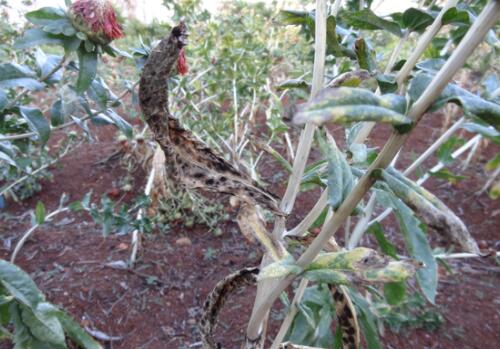
1. Anthracnose: From March to April, thornless safflower varieties with vigorous growth and high density, and fields that are damp with poor ventilation, are all prone to the disease, which harms stems, leaves and flower buds and directly affects yield. When diseased plants are found, remove them promptly and burn them in a centralized manner; before the disease occurs, spray with difenoconazole 2000-fold solution, or 45% prochloraz 800-1000-fold solution, which also controls black spot and sclerotinia.
2. Rust: It begins to occur from February to March, and low temperature and high humidity favor the disease, mainly harming leaves. Control methods: mix seeds with 15% triadimefon at 0.4% of the seed amount; at the early stage of the disease, spray with 15% triadimefon 500-fold solution and 40% imibenconazole 1500-fold solution; at the bud stage, control nitrogen fertilizer and increase phosphorus and potassium.
3. Fusarium wilt: It is severe when low temperature and continuous rain occur during the flowering period, and harms the whole plant. Control methods: clean the field, and when diseased plants are found, pull them out promptly and burn them in a centralized manner, and disinfect the disease holes with lime powder. Drench the roots with 1:1:120 Bordeaux mixture or 50% carbendazim 500-600-fold solution; select disease-free plants for seed preservation.
II. Main Insect Pests of Safflower and Their Control Methods
1. Safflower fruit fly: The larvae harm flower heads and young seeds. Control methods: clean the field; during the stage when flower buds show white, spray with agents such as cyromazine, acetamiprid, and banqianjing.
2. Stem borer: It is extremely harmful to inflorescences. Once the insect bores into the inflorescence, the flowers wither and fall, seriously affecting yield. Control methods: at the bud stage, spray with diflubenzuron 2-3 times for control.