Jerusalem cherry care methods and pruning techniques - is it suitable for growing indoors?
Jerusalem cherry (Solanum pseudocapsicum) likes sunlight and a warm environment; it is neither shade-tolerant nor cold-tolerant. So what are the care methods for Jerusalem cherry? How do you prune it? Can it be grown indoors? According to available information, Jerusalem cherry has low soil requirements and prefers loose, fertile, well-draining soil, ideally neutral or slightly acidic. Note that Jerusalem cherry is not drought-tolerant, yet in rainy seasons it fears being rained on and cannot tolerate waterlogging. Also, because Jerusalem cherry is not cold-tolerant, in northern regions it is best to move it indoors to overwinter in winter.
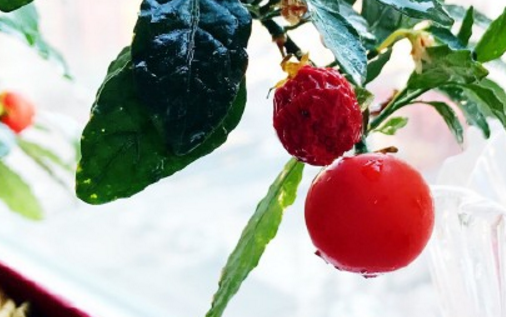
1. What are the care methods for Jerusalem cherry?
Soil
For potted Jerusalem cherry, choose a flower pot of appropriate size. When potting, choose loose, fertile and well-draining soil, and you can add a little base fertilizer.
Light and temperature
Jerusalem cherry likes a warm growing environment and likes sunlight, and is suitable for growing in a sunny spot. Its suitable growing temperature is between 18°C——25°C. In winter, when the temperature is lower, you need to ensure the temperature of its environment is not below 5°C so it can overwinter safely. In addition, Jerusalem cherry likes sunlight, so it is best not to shade it. In summer, when the temperature is high and the sunlight is strong, you can place Jerusalem cherry in a well-ventilated and brightly lit spot for care.
Watering and fertilizing
Jerusalem cherry is not drought-tolerant and is rather afraid of waterlogging, so avoid standing water in the pot. During cultivation, keep the soil moist and water appropriately; it should not be too dry or too wet. For fertilizing, apply a dilute liquid fertilizer once every half month. Note that before flowering, you need to apply some phosphorus fertilizer to produce abundant flowers and fruit. During flowering, you need to control water and fertilizer to avoid flower and fruit drop. When the fruit grows to the size of a mung bean, you can resume water and fertilizer, and appropriately apply some phosphorus and potassium fertilizer to make the fruit brightly colored.
Notes:
Propagation methods
Jerusalem cherry is mostly propagated by sowing or cuttings. Sowing is done in spring, and cuttings can be done in either spring or autumn.
Pests and diseases
For potted Jerusalem cherry, when the summer temperature is high, it is prone to anthracnose, which harms stems and leaves and can be quite severe. When the disease occurs, you can cut off and burn the diseased leaves and spray medication. The main pest is aphids, which can be controlled by spraying insecticide.
Flowering period management
Flowering period management for Jerusalem cherry mainly involves water and fertilizer management. You need to pause fertilizing and control watering, then resume water and fertilizer after the fruit begins to grow.
2. How do you prune it?
1. Notes on pruning Jerusalem cherry
The tree shape of Jerusalem cherry is very elegant and graceful; even without pruning it already has very strong ornamental value. If the Jerusalem cherry we planted was just transplanted or grown from cuttings this year, it is a current-year Jerusalem cherry. Such a Jerusalem cherry plant is still relatively weak and not very robust, so at this time the Jerusalem cherry cannot be pruned, nor can it be pinched back; first you need to let it grow healthily. Once the Jerusalem cherry has grown relatively robust, usually after the second year, we can prune the Jerusalem cherry.
2. Pruning methods for Jerusalem cherry
So how do you prune Jerusalem cherry? We wait until the crown of the Jerusalem cherry has grown relatively full and the fruit has ripened, then we can prune it.
The bright red fruit of Jerusalem cherry is the most important ornamental part of the plant, so after the Jerusalem cherry has set fruit, pruning should further highlight the fruit. We can cut off the branches and leaves at the upper end of the fruiting branches, so the fruit of the Jerusalem cherry becomes more prominent, with bright fruit covering the branch tips, very beautiful. After the Spring Festival, the fruiting period of the Jerusalem cherry has also passed; at this time we can prune the old branches of the Jerusalem cherry short, and we should also cut off previously diseased branches, pest-damaged branches and relatively weak branches. This can promote the growth of new branches and leaves. Also, relatively densely growing branches should be thinned slightly to make it more ventilated and breathable, which is beneficial to the growth of the Jerusalem cherry.
3. Can it be grown indoors?
Because the entire Jerusalem cherry plant is toxic, people worry whether the toxicity of the Jerusalem cherry will be released through the plant's respiration. This worry is completely unnecessary. Although the entire Jerusalem cherry plant is toxic, the toxicity will not volatilize, and people will not be poisoned by breathing it. As long as we do not eat any part of the Jerusalem cherry, we will not be poisoned. Therefore, although Jerusalem cherry is toxic, it can still be grown indoors, because the toxicity of Jerusalem cherry will not volatilize into the air. On the other hand, plants have the function of purifying the air, and Jerusalem cherry is the same. If you want to grow Jerusalem cherry indoors, be sure to supervise children and pets well to prevent children and pets from accidentally eating the branches, leaves or fruit of the Jerusalem cherry and being poisoned. Of course, if there are young children in the home or pets are kept, it is still not recommended to grow Jerusalem cherry at home.