Sunflower as One of the Four Major Oil Crops: Sowing Time and Fertilization and Fertilizer Selection Methods
The sunflower is one of the world's four major oil crops and was introduced to China around the Ming Dynasty. China's main sunflower production areas are Inner Mongolia, Jilin, Liaoning, Heilongjiang, Shanxi and other provinces and autonomous regions. So when is the best time to sow sunflowers? Below is a summary of sunflower planting time and methods.
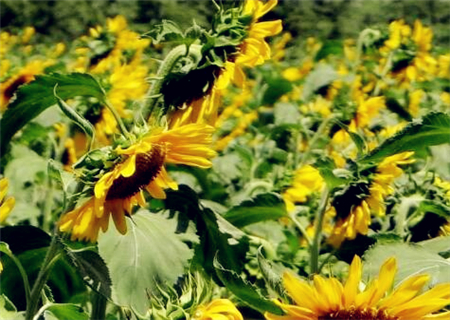
Sowing Time for Sunflowers
The sowing time for sunflowers is March to April, the suitable temperature for sowing is 18-25°C, and sprouts emerge about 5-7 days after sowing. The basic principle for choosing the sowing period is to sow appropriately early or late according to the patterns of salinization, so that the seedlings avoid salt-alkali damage. Spring or summer sowing is done according to the growth period of the variety. Adjust the sowing period according to disease occurrence patterns so as to avoid the season when diseases are frequent. Adjust the sowing period according to growth characteristics so that the flowering and grain-filling period avoids high temperatures above 28°C. The sowing method is dibbling, with about 1 cm of soil covering the seed; flowering occurs about 50-80 days after sowing, with slight differences depending on the variety.
Sunflower Planting Time and Methods
1. Temperature
The sunflower originated in the tropics, but it has strong adaptability to temperature and is a crop that likes warmth and tolerates cold. Sunflower seeds have a very strong tolerance to low temperatures; when the soil temperature is stable above 2°C, the seeds begin to germinate; at 4-5°C, the seeds can sprout and take root; when the soil temperature reaches 8-10°C, it can meet the needs of seed germination and emergence. The optimum temperature for germination is 31-37°C, and the maximum temperature is 38-44°C. Throughout the entire growth process of the sunflower, as long as the temperature is not lower than 10°C, it can grow normally. Within the suitable temperature range, the higher the temperature, the faster the development.
2. Water
The sunflower plant is tall, with many dense leaves, and is a crop that consumes a relatively large amount of water. Its water uptake is 1.74 times that of corn. However, because its growth and development mostly coincide with local rain and heat, the contradiction between water supply and demand is not prominent. The water requirements of sunflowers differ greatly at different growth stages. From sowing to budding, it is relatively drought-tolerant and needs little water, only 1.9% of the total water requirement. Moderate drought at this stage is beneficial to root growth and enhances drought resistance. From budding to flowering is the peak water-demand period, with water requirement accounting for about 43% of the total. Water shortage at this stage greatly affects yield. This stage happens to coincide with relatively abundant rainfall, which can basically meet the water needs of sunflower growth and development. If it is too dry, irrigation is needed to supplement. From flowering to maturity, the water requirement is also relatively high, accounting for about 38% of the total. If water is insufficient, it not only affects yield but also reduces oil content.
3. Light
The sunflower is a short-day crop. But its response to daylength is not very sensitive. For example, under the sunshine conditions of Tianjin, it can flower and mature normally without special treatment. Sunflowers like ample sunlight, and their seedlings, leaves and flower heads all have strong phototropism. With sufficient sunlight, seedlings are robust and can be prevented from becoming leggy; sufficient sunlight in the mid-growth period can promote vigorous stem and leaf growth, normal flowering and pollination, and a higher seed-setting rate; sufficient sunlight in the late growth period of sunflowers makes the seeds plump and full.
4. Soil
Sunflowers are not strict about soil requirements and can grow in all types of soil, from fertile soil to dry land, poor soil and saline-alkali land. They have strong salt-alkali tolerance.
1. Preventing dryness and drought: According to the water-demand patterns and drought tolerance of sunflowers, generally from sowing to emergence it is advisable to sow on the frozen soil or sow dry while seizing moisture, and soaking seeds before sowing all have good drought-prevention and drought-resistance effects. From emergence to budding, the aboveground parts of the seedlings grow relatively slowly while the roots grow very quickly, so watering can be omitted and seedling restraint practiced. From budding to flowering, the water requirement accounts for 43% of the total for its whole life, and this is the critical period. Once the rainy season begins, measures such as high hilling and deep ditching should also be taken to drain water and prevent waterlogging.
2. Disease and pest control: Do a good job of forecasting and reporting diseases and pests. Once they occur, control them immediately, striving to control them early, while small, and completely. When the temperature reaches 18-20°C, use 30-45 kg of quintozene per hectare, add 150-230 kg of moist fine sandy soil, mix well and spread it on the sunflower ground to inhibit the germination of sclerotinia, then apply the pesticide again after 15 days. In early August, during the occurrence period of sunflower moth larvae, spray 500-fold 90% trichlorfon solution, controlling 2-3 times.
1. Variety Selection
There are many sunflower varieties, including edible types, potted types and cut-flower types. For cut-flower cultivation, cut-flower varieties should be selected. At present, common sunflower cultivated varieties are hybrid F1 generation, "pollen-free" varieties, such as Golden 08, Double-petal Golden Auspiciousness and Sanyang Kaitai. Choose varieties for different uses according to needs. Seeds should be selected from varieties that have been tested locally and have passed approval (registration), and the quality should preferably meet the standards stipulated by the state.
2. Seed Treatment
Sun the seeds for 2-3 days before sowing to enhance the activity of enzymes inside the seeds and improve germination vigor and germination rate. For uncoated seeds, use 150 ml of 40% phoxim, add 5-7.5 kg of water, and mix with 25-30 kg of seeds for seed treatment. To prevent sclerotinia, soak the seeds in 500-fold 50% carbendazim solution for 4 hours, or use sclerotinia-removing agent or thiophanate-methyl at 0.5%-0.6% of seed weight for seed dressing.
3. Land Selection
For planting sunflowers, one must choose cultivated land of loam or sandy loam with deep soil layers, medium or above fertility, flat terrain, convenient irrigation and drainage, and no sunflower planting in the past 3-5 years. The previous crop is preferably wheat or beans.
4. Land Preparation
Do a good job of autumn plowing and autumn irrigation. The depth of autumn plowing should reach more than 20 cm, and strive to subsoil the land once every three years; in areas with the conditions, delay irrigation time as much as possible and ensure the quality of autumn irrigation to ensure soil moisture for the next year.
Before sowing, determine the land preparation method according to soil moisture and variety. Conventional varieties have a long growth period and are sown early, when soil moisture is relatively good, so the method of preparing land first and then sowing can be adopted, that is, shallow plowing or rotary tillage before sowing, then timely harrowing level lengthwise and crosswise, and direct sowing after compaction. Hybrid varieties have a shorter growth period and are sown later, when temperatures rise, evaporation is high, and soil moisture is relatively poor, so the method of preparing land first, then mulching with film, then watering, and sowing after watering can be adopted. Land preparation should achieve a level surface, fine soil and no large clods.
5. Base Fertilizer
In conjunction with autumn plowing, plow in 2500-3000 kg of decomposed organic fertilizer per mu. Before sowing, apply seed fertilizer deeply, generally 10 kg of diammonium phosphate per mu or 15 kg of ternary compound fertilizer is suitable.
6. Sowing Time
Cut-flower sunflower seeds are relatively large. For cut-flower cultivation and production, plug tray sowing and seedling raising are commonly used, with a mixed soil of peat, culture soil and sand as the sowing medium, sowing 1 seed per cell, covering with 0.8-1.0 cm of soil after sowing, watering thoroughly to keep the soil moist, germination after 4-7 days, and planting when the seedlings are 5-6 cm tall. The specific sowing time is determined by the flower supply time. If flowers are needed in May, sow in February to March; if flowers are needed in October, sow in August. Ornamental sunflower seeds are large, with 25-50 seeds per gram, and the suitable germination temperature is 21-24°C. Open-field sowing commonly uses hole sowing, and sowing trays use dibbling. Germination occurs 7-10 days after sowing. The germination rate is 80%-90%. Taking potted dwarf varieties as an example, it takes 50-60 days from sowing to flowering.
7. Planting
Planting density is determined according to trials. Generally, conventional edible sunflower varieties keep 2000-2500 seedlings per mu; edible sunflower hybrids keep 3000-3500 seedlings per mu; oil sunflowers keep 3500-4000 seedlings per mu. The plant and row spacing is preferably 20×40 cm to obtain uniform flowers. Sometimes the plant and row spacing for planting should be adjusted accordingly according to the soil fertility itself and the market's requirements for stem thickness.
8. Film-Mulched Sowing
Adopt the method of mulching first and then sowing, with wide and narrow row planting. Choose 70 cm plastic film, mechanically mulch before sowing, cover two rows with one film, sow at a depth of 2-3 cm, and cover lightly with soil after sowing. The quality of film laying should achieve close contact between the film and the ground. Cover damaged areas tightly with soil and make a horizontal soil band every 5-10 m or so to prevent the film from being damaged when the wind blows. Conventional varieties are generally sown 3-5 days after mulching, with 2-3 seeds per hole and a sowing rate of about 0.75 kg per mu. Hybrid varieties should be watered promptly after mulching, and sown when the ground is almost dry after watering, with 2 seeds per hole, or single seeds in alternate holes and double seeds in the next alternate holes, with a sowing rate of about 0.5 kg per mu.
9. Planting Management
Sufficient light should be given at the early stage of sowing to prevent the plants from becoming leggy. Fertilizer can be applied sparingly to limit the flower head from becoming too large and the stem from becoming too thick, which is not conducive to vase insertion. The seedling stage needs sufficient water. If soil fertility is too poor, apply mainly nitrogen fertilizer in the early stage, increase phosphorus and potassium fertilizer at the bud stage, and appropriately control water at the budding stage. However, under conditions of strong light and high temperature, because the plants are tall and the leaves are luxuriant, water consumption is large, so water should be applied in time to prevent leaf wilting, which would affect normal plant growth and lead to reduced cut-flower quality. In open-field cultivation, the root system is relatively developed and tolerant of drought; not much watering is needed in spring, and supplementary watering is needed only in early summer when temperatures rise and water evaporation is relatively high. For potted ornamental sunflowers, the plant is large and the pot is small, so water in time during the growth period, otherwise the leaves are prone to dehydration and wilting. But it should not be too wet; if humidity is too high, the basal leaves are prone to yellowing. For ornamental sunflowers, choose 10-15 cm pots according to the size of the aboveground crown width. Apply fertilizer once every ten days during the growth period, or use "Huiyou" 15-15-30 special fertilizer for pot flowers. If for flowerbed viewing, pinch once, and the branches can produce 4-5 flowers. For tall-stem varieties, 20 days after germination, spray the leaf surface with 0.25%-0.4% daminozide solution to control plant height. When ornamental sunflowers are cultivated in the open field, the light duration is long, and they often flower slightly earlier; while when cultivated in a greenhouse in winter, the light duration is short, and flowering is delayed.
12