Growing Methods, Propagation Techniques and Benefits of Adenanthera pavonina
Adenanthera pavonina is native to Southeast Asia, such as India, Malaysia and Java. So what are the growing methods for Adenanthera pavonina? How is it propagated? What benefits does it have? According to available information, Adenanthera pavonina prefers a warm and humid climate; deep, fertile, well-drained sandy loam is suitable for its growth; it likes light but is also shade-tolerant, and it has strong adaptability to the environment. In winter, low temperatures require insulating the tree, and the trunk can be wrapped in plastic film.
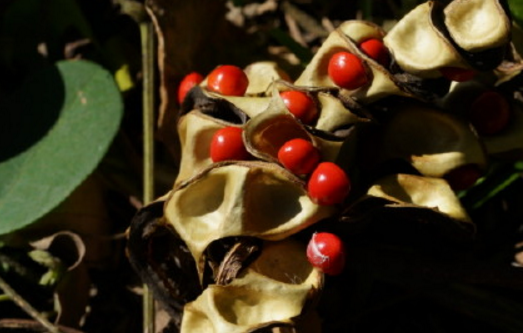
1. What are the growing methods for Adenanthera pavonina?
1. Temperature management for Adenanthera pavonina
Adenanthera pavonina is native to subtropical and tropical regions, and a hot and humid environment is more suitable for its growth. It is not cold-tolerant, so its temperature requirements in winter are relatively high. In areas where frost occurs, it cannot overwinter safely, and the trunk needs to be wrapped in plastic film or straw to help insulate it.
2. Light management for Adenanthera pavonina
The Adenanthera pavonina tree does not have strict light requirements; it likes a sunny environment and is also tolerant of partial shade. For Adenanthera pavonina at the seedling stage, be careful not to expose it to strong sun, otherwise it easily dehydrates and wilts, so appropriate shading can be provided.
3. Water and fertilizer management for Adenanthera pavonina
For potted Adenanthera pavonina, attention should be paid to its water and fertilizer management. When potting, add organic fertilizer as a base fertilizer. During routine care, appropriate water and fertilizer management should also be carried out to promote plant growth.
Spring, summer and autumn are the peak growing seasons for Adenanthera pavonina. Fertilizing and watering should be done at intervals, with an interval of about 3 days. During sunny or high-temperature weather, the interval should be appropriately shortened; on rainy or low-temperature days, the interval should be longer. Do not let water accumulate.
Winter is the dormant period for Adenanthera pavonina. During this period, fertilizer application should be reduced. One fertilizer application and two waterings can be treated as one cycle for water and fertilizer management, with an interval of about one week.
4. Pruning and branch training for Adenanthera pavonina
Adenanthera pavonina should be pruned and trained in winter, because in winter the plant enters dormancy or semi-dormancy, and nutrient consumption during this period is relatively low. Therefore, weak, dead and overly dense branches should be pruned away so that new branches can grow the following year.
2. How is it propagated?
Preparations before cutting propagation of Adenanthera pavonina
Late spring and early autumn are good times for cutting propagation of Adenanthera pavonina. For cuttings, young branches of the current year can be chosen, or old branches from the previous year can also be chosen for cutting; the cutting medium can be materials such as nutrient soil, river sand or peat soil.
Cutting propagation of Adenanthera pavonina
After choosing the branches for cutting, cut them into sections 10 cm long, and each section should have at least 3 leaf nodes. Note that the upper cut should be made with a flat cut about 1 cm above the topmost leaf node, and the lower cut should be made with a slanted cut about 0.5 cm below the bottommost leaf node. Both the upper and lower cuts should be smooth.
Post-cutting management for Adenanthera pavonina
If low temperatures are encountered after cutting, wrap the flower pot or container with plastic film; if high temperatures are encountered after cutting, be careful to shade the cuttings. At high temperatures, the cuttings easily lose water, so you can mist the cuttings to supplement moisture. Before the cuttings have rooted, make sure the cuttings stay fresh so they can carry out photosynthesis to produce the substances needed for plant growth; giving the cuttings suitable light is conducive to rapid rooting and growth, so be careful to place the potted cuttings in the sunlight. Of course, exposure to strong sunlight is strictly prohibited, and shade should be provided in summer. Once the cuttings have rooted, they can be transplanted.
3. What benefits does it have?
1. Pharmacological effects of Adenanthera pavonina
Extracts of Adenanthera pavonina have a relatively strong inhibitory effect on proteolytic enzymes and trypsin in rabbit pancreas, and on trypsin, chymotrypsin and total proteolytic enzyme activity in human pancreas, but the inhibitory effect on bovine protease is relatively weak.
2. Indications and main functions of Adenanthera pavonina
Adenanthera pavonina has the effects of dispelling wind and clearing heat, and drying dampness to relieve itching; Adenanthera pavonina also has the effect of nourishing the skin and improving complexion, and has relieving and curative effects on facial dark spots, acne, rosacea, wandering wind on the head and face, tinea versicolor and so on.
3. Usage of Adenanthera pavonina
Adenanthera pavonina is generally used externally: grind Adenanthera pavonina into powder and apply an appropriate amount to the affected area.