Rosaaceae Exochorda racemosa: Cultivation Methods, Precautions, Seed Sowing, Value and Uses
Exochorda racemosa (pearlbush) prefers a warm and humid climate; it likes light but also tolerates shade, and has strong cold resistance. So what are the cultivation methods and precautions for Exochorda racemosa? How do you sow the seeds? What value and uses does it have? According to available information, Exochorda racemosa is not demanding about soil and can grow in acidic soil, neutral soil and poor soil. Of course, in fertile, well-aerated soil it grows more vigorously and has stronger sprouting ability.
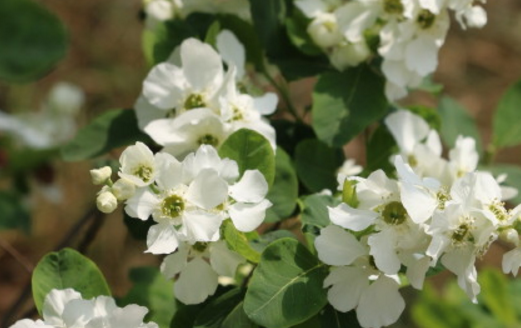
I. What are the cultivation methods and precautions for Exochorda racemosa?
Pot and soil selection
Exochorda racemosa can be grown in the open ground or in pots for bonsai display. For pot cultivation, choose a flower pot of appropriate size according to the plant's growth, then fill it with soil. First place some broken tile pieces at the bottom of the pot as a drainage layer, then fill the mixed substrate above the drainage layer. You can choose garden soil, coarse sand, furnace slag or leaf mold for mixing, and add some decomposed organic fertilizer to the soil as a base fertilizer.
Light and temperature
Exochorda racemosa likes light, tolerates partial shade, has strong adaptability, and is cold-resistant. The suitable temperature for its growth is between 16°C——28°C; take care that summer is not too hot and stuffy. Light should be moderate, ensuring enough light for the growth of Exochorda racemosa, but be careful to avoid strong direct sunlight; the light intensity can be adjusted artificially.
Watering and fertilizing
Exochorda racemosa grows vigorously, with abundant flowers and lush leaves, and is very beautiful, which means water and fertilizer management must be done well. During cultivation, its consumption of water and fertilizer is relatively large, so it needs appropriate watering to keep the soil moist and avoid the soil becoming too dry. Basically during the growing period, it needs to be watered once or twice a month. Fertilizing must ensure sufficient nutrients, adjusted according to the growth needs of Exochorda racemosa. For example, before flowering you can apply some phosphorus and potassium fertilizer, and during overwintering you can apply some fertilizer to ensure it survives the winter.
Precautions:
Propagation
Exochorda racemosa can be propagated by sowing seeds, or by cuttings and layering. Seed propagation is mainly done by autumn sowing, while cuttings and layering both require selecting suitable branches.
Pruning
Exochorda racemosa is a woody plant with abundant branches and leaves, and proper pruning is beneficial to its growth. Pruning is best done during the bud differentiation period of Exochorda racemosa, as it has less impact on the tree shape. When pruning, take care to remove overly dense branches, overly long branches, as well as dead and diseased branches; after flowering, the spent flowers need to be pruned off.
Pests and diseases
The main diseases of Exochorda racemosa are powdery mildew, sooty mold and brown spot disease, while the main pests are aphids, scale insects, red spiders, bagworms, yellow stinging moths and others. When pests and diseases break out on Exochorda racemosa, timely measures must be taken for prevention and control.
II. How do you sow the seeds?
1. Find a good piece of land for sowing and dig holes to plant the seeds. Because this plant has good cold resistance, it can also be planted in the open air; it is best to choose a sunny slope.
2. After the seeds are planted, water appropriately. In spring and summer the temperature difference is large; to keep warm, cover the surface with about one cm of burnt soil, and finally cover with a straw mat. Seedlings will emerge in 20 days to one month.
3. When the seedlings reach three or four cm, thinning is needed. Thinning mainly adjusts the spacing between seedlings to prevent them from being too dense, and also removes diseased and weak seedlings. Water a little before thinning, and choose a day when it clears up after rain.
4. During the seedling growth period, weeding and turning the soil should be carried out, and in May and June appropriate fertilizing should also be done, about two or three times.
4. If sowing is done later, by midsummer the seedlings must be shaded to prevent sunburn, and straw mats should be used to prevent drought. Once insufficient moisture is found, water promptly to keep them moist.
III. What value and uses does it have?
1. Landscape value
Exochorda racemosa has a very high ability to adapt to the environment; whether along roadsides, on rocky mountain streams, or in grasslands and forests, it can grow well. Its snow-white petals are very eye-catching; it is also a first-choice material for bonsai enthusiasts.
2. Nutritional value
The fresh tender leaves of Exochorda racemosa are truly especially rich in carotene and vitamins, with high nutritional value. The dried leaves of Exochorda racemosa contain nutrients such as potassium, calcium, magnesium, phosphorus, sodium, iron, manganese, zinc and copper per gram. Every 100 grams of Exochorda racemosa flowers contain quite a lot of nutrients such as carotene, vitamin B2 and vitamin C.
3. Can be eaten as a food ingredient
The nutrients contained in the flowers and leaves of Exochorda racemosa are unmatched by many vegetables. It also has many ways of being eaten: the fresh leaves and flowers can be eaten directly, or dried and steeped in water to drink. It can also be cooked, used in soups, cold dishes or stir-fries. It is even a good choice for making pastries. It can also be used as an ingredient with many staple foods.
4. Health benefits
Because of the nutrients it contains, it can supplement the nutrients the human body lacks. Even its inconspicuous bark and the outer skin of its roots can be used to relieve soreness and swelling pain in the lower back. It truly has so many benefits; with such a wonderful ornamental flowering plant as Exochorda racemosa, how could you not grow a pot of it?