Tuberose (Polyanthes tuberosa) of the Amaryllidaceae suborder: cultivation methods, precautions, toxicity, and benefits
Tuberose is very easy to plant and to force into bloom, which makes it one of the most important cut flowers. So what are the cultivation methods and precautions for tuberose? Is it toxic? What benefits and effects does it have? According to the available information, tuberose dislikes waterlogging; if it is too dry, the leaf edges curl, the flower buds shrivel and are hard to open. Summer is the peak growing season, so the potting soil must be kept constantly moist, with watering once a day.
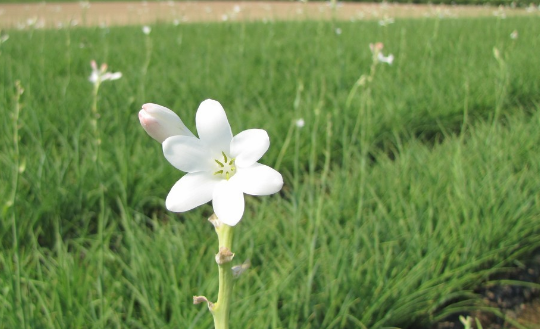
I. Cultivation methods and precautions for tuberose
Watering
Tuberose dislikes waterlogging; if it is too dry, the leaf edges curl, the flower buds shrivel and are hard to open.
Summer is the peak growing season, so the potting soil must be kept constantly moist, with watering once a day.
Fertilizing
Tuberose loves fertilizer, so it needs regular top-dressing. Generally, apply once 1 month after planting, once before flowering, and thereafter once every 1.5 months or 2 months.
Light
Tuberose is suited to growing in a sunny environment and requires good ventilation. From early May to the end of September, it is best kept in a sunny spot in the yard or on a balcony.
Temperature
Tuberose prefers a warm, humid environment, with an ideal growing temperature of 20°C—30°C. Flower bud differentiation occurs in late spring and early summer, when the minimum temperature should be kept at around 20°C.
Soil
Tuberose requires fertile, clayey soil for growth; it does poorly in sandy soil.
Precautions:
Avoid scorching sun in summer
Although tuberose prefers a sunny environment, it should still be protected from the blazing midday sun in summer and placed where it receives diffused light.
Maintain a suitable temperature
Each year in mid-to-late October it should be moved into a shed or greenhouse, where the temperature must be kept at 8°C—12°C. If the temperature drops below 5°C, the leaves will turn yellow and drop, eventually leading to death.
Repot in spring
It is best to repot every year in early April, removing old roots, replacing the soil and pruning the stems.
After repotting, keep the potting soil moist but not waterlogged. If the young leaves are found to droop slightly after repotting, water promptly.
Prepare a suitable soil mix
The potting soil is generally made up of 3 parts peat soil or leaf mold plus 2 parts coarse river mud and a small amount of farmyard manure. When potting, fill the bottom roughly one-fifth deep with granular crushed brick to aid drainage, and use the prepared potting soil for the upper portion.
II. Is it toxic?
Relevant information indicates that tuberose is not really suitable for growing indoors, as its fragrance is harmful to human health. The scent given off by tuberose can make people with high blood pressure and heart disease feel dizzy, depressed and unwell, and can even cause symptoms such as chest tightness and difficulty breathing. For the sake of health, therefore, it is best not to place tuberose indoors, but to keep it as an outdoor ornamental plant.
Tuberose originated in the tropical regions of Asia. As is well known, daytime temperatures in the tropics are extremely high, and flying insects do not like to come out during the day, but once the temperature drops in the evening and at night, the insects come out to forage. At this time tuberose gives off a strong fragrance to lure the insects into helping it spread pollen. Over time, tuberose developed this habit of releasing fragrance at night. However, this scent is very bad for human health; if tuberose is kept indoors for a long time, it can cause coughing, dizziness and even asthma and insomnia.
III. What benefits and effects does it have?
1. Economic value
Tuberose, as its name suggests, is a plant with a fragrance, and it is also a raw material for extracting essence. In fact, night-blooming jasmine and tuberose are one and the same.
The main components of tuberose concrete include geraniol, nerol, neryl acetate, methyl benzoate, methyl anthranilate, benzyl alcohol, farnesol, eugenol and tuberone. Used in food, it gives foods a distinctive tuberose aroma.
It can also be used to make scented everyday products; for example, a suitable amount of tuberose extract can be added to perfumes and soaps.
2. Ornamental value
Tuberose has translucent leaves and pure white petals, giving a delicate, modest beauty; it holds fragrance within a clean form, its subtle scent spilling all around, bringing enjoyment of beauty in the height of summer.
Tuberose has long flower stems, with upright scapes 40—90 cm tall, and a long flowering period. The flowers are opposite, white, and arranged in fairly long spikes; it is an important cut flower material and also a lovely flower for bedding displays.
3. Medicinal value
Tuberose is sweet and bland in taste and cool in nature, so it can clear heat and detoxify, and is mainly used for carbuncles, sores and swellings. It was first recorded in "Names of Seed Plants".
The roots of tuberose contain about 1.8% sapogenins, mainly tigogenin, hecogenin and 9-dehydrohecogenin; the flowers contain 0.08%-0.14% volatile oil, whose main components are geraniol, nerol, farnesol, eugenol and methyl anthranilate.
Besides its ornamental value, tuberose can also be used as medicine. Taken in an appropriate amount, crushed and applied externally, it can repel mosquitoes. The leaves, flowers and fruits of tuberose can all be used medicinally, with effects of clearing the liver and brightening the eyes, and drawing out toxins and promoting tissue regeneration.
Tuberose has a certain effect in treating acute conjunctivitis, keratitis, corneal opacity, boils and swelling, and traumatic erosions, and can relieve the symptoms.
4. Edible value
Tuberose can be eaten, mainly using its fresh flowers and flower buds; it is a semi-wild vegetable.
In addition, tuberose has a fairly strong fragrance and is somewhat toxic, so it can drive away mosquitoes, which is also a convenience in daily life. Usually a screen is fitted over the window and the plant is grown outdoors.