Amaryllidaceae Narcissus Cultivation Methods and Precautions, and What Are the Benefits of Fertilizing and Watering?
Narcissus is a temperate bulbous flower that prefers a cool climate. So what are the cultivation methods and precautions for Narcissus? How to fertilize and water? What are its uses? According to available information, after planting Narcissus, the plant should be moved to a semi-shaded location with about 50% sunlight for care, and the soil should be kept moist. Once its leaf buds emerge above the soil surface, move it to an environment with about 70—80% sunlight for management. The flowering period of Narcissus can be regulated by adjusting different levels of light, humidity, and temperature.
I. Cultivation Methods and Precautions for Narcissus
Temperature and Light
Narcissus is a temperate bulbous flower that prefers a cool climate and dislikes high temperatures and excessive moisture. The suitable growing temperature is around 10-15°C. Narcissus is not sensitive to light. During the leaf growth stage, adequate light is needed, while during the flowering stage, semi-shade is preferable. If Narcissus experiences insufficient light for an extended period during growth, it tends to cause leaves to elongate, become soft, and droop, though this has little effect on flowering.
Water
During the growth period, Narcissus needs adequate water, while avoiding waterlogging. After Narcissus blooms, watering can be gradually reduced, and during the bulb dormancy period, the soil should be kept dry.
Soil
For Narcissus cultivation, a slightly acidic sandy loam rich in organic matter is suitable.
Fertilizing
During the growth period of Narcissus, a dilute monopotassium phosphate solution can be applied once every two weeks, and a small amount of nitrogen fertilizer can also be applied.
II. How to Fertilize and Water?
First, it has certain water requirements. If it lacks water too much, its development will be poor, and the whole plant will appear relatively short. However, it is also quite sensitive to water, so it should not be too moist, especially when the temperature is particularly high. In addition, it is a plant that quite likes fertilizer, especially during its vigorous growth period. There are also some requirements at planting time.
Specific Methods
Watering: After planting is complete, we need to water it thoroughly once, making sure to soak it completely. After that, during its rapid growth and development period, we must not let it lack water. To ensure sufficient water, we generally choose to water about once a week. However, note that it also must not become waterlogged, and we must ensure that water drains away promptly. After the flowering period, the amount and frequency of watering can be gradually reduced. During its dormancy period, keeping it dry is sufficient. In addition, note that air humidity must also be ensured.
Fertilizing: Before planting, we should prepare the substrate in advance. Generally, we choose soil rich in organic matter and slightly acidic, and mix some nutrients into it. Doing so helps ensure future nutrient supply and also helps improve its survival rate. During the growth period, apply a monopotassium phosphate solution once every two weeks or so, and fertilizers rich in N element can also be used. Similar to watering, once it enters the dormancy stage, there is no need to continue applying fertilizer.
III. What Are Its Uses?
1. Ornamental Value of Narcissus
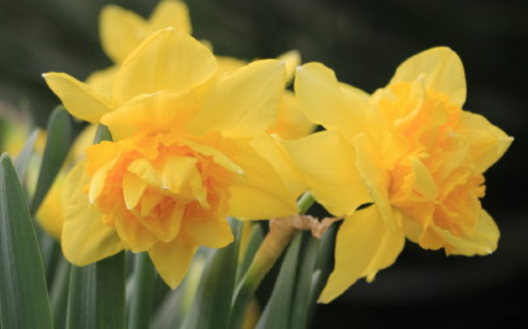
Narcissus has a unique flower shape, with colors mostly yellow and white, extremely plain and gentle, with green leaves and graceful posture. Yellow narcissus also carries a fresh and pleasant fragrance, making it very suitable for pot cultivation. Placed at home or in the office, it can decorate and beautify the surrounding environment, give people visual enjoyment, relieve fatigue, tension, and other emotions, and provide sensory comfort.
2. Landscape Value of Narcissus
Narcissus is a high-quality cut flower material and has good uses in landscaping. As a famous bulbous flower, Narcissus is very suitable for decorating flower beds and flower borders. Under the warm spring sun, Narcissus blooms profusely and sways gently in the wind, forming a bright and beautiful scene. At the same time, Narcissus is also suitable for clump planting in lawns, inlaid in rockery crevices, or planted in patches under open woodland and at the edges of flower beds.
3. Symbolic Meaning of Narcissus
The flower language and symbolism of Narcissus include nobility, purity, and good fortune. Narcissus is suitable for giving to relatives, friends, and families on festive occasions, carrying meaning of good blessings. In addition, Narcissus can also embody the integrity of the ancients who expressed their aspirations through objects. Therefore, if a friend is an elegant person with integrity, Narcissus is particularly worth considering when giving flowers. It has a relatively unique meaning, and I believe the recipient will also like it very much.