Calanthe (Asparagales): Growing Methods, Propagation Tips and Variety Guide
Calanthe is relatively cold-tolerant and tolerates partial shade, but not drought or high temperatures; it prefers cool summers. So what are the growing methods for Calanthe? How do you propagate it? What varieties are there? According to available information, Calanthe likes a high-humidity environment. If it is kept indoors, it is not suitable to water it frequently; simply keeping the soil moist is enough, but there must be no waterlogging, no waterlogging, no waterlogging. However, from March to May, when Calanthe is in bloom, the soil should be kept slightly dry, but water promptly during dry spells. From July to September, it can be watered once in the morning and once in the evening.
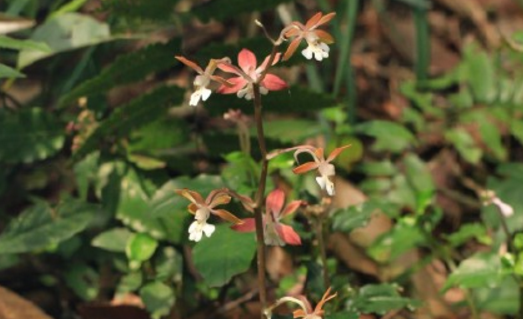
I. What are the growing methods for Calanthe?
Soil
A loamy soil that drains well, is loose, has some moisture-retaining capacity and is rich in humus. You can use humus soil or peat soil with an appropriate amount of river sand, or mix ordinary garden soil with humus soil and add an appropriate amount of bone meal or horn shavings as a base fertilizer.
Water
Calanthe likes a high-humidity environment. If it is kept indoors, it is not suitable to water it frequently; simply keeping the soil moist is enough, but there must be no waterlogging, no waterlogging, no waterlogging. However, from March to May, when Calanthe is in bloom, the soil should be kept slightly dry, but water promptly during dry spells. From July to September, it can be watered once in the morning and once in the evening.
Temperature
Calanthe likes a warm environment, so in winter, make sure the temperature stays above 0°C, otherwise there is a risk of it freezing to death.
Light
Calanthe likes a sunny environment, but "sunny" does not mean direct sunlight. In spring, summer and autumn, it is best to place Calanthe in a shaded spot, or if conditions allow, place it in a shade house with 50% shading.
In winter, because the light is not so intense, it does not need to be shaded when kept indoors.
Fertilizing
During the growing season, fertilize once a month. When the flower stem emerges from the leaf cluster, apply 1-2 additional applications of phosphorus and potassium fertilizer. From May to August, apply a dilute fertilizer once every half month, at a concentration not exceeding 0.5%.
II. How do you propagate it?
1. Autumn propagation
Propagation region
For autumn propagation of Calanthe, it is generally treated as a herbaceous perennial. This cultivation method is best suited to areas south of the Yangtze River.
Selecting material
For selecting material, of course choose tubers of the current year that still have young buds. Cut the selected tubers into small pieces, each piece needing 1-2 buds.
Preparation
In the prepared loose, fertile soil, dig holes 10-13 cm deep at a row spacing of 33 cm and a plant spacing of 23-25 cm. Dig as many holes as you want to plant. Then level the bottom of each hole and plant 3 seed tubers per hole.
Cultivation points
When planting, stagger the bud tips so they face each other in a triangle and lay them flat at the bottom of the hole.
After-planting care
After planting, cover with fine fertile soil or burnt earth ash, water once with dilute human and livestock manure water, then cover with soil level with the bed surface.
2. Spring propagation
Suitable areas
Used for pot cultivation and in areas with relatively low temperatures where plants cannot overwinter outdoors, such as northern China, where propagation at this time is quite suitable.
Cultivation method
Every year in May, after Calanthe has flowered, take the pseudobulbs out of the pot.
Cut off the old roots and dead branches, divide into single pieces, store in a dry, cool place, and replant when the new shoots have grown to 5 cm.
III. What varieties are there?
Calanthe argenteo-striata, native to southwestern Guangxi, northern Guangdong, southwestern Guizhou and southeastern Yunnan. Its flowers open yellow-green, and the flower stalks and ovaries are also yellow-green.
Calanthe longicalcarata, native to western Hubei, Yunnan and Sichuan. Its flowers are yellow.
Calanthe henryi, native to Hubei, Sichuan and other places. Its flowers are yellow-white and give off a faint delicate fragrance.
Calanthe triplicata, native to Guangxi, Guangdong and Fujian. Its flowers are pure white, pure and flawless.
Calanthe medogensis, native to southeastern Tibet. Its flowers are a pale purple.