What is the yield per mu of Pinellia ternata (drought pinellia) cultivation, its market prospects and cultivation techniques?
Drought pinellia (Pinellia ternata), a perennial herb of the genus Pinellia. It grows below 2500 m altitude, commonly found on grassy slopes, wasteland, corn fields, field edges or under sparse forests, and is one of the weeds in dry land. So how many jin per mu does drought pinellia yield? What are its cultivation market prospects?
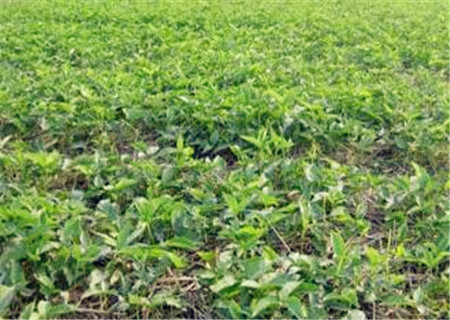
How many jin per mu does drought pinellia yield
Drought pinellia is a major commonly used medicinal herb. Due to reckless digging and over-harvesting of wild resources, it is on the verge of extinction, while artificial cultivation is very limited, causing prices to rise year after year and demand to exceed supply. The current price has reached 130 yuan/kg. When planted using tubers, it can be harvested in the same year, generally yielding 150 kg of dried product per mu, with a per-mu benefit of more than 20,000 yuan.
Market prospects for drought pinellia cultivation
1. Wild resources are becoming scarcer. Drought pinellia prefers shaded environments. In recent years, land reclamation and deforestation, along with heavy use of herbicides, have destroyed its growing environment; in addition, production areas are relatively scattered, and natural disasters such as drought and flooding are frequent, so the wild area has decreased year by year and output has dropped sharply.
2. Planting area grows slowly. For several years the price of drought pinellia has remained high, supply has been tight, and seedlings are also scarce; seedling prices have risen and are high. Drought pinellia requires a large amount of seed, with an investment of over a thousand yuan per 667 sq m (1 mu). The high cultivation cost makes medicinal farmers afraid to develop it on a large scale, so they only plant it on a small scale. Growing drought pinellia has relatively strict requirements for site selection, water sources, etc., and herbicides must also be used properly to achieve high yields. Unlike field crops, it is not something that can be grown casually to get rich.
3. Market demand is steadily increasing. Many manufacturers producing traditional Chinese medicines for relieving cough and reducing phlegm have abandoned water pinellia and switched to drought pinellia as an ingredient, causing market demand for drought pinellia to surge. Drought pinellia is one of the traditional Chinese medicinal materials with the largest year-round export volume, ranking in the top ten, with year-round demand from Japan, South Korea, the United States and Southeast Asia.
4. Judging from the curve chart of drought pinellia prices over many years, the overall price trend is upward. In addition to the above three reasons, there is also the aspect of labor costs: rising labor costs and rising production factors will inevitably lead to higher prices for drought pinellia as a commodity.
Medicine traders are optimistic about the future market of drought pinellia. Industry insiders point out that the drought pinellia market cannot be saturated in the next few years, and its price will remain stable with a slight rise.
Cultivation techniques editor
Growing conditions
1. Temperature conditions during the growth process of pinellia
Generally, when the ten-day average temperature is around 10°C, all types of pinellia successfully sprout and emerge. This temperature is the biological starting temperature for pinellia. When the ten-day average temperature reaches 15°C to 27°C, pinellia grows most luxuriantly. In some areas of China, starting in mid-July, as the plum rain season ends and temperatures rise, the maximum temperature often exceeds 35°C, and pinellia growth is severely affected. Without shade conditions, the aboveground parts of pinellia die successively, forming a major summer seedling collapse. After autumn, in early September, the temperature drops below 27°C again, and the underground tubers of pinellia emerge one after another, forming an autumn growth period, until early to mid-November, when the temperature often drops below 10°C and seedling collapse begins for overwintering. Because the combined conditions of temperature, light and water in autumn are far less suitable for pinellia than in spring, autumn growth is weak, with a total number of seedlings of only about 100,000 per mu, while in spring it reaches more than 180,000 per mu. The suitable temperature for pinellia growth is 23°C to 29°C.
2. Humidity conditions during the growth process of pinellia
Pinellia is not drought-tolerant and prefers to grow in soil with relatively high humidity. Someone once investigated a high-yield pinellia field at Shahe Bridge in Feng County, with an average tuber yield of 1500 kg. The variety was Feng County pinellia, and there was almost no obvious seedling collapse process throughout the year; even in the hot summer season, growth was very vigorous. One of the most prominent measures in cultivation was, in response to the local dry climate and soil water shortage, to insist on furrow irrigation with well water once every evening in summer, which both kept the soil moist and lowered soil temperature, achieving two goals at once. In the Yangtze River basin of China, in ordinary years, pinellia grows especially vigorously from early June to early July. One of the main reasons is that this period is exactly the plum rain season, with continuous drizzle, which not only reduces intense sunlight and lowers the impact of high summer temperatures, but more importantly increases soil and air humidity, ensuring that pinellia growth has sufficient water. Of course, soil humidity is not better the higher it is. Pinellia both likes water and fears water. When soil humidity exceeds a certain limit, growth instead becomes poor, causing root rot, stem rot, seedling collapse and death, and reduced tuber yield. For example, in a treatment watered with 8 kg/m2 per day, the aboveground parts grew excessively, nitrogen metabolism was excessive, a large amount of carbohydrates was consumed, nutrient accumulation decreased, and yield declined. In the "Santai" area of Jiangsu, which is abundant in pinellia, since the implementation of a paddy-upland rotation system, pinellia in the farmland has become extinct, precisely because pinellia fears water.
3. Light conditions during the growth process of pinellia
Pinellia is a shade-tolerant rather than shade-loving plant, and can grow luxuriantly under moderate shading conditions. However, if light is too strong, such as as high as 90,000 lx, pinellia will experience 100% seedling collapse; if light is below 3000 lx, pinellia can also hardly survive. A semi-shaded environment is suitable; both the increase in bulbils and the weight gain of mother tubers are better than in sunny and shaded areas. The number of bulbils formed in the semi-shaded area was 14.37% more than in the sunny area and 48.37% more than in the shaded area; the weight gain of mother tubers was 51.89% more than in the sunny area and 62.75% more than in the shaded area.
Pinellia propagates by seeds and bulbils or tubers, so in natural populations there are both seedlings and new individuals developed from bulbils or small tubers. In terms of physiological age, it is a typical case of "four generations under one roof," including seedlings developed from seeds, plants developed from first-generation, second-generation, or even third-generation bulbils, and plants grown directly from tubers.
The seeds, bulbils and tubers of pinellia have no dormancy characteristics and can germinate as long as environmental conditions are suitable. Generally, plants can be seen from late March to late October, especially in spring and autumn. Studies show that, except when survival conditions deteriorate sharply, pinellia mainly reproduces asexually. Under normal circumstances, the reproduction of pinellia and the renewal of individuals mainly rely on bulbils. Bulbils occur at the base of the petiole or leaf blade. When leaves sprout, the base of the petiole bulges slightly and later develops into a bulbil.
Site selection and land preparation
I. Site selection
It is suitable to choose moist, fertile, strongly water- and fertilizer-retentive, loose-textured, well-drained, neutral sandy loam or loam for planting, and a gently sloping mountainous area with half shade and half sun can also be chosen. The previous crop is best a leguminous crop, and continuous cropping for 2 to 3 years is possible. Waterlogged, saline-alkali land is not suitable for planting. It can be intercropped in corn fields, rapeseed fields, wheat fields and fruit tree forests. The specific method is: when sowing wheat in the first year, widen the wheat rows to 30 cm and reserve rows for pinellia sowing. In the second year at the Spring Equinox, open furrows 8 to 9 cm deep in the reserved sowing rows (too deep delays emergence and affects yield, while too shallow makes it easy to die from drought), and broadcast pinellia seed stems at a spacing of 2 to 3 cm. After the wheat harvest, plant corn in time, and at the same time spread about 3 to 5 cm of wheat bran in the pinellia seedling rows and water it to retain moisture and lower temperature, preventing pinellia seedling collapse. After the corn harvest in autumn, harvest pinellia from White Dew to the Autumn Equinox.
Artificial soil suitable for pinellia growth can also be used, with nutrient solution applied and light conditions provided, combined with corresponding cultivation measures according to pinellia growth habits. After one sowing, 0.5 kg can be harvested per sq m of artificial soil each year. Artificial soil raw materials are easy to obtain, do not occupy cultivated land, and the harvesting method is simple, which can save a large amount of labor. It is suitable for industrialized production and can obtain relatively high economic benefits. The specific method is to lay the artificial soil on cement ground, plywood or agricultural film, with thickness controlled at 6 to 8 cm, so that after pinellia is turned over and harvested, the small tubers and bulbils left in the soil are all easy to grow out of the soil surface, thus also solving the problem of subsequent seed sources.
1. Preparation of pinellia artificial soil. Artificial soil can be made from sawdust, humus soil, domestic waste (with plastic, glass and metal removed), traditional Chinese medicine residue, compost, rice husks, rabbit dung, plant ash, river sand, etc., as raw materials in different proportions. The better ratios are: humus soil 50%, sawdust 30%, river sand 20%; humus soil 40%, plant ash 5%, sawdust 30%, river sand 25%; compost 40%, coal ash 40%, rice husks 10%, rabbit dung 10%; or traditional Chinese medicine residue 50%, coal ash 30%, fine sandy soil 20%, etc.
2. Preparation of nutrient solution. The nutrient solution should contain elements such as N, P, K, Ca, Mg, S, Fe, Na, Zn, Cu, Mo, Mn and B, and be applied both to the roots and to the foliage.
II. Land preparation
After the land is selected, from October to November, deep-plow the land about 20 cm, remove stones and weeds, and let it weather and mature. Pinellia has a short growth period, and base fertilizer plays an important role for it. Combined with land preparation, apply 2000 kg of barnyard manure or compost and 50 kg of superphosphate per mu, and plow them into the soil as base fertilizer. Before sowing, plow and turn once more, then break up clods and level the soil, and make high beds 1.3 m wide with furrow width 40 cm. Or after shallow plowing, make flat beds 0.8 to 1.2 m wide, with bed ridges 30 cm wide and 15 cm high. The bed ridges should be firm and level so as to carry out spring sowing and sprout promotion and plastic film mulching cultivation during the seedling stage. Sprout-promoted planting plus plastic film mulching not only makes pinellia emerge earlier, increasing the growth period by more than 20 days, but also maintains the loose state of the soil at land preparation, promotes root growth, makes pinellia roots thick and long with an expanded root system, and enhances drought resistance and the ability to prevent seedling collapse.