How Many Times Does Honeysuckle Bloom a Year? Post-Bloom Pruning and Pest Control Methods
Honeysuckle blooms in March. When the flowers first open they are white, and after one or two days they turn yellow, hence the name "honeysuckle" (gold-silver flower). It is also called golden-silver vine, silver vine, two-color flower vine, two-treasure vine, right-turning vine, zifeng vine, mandarin duck vine, and erhua. So how many times does honeysuckle bloom a year? Does it need pruning after blooming? How are pests controlled?
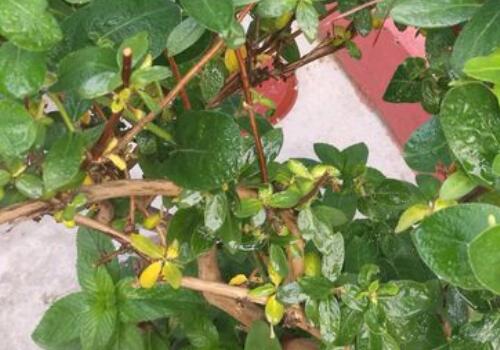
How many times does honeysuckle bloom a year?
1. The northern varieties of honeysuckle, also called four-season flower, bloom 3-5 times a year, blooming and being harvested continuously. The flowers are fairly scattered, which requires more labor. In the north, honeysuckle has two peak blooming periods each year: one starting around Qingming and ending after Mangzhong, and another peak blooming period of about one month in autumn. It blooms almost year-round, though less at other times.
2. The southern varieties of honeysuckle, such as the Xianglei series from Hunan, bloom only once a year, in one concentrated and abundant flush. They can be harvested with scissors, and one person can pick several hundred jin of fresh flowers a day, saving a great deal on labor. And although they bloom only once, the yield of dried flowers is about 3 times that of northern varieties.
Does honeysuckle need pruning after blooming?
Honeysuckle is a semi-evergreen twining shrub with a well-developed root system and tolerance for drought and poor soil, making it an ideal plant for soil and water conservation. Pruning of honeysuckle varies depending on the planting form, site conditions, and management level. When winter comes, it should be pruned in time to prevent cold damage and promote spring sprouting.
I. Pruning period
Winter pruning of honeysuckle is best carried out from December each year to early March of the following year.
II. Pruning methods
1. Pruning of young plants. Pruning of young plants focuses on shaping, with emphasis on developing good primary, secondary, and tertiary scaffold branches to form a sturdy framework that lays the foundation for future high yields. Plant shapes generally use the natural round-headed form and the umbrella form. In pruning in the year of planting, the natural round-headed form keeps 1 branch and the umbrella form keeps 3 branches, cutting the branches back to leave 3 to 5 nodes, and all remaining branches are removed. In the second year of pruning, the natural round-headed form keeps 2 to 3 and the umbrella form keeps 6 to 7 vigorous branches as primary scaffold branches, cutting them back to leave 3 to 5 nodes, and all other branches are removed. In the third year of pruning, the natural round-headed form selects and keeps 7 to 11 and the umbrella form selects and keeps 12 to 15 branches as secondary scaffold branches, thus developing good primary, secondary, and tertiary scaffold branches.
2. Pruning of mature plants. The framework of mature plants has basically formed, and pruning mainly aims to develop vigorous flowering mother branches, use new shoots to adjust the angle of scaffold branches, and remove weak ones while keeping strong ones. The base diameter of the flowering mother branches selected and kept must be more than 0.5 cm. Each secondary scaffold branch keeps at most 2 to 3 flowering mother branches, each tertiary scaffold branch keeps at most 4 to 5, and the whole plant keeps 80 to 120 flowering mother branches. During pruning, remove crossing branches, drooping branches, dead and weak branches, diseased and pest-infested branches, and ineffective branches. The flowering mother branches that are kept should be cut back: vigorous ones are lightly cut back leaving 4 to 5 nodes, and moderate ones are heavily cut back leaving 2 to 3 nodes, and they should be distributed evenly with a reasonable layout.
3. Pruning of old plants. After 20 years, honeysuckle plants gradually age. At this time, pruning, besides leaving enough flowering mother branches, mainly involves renewing and rejuvenating the scaffold branches, so that the plant is old in age but young in branch age, which is the only way to maintain yield. The method is to combine thinning and cutting back, suppressing the front and promoting the back.
How are honeysuckle pests controlled?
The main pest of honeysuckle is aphids. In hot and rainy environments, they often harm new leaves and vine tips, causing curling and affecting growth. Commonly, 40% dimethoate emulsifiable concentrate at 3000 times solution is sprayed, or 25% phosmet emulsifiable concentrate at 1000 times solution is sprayed. In addition, there are two simple methods:
1. Soak 5 g of cigarette butts in 70—80 ml of water for 24 hours, rub them a little, filter out the residue with gauze, and then spray;
2. Use laundry detergent water (soapy water) at 1:200 solution. To improve the effect, add a few drops of rapeseed oil (do not use animal fat), stir thoroughly until no oil film is visible on the surface, and spray with a sprayer; or adding a little ginger water before spraying also works well.