How do you keep Diospyros armata alive and growing fast in the north, and how long does a collected wild stump take to sprout?
Besides seed propagation, Diospyros armata can also be propagated by cuttings. The advantage of cutting propagation is that it ensures the offspring's traits remain unchanged, and at the same time makes the male and female plants clear, which helps in cultivating fruit-bearing bonsai. So do you know how to grow Diospyros armata fast in bonsai cultivation? Can it survive in the north? How long does a collected wild stump take to sprout? According to botanists, Diospyros armata can be grown in the north, and at present it is basically cultivated everywhere except in China's Tibet region; as long as you understand the basic common knowledge, Diospyros armata is a very easy bonsai material to grow!
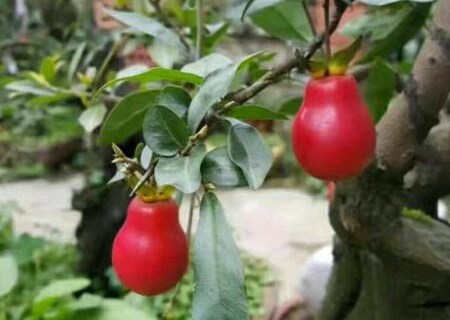
I. How to grow Diospyros armata fast
1. Choosing a pot
For Diospyros armata, a medium-deep glazed ceramic pot is suitable; a purple clay ceramic pot or a stone pot will also do. Plain, light colors are best, and it should not be too deep.
2. Soil
Diospyros armata likes fertile, loose and moist sandy soil. For pot cultivation, leaf mold or aged garden soil mixed with sandy soil is commonly used.
3. Potting
It is best done in spring and autumn. Be careful to leave the bottom of the pot hollow to ensure good ventilation and drainage, so that Diospyros armata can grow normally.
4. Watering
Usually the pot soil must be kept moist and must not be allowed to dry out. In summer when temperatures are high, besides paying attention to appropriate shading, you should also spray and water frequently to increase air humidity, so as to promote good growth.
5. Fertilizing
Fertilize regularly during the growing season; in summer and autumn, increase phosphorus fertilizer to promote flowering and fruiting.
6. Pruning
Mostly done in March in spring, cutting off messy branches and overly dense branches to maintain a certain tree shape.
7. Repotting
Repot once every 2 to 3 years, preferably in early spring. The compacted old soil should be replaced 13 to 12, and filled with loose fertile soil, with a layer of coarse sand or vermiculite at the bottom of the pot to facilitate drainage.
8. Pest and disease control
Diospyros armata has very few pests and diseases, mainly scale insect damage, which is usually killed by manual brushing and washing. Prevention should be the main approach; in March each year, apply a fast-acting pesticide once to prevent scale insect damage.
II. How long does a collected wild stump of Diospyros armata take to sprout
The degree of damage during digging of a collected wild stump, the severity of water loss, whether it has already entered winter dormancy, whether it is just budding, the local temperature at the planting site, and so on all vary, so sprouting conditions also differ. If it was budding when in the mountains, sprouting ten days to half a month after transplanting is normal. If it had already entered winter dormancy in the mountains and the transplant site has low temperatures, sprouting in early spring is the norm……! It sprouting only after three or four years when planted upside down, though rare, is not surprising either!
The landmark temperatures marking the end of winter dormancy for Diospyros armata:
Hilly warm-region stumps: the average day-night temperature is continuously above or equal to 15 degrees for five days!
High-mountain cold-region stumps: the average day-night temperature is continuously above or equal to 12 degrees for five days.
Under normal and still acceptable stump conditions, the sprouting time is mostly 30 to 60 days. Extreme cases are not included here!!!
The most suitable temperature is around 25. At the most suitable temperature, the growth rate accelerates! This is my personal experience, not academically proven, for reference only!