How to grow snowdrops (Amaryllidaceae) and what to pay attention to? How do they reproduce? What is the flower language?
Snowdrop, also called snow drop, snow bell flower or lily-of-the-valley daffodil, so what are the growing methods and precautions for snowdrops? How do they reproduce? What is the flower language? According to the information, snowdrops are suitable for growing in a cool and moist environment; they require fertile soil rich in humus, and some base fertilizer needs to be applied before planting. Snowdrops can grow in semi-shade or in a sunny spot.
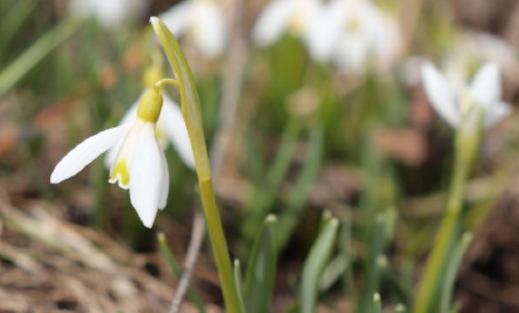
1. Growing methods and precautions for snowdrops?
Light and temperature
Snowdrops do not have high light requirements and have some tolerance for shade; they can grow in sunny spots and in semi-shade. However, in spring, autumn and winter, they should receive frequent direct sunlight and get sufficient light, while in the hot summer they should be shaded appropriately so as not to affect the growth of the snowdrops.
The suitable growing temperature for snowdrops is between 15°C and 28°C. Snowdrops are naturally fond of cool conditions and afraid of heat, and getting through summer is relatively difficult; they also lack resistance to frost. If the temperature falls below 10°C, the plant will go dormant.
Humidity
The best relative air humidity for snowdrop growth is between 40 and 65%, and the environment is best kept slightly dry. The growing environment for snowdrops must not be too humid; they are relatively afraid of being rained on, and if rainy weather lasts too long, pests and diseases are easily encouraged. Keeping the leaves of snowdrops dry at night will be relatively beneficial to their growth.
Water and fertilizer management
Snowdrops do not have high requirements for fertilizer and water. Basically, when planting, apply a certain amount of base fertilizer first, and then during the growing period be careful to fertilize lightly and frequently, ensuring that all kinds of growth elements are complete. Do not apply fertilizer that is too concentrated, and do not let snowdrops lack any element, so as to avoid various problems in their growth.
Watering should also be reasonably controlled. Generally, on clear days there should be sufficient water, while on rainy days water less or not at all. In summer, when growth is slow, water and fertilizer should be appropriately controlled, but when the temperature is high, misting should be done appropriately.
Propagation methods
Snowdrops are bulbous plants, and when propagating, the main method used is division of the bulbs.
Precautions:
Diseases
The main disease of snowdrops is outbreaks of leaf spot.
Pests
Snowdrops sometimes suffer from nematode damage.
2. How do they reproduce?
Bulb division propagation of snowdrops
Snowdrops are bulbous plants; their underground parts include bulbs, corms, tuberous roots, tubers and so on. After a period of growth, these bulbs or corms, tuberous roots and tubers will produce many small bulbs, and these small bulbs are the material used for division propagation. Simply separate these small bulbs from the snowdrop and plant them. The division propagation of snowdrops is very simple to carry out and also convenient to manage.
Snowdrops can be divided during the bulb dormancy period from September to October. Dig out the mother bulb of the snowdrop, and plant the small bulbs on it separately; the planting depth should be only 5cm, and the small bulbs should not be planted too deep. After planting, the bulbs and roots can be dug out after 3 to 4 years and divided and planted again.
Precautions for snowdrop bulb division propagation
1. For potted snowdrops, after potting them in November, they can be placed outdoors for a period, and once new roots and new leaves have grown, they can be moved indoors for care. Place the potted snowdrops in a sunny spot indoors, and they will basically bloom in about 50 days.
If snowdrops are planted in the open ground, after early summer they can be divided and propagated by bulbs, and after 3 to 4 years the bulbs and roots can be dug out again for division propagation. If autumn planting is chosen, then they should be divided and replanted once every 2 to 4 years.
2. After digging out the snowdrop bulbs, they may not be planted immediately; at this time they should be stored in moist sand, and the sand must maintain a certain humidity. The humidity should not be too high or too low; it is better if a handful of sand holds together when squeezed but breaks apart when touched. Store them at a temperature kept around 15°C.
3. When carrying out division propagation of snowdrops, first apply sufficient base fertilizer, preferably adding some bone meal; afterward, during their growing period, apply fertilizer water once every 2 to 3 weeks, and in the rainy season pay attention to drainage.
3. What is the flower language?
The flower language of the snowdrop is hope. Snowdrops represent strong vitality and the power to forge ahead, though in some places in the UK, snowdrops are also regarded as a symbol of death.
The origin of the name snowdrop
Snowdrop, at first hearing, sounds as if it describes this flower as being like a drop of snow, but that is not actually the case.
The name snowdrop can be seen in some 17th-century German documents. The reason snowdrops are called snowdrops actually has nothing to do with their blooming in snowy weather; rather, at that time a newly popular style of earring in Germany was teardrop-shaped, very similar to the shape of the snowdrop, so it was called the snowdrop. Nowadays, people, based on the English interpretation of snowdrop, think the flower's shape resembles a drop of snow, which is actually a misunderstanding. But it is also quite interesting.