Lily subclass: Cultivation and propagation methods for the octopus orchid, and points to note
The octopus orchid is an epiphytic orchid with extremely high ornamental value. It has pseudobulbs, and its flowers open in succession. So what are the cultivation methods for the octopus orchid? How do you propagate it? What points should be noted? According to available information, the octopus orchid originally grows in cold high mountain regions, and its requirements for soil are not especially high. However, the soil generally needs good drainage and breathability. Fine-grained volcanic rock, bark or fired soil are generally chosen, though of course you can also buy it directly from a flower shop.
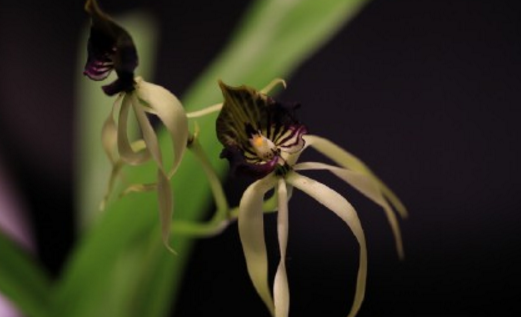
1. What are the cultivation methods for the octopus orchid?
1. Soil requirements
The octopus orchid originally grows in cold high mountain regions, and its requirements for soil are not especially high. However, the soil generally needs good drainage and breathability. Fine-grained volcanic rock, bark or fired soil are generally chosen, though of course you can also buy it directly from a flower shop.
2. Temperature range
The octopus orchid grows in forests at an altitude of 2000m, and has relatively strong adaptability to temperature. It grows well at temperatures of 15-35°C. In summer when it is hot, avoid excessively high temperatures at noon and use humidity to cool it down. In winter the temperature must not fall below 8°C. If the temperature is low, appropriately increase light and water less to keep the roots relatively dry.
3. How to fertilise
The octopus orchid is a relatively large plant and has relatively high fertiliser needs itself, especially during the vigorous growth period when its fertiliser needs increase. In daily care, apply fertiliser once every 1-2 weeks; during the growth period, appropriately increase the frequency of fertilisation and the amount of fertiliser. Choose liquid compound fertiliser. Try not to use granular fertiliser, as it is not easily absorbed by the plant.
4. Sufficient light
The octopus orchid likes bright sunlight, but not direct sunlight. Insufficient light will cause the plant to grow spindly and bloom poorly. In summer when sunlight is abundant, provide moderate shading, especially at noon. In winter in the north, no shading is needed and it can receive sunlight all day.
5. Appropriate watering
The growth of the octopus orchid requires relatively large amounts of water. Generally water once every 3-5 days, and appropriately extend the interval in winter. During this period, frequently spray water on the leaves to ensure air humidity. At the same time, watering and fertilising should be coordinated with each other; usually after fertilising once, water once.
2. How do you propagate it?
1. Division timing
Once all the tools are ready, all that is left is to wait. Division is generally chosen in spring, but it must be before flowering.
2. Division method
First take the plant out of the pot, taking care not to damage the roots. To make handling easier, watering is generally stopped one week before division to ensure the soil is soft and the plant is easier to remove from the pot.
Prepare the plant by shaking off the old soil from the roots and trimming the roots, cutting off root fibres that have already aged and died, then cutting off the withered leaves.
Divide the clumps. Divide the plant into clumps depending on how many pots you want. Try not to divide it into too few; generally it is enough to divide a full pot of octopus orchid into two pots. Take care not to damage the buds and roots during the cutting process. Each clump should retain at least 3 pseudobulbs, as this gives a relatively high survival rate.
Place in the pot. When planting, note that the side with new buds should face the edge of the pot, leaving enough space for its growth. When planting, the pseudobulbs should not be too deep or too shallow; slightly below the soil surface by 1-2 cm.
After division, place it in a cool place and do not water for 3-5 days, so as to avoid rot caused by wounds from the division process not healing in time. Just spray a small amount of water on the leaves to ensure the plant does not shrivel.
After about a week, new roots and buds will grow normally, and from then on it can be cared for normally together with the other plants.
3. What points should be noted?
1. Pests of the octopus orchid
The main pests of the octopus orchid include scale insects, thrips, spider mites, as well as snails and slugs, and so on.
Scale insects often parasitise the underside of leaves. If the leaves are thick, they will suffer less from scale insects. Thrips mainly appear during the flowering period of the octopus orchid; if it is grown indoors, this kind of pest is even more likely to appear. Spider mites generally refer to small insects such as red spider mites, yellow spider mites and white spider mites. Spider mites are relatively likely to appear when the weather is hot and dry, causing greyish-white spots on the leaves of the octopus orchid, and in severe cases causing the leaves to shrivel and deform. On cloudy days or in the evening, snails and slugs often harm the plant; snails and slugs will gnaw on the leaf bases of the octopus orchid, so they should be prevented in good time.
2. Prevention and control of octopus orchid pests
When caring for the octopus orchid, in order to prevent the occurrence of pests or to avoid pests becoming severe and spreading, we should frequently check the leaves of the octopus orchid and observe whether any pests have appeared.
When scale insects appear, pay attention to giving the octopus orchid's growing environment ventilation and breathability, then spray the relevant insecticide. When thrips appear, you can use sticky traps to catch the insects, and of course you can also use professional and safe insecticides to carefully spray and kill them. When spider mites appear, you can increase the moisture level on the leaves of the octopus orchid, because insects like spider mites dislike humid environments. If snails and slugs appear, you can scatter quicklime on the flower pots and stands, which can effectively drive away snails and slugs; saturated salt water can be used instead of quicklime and can achieve the same effect.