How much is a jin of gentian seeds? Planting time and pest and disease control techniques
Gentian, formerly known as: gentian, also known as: dancao, caolongdan, shanlongdan, grows on hillside grasslands, roadsides, riverbanks, in thickets, at forest edges and under forests, and in meadows. So roughly how much is a jin of gentian seeds? When to plant? What are the pest and disease control techniques? Learned from Jiujiang Seed Company, the price of gentian seeds is about 120-160 yuan per jin, but prices vary greatly depending on seed quality, variety, place of origin and market.
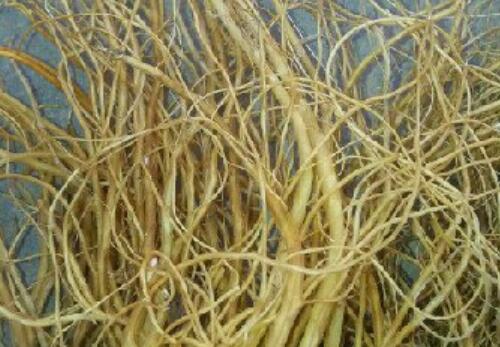
When are gentian seeds planted?
1. Gentian is generally best planted in March or April; a slightly higher temperature and frequent spraying of water to increase humidity are better, and it generally takes about a month to take root and sprout.
2. Gentian has an annual growth period of about 180-210 days. Under natural conditions it blooms in early August, and the flowering period is fairly long, opening successively downward from the top of the inflorescence. The seeds also gradually mature, and mature seeds spill out from the crack at the tip of the capsule. Therefore, in early August, when the tip of the capsule splits, it can be harvested. After drying, the seeds are removed and stored in a low-temperature, dry place.
What are the pest and disease control techniques for gentian? ⟧8⟧1. Diseases
1. Diseases
Gentian leaf spot: mainly harms leaves, and in severe cases causes the entire leaf to wither and die. A 1000-fold dilution of 50% tuijunling can be used, sprayed once every 10 days after summer begins, with good results. Before winter begins, clear the withered branches and fallen leaves in the field and burn them to prevent the spread of the pathogen.
2. Insect pests
In plots where mole crickets and white grubs cause serious damage, soil disinfection can be carried out during land preparation, or control can be done during the growing period. For soil disinfection, 0.5-1.5 kg of 35% endosulfan per mu can be applied, or 0.5 kg of phoxim per mu, mixed into the soil of the seedbed; if mole crickets occur during the growing period, black light traps can be used to trap and kill them.
What are the cultivation methods for gentian?
1. Land selection and preparation: For gentian, it is best to choose relatively moist, flat terrain, sunny, sandy soil rich in humus. Areas with high and dry terrain, direct sunlight, overly sticky soil, or poor soil are not suitable for cultivation.
2. Timely weeding: When planting gentian, weeding should not be limited by the number of times. Follow the principle of weeding early, weeding small, and weeding as soon as weeds appear. Do not wait until the weeds have grown up and formed a weed infestation before pulling them, as this both wastes labor and damages the seedlings.
3. Reasonable loosening of the soil: After gentian is transplanted and has recovered from transplanting, the surface crust on the seedbed caused by watering should be removed promptly by hand or with a rake. Do not loosen the soil too deeply, so as not to damage the seedlings or pull them out. Generally, combining weeding with soil loosening 2-3 times is sufficient.
4. Timely topdressing: After gentian is transplanted and has recovered from transplanting, foliar topdressing can be carried out. Foliar topdressing can be done twice, from after leaf expansion to the budding stage and from flowering to fruiting, using foliar fertilizers such as monopotassium phosphate, yemianbao, and fengchansu.
5. Thinning flowers and removing buds: When planting gentian, in order to reduce nutrient consumption, promote the accumulation of root substances, accelerate rhizome growth, and improve cultivation benefits, for fields not used for seed production, all flower buds should be removed after budding.