Cabbage Garden Varieties: Kale Sowing Time, Varieties, Nutritional Value and Benefits
Kale is a variety of edible cabbage. Kale has intense, vivid colors and is often used as an ornamental potted plant. Today we will learn about when to sow kale, what varieties there are, and what nutritional value and benefits it has.
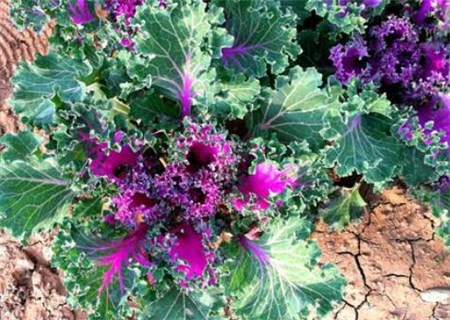
I. When to sow kale
Among the propagation methods for kale, the most important and most commonly used method is sowing propagation, and when carrying out sowing propagation, the sowing time must be well controlled. The sowing time is very important for the growth of kale. Under normal circumstances, we should preferably choose to sow kale seeds from mid-July to early August each year. Sowing kale during this period is conducive to seed germination and healthy growth. However, there is relatively high rainfall during this period, so we should pay attention to drainage work when cultivating kale. After the sowing work is completed, kale can be planted out at around late August. In this way, kale can grow at a suitable temperature, grow well, and have high ornamental value.
II. What varieties of kale are there
1. Flowering kale
It is an ornamental variety, a plant of the Brassicaceae family, native to Europe. The plant shape is graceful, it is easy to cultivate, and it has a long ornamental period. It can also be enjoyed in winter and has high ornamental value. It is an important material for flowerbed arrangements and can also be used for potted ornamental display and as cut flower decoration. The sowing time is from mid-July to early August, planting out is carried out in mid-to-late August, and the ornamental period is from November to December.
2. Oriental Green Tenderness
It has good quality, is resistant to storage, and has good growth vigor. The leaf color is dark green with no wax powder, and the edges of the tender leaves curl into wrinkles. This variety has characteristics such as heat tolerance, cold tolerance, fertilizer tolerance, late bolting, and a long harvest period. It can be cultivated in open fields in spring and autumn and in greenhouses or cold frames in winter. It generally takes 50 days from sowing to harvest, and the yield is high.
3. Apeida
A first-generation hybrid improved variety introduced from the Netherlands. It is medium in height, the leaf color is blue-green, the degree of curling is relatively large, the appearance is neat and elegant, the quality is excellent, and the stress resistance is extremely strong. It can be used not only for open-field cultivation in spring and autumn, but also for protected cultivation in winter.
4. White Rosette
Tall-growing, round-leaf type, colors early, the heart leaves are milky white, forming a sharp contrast with the edges of the green outer leaves, and the edges of the whole leaves are slightly wrinkled, appearing wavy. The plant type is neat, the plant height is about 40 cm, it is extremely cold tolerant and can withstand a low temperature of -10°C. It grows vigorously and has good disease resistance.
III. What nutritional value and benefits does kale have
Kale is rich in nutrition, containing large amounts of vitamin A, C, B2 and various minerals, especially high levels of calcium, iron and potassium. Among these, the vitamin C content is very high. In every 100 grams of tender leaves, the vitamin C content reaches 153.6-220 mg, comparable to broccoli among cabbages.
Eating kale is beneficial for strengthening the spleen and nourishing the spleen, nourishing the stomach and strengthening the stomach, supplementing qi and boosting qi, regulating the intestines and stomach, and beautifying the face. Its tender leaves can be stir-fried, served as a cold dish, or used in soup.