Kale (Brassica oleracea var. acephala) Cultivation Methods, Prospects, and Whether It Can Be Eaten Raw
Kale is a biennial herbaceous plant and a garden variety of head cabbage (common cabbage). Its structure and shape are very similar to cabbage, and it is now widely cultivated in China. Do you know what the cultivation methods for kale are? How are its prospects? Can it be eaten raw?
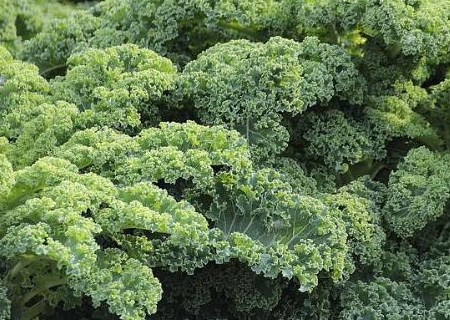
I. What are the cultivation methods for kale?
1. Sowing time
Kale is usually sown from mid-July to early August. If sown too early, the old leaves will turn yellow in the later stage of growth, which increases the difficulty of management and also prolongs the management period. If sown too late, it is also easy for the leaf rosette crown diameter to fail to reach the required specifications when the plants leave the nursery.
2. Seedling raising methods
Sowing can be done in the open field. Generally, two methods are used: raising seedlings in holes or in seedbed trays. In order to drain water promptly in July and August when rainfall is heavy, the seedbed needs to be built as a high bed about 20 cm above the ground.
3. Sowing method
Before sowing, the arched shed frame needs to be set up and plastic film prepared, so that it can be covered promptly in case of heavy rain and avoid reducing the seedling emergence rate due to rain washing. For the seedling substrate, 40% peat soil and 60% perlite can be used, and carbofuran can be used to disinfect the soil and kill insects, reducing the occurrence of pests and diseases. Before sowing, the soil needs to be thoroughly sprayed with water, then the seeds are broadcast directly on top, with a covering depth just enough to cover the seeds. After sowing, there is no need to water again. At a temperature of about 15-20°C, seedlings can emerge in about one week.
Propagation precautions:
Transplanting is usually carried out when the seedlings have grown 4-5 true leaves, and field planting is carried out in mid-to-late November, generally requiring 3-5 transplantings. Kale can be transplanted bare-root. When planting, peel off the outer old leaves, which not only highlights the color of the heart leaves but also reduces water consumption and prompts the plant to resume growth as quickly as possible.
Kale is fond of fertilizer and has a relatively high demand for nitrogen fertilizer in the early growth stage, so more topdressing should be applied to ensure sufficient nutrient supply. When field planting, prepare sufficient base fertilizer. About one week after transplanting during the seedling stage, topdressing can begin. In autumn, as the climate turns cooler, growth speeds up and nutrient absorption increases, so attention should also be paid to providing sufficient water and fertilizer at this time. When the plant begins to change color, stop applying nitrogen fertilizer. If the fertilizer amount is insufficient, the outer leaves will appear yellow and fall off.
II. How are the prospects for kale cultivation?
Growing kale, like growing other crops, has the advantages of low cost and large profits. And most importantly, it is not only used as a vegetable; it also belongs to the ornamental Brassica family of flowers, so it is often used by people as a preferred choice for home decoration.
Kale is a biennial herbaceous flowering plant, and it prefers cool conditions, has relatively strong cold resistance, and is not strict about soil. In winter, when most crops cannot survive, kale is an exception, which is very favorable for growers. It is estimated that kale requires a total input cost of about 2,000 yuan per mu, and under normal management, kale yield per mu can generally reach 2,500-4,000 kg. Calculated at the current market price of 2-4 yuan/kg, the income per mu is about 5,000-16,000 yuan, with a profit of about 3,000-14,000 yuan.
III. Can kale be eaten raw?
Kale can be eaten raw and is generally made into salad.
Kale can be continuously harvested by picking leaves, and it continuously produces new tender leaves. Its tender leaves can be stir-fried, dressed cold, or made into soup. In Europe and America, it is often paired with various vegetables to make salad. The flavor is fresh and light, and after cooking it maintains a beautiful bright green color. Kale is rich in nutrients, containing large amounts of vitamin A, C, B2, and various minerals, especially high levels of calcium, iron, and potassium. Its vitamin C content is very high; every 100 grams of tender leaves contains 153.6-220 mg of vitamin C, comparable to broccoli among brassicas.
Kale is not only highly nutritious but also highly ornamental. In East China, it is an important material for winter flowerbeds, and in northern regions it is a commonly used garden flower in winter. Its ornamental period is long, and its leaf color is extremely vivid. In parks, on streets, and in flowerbeds, kale is commonly used for edging and forming various beautiful patterns. Used for arranging flowerbeds, it has a very high ornamental effect.