Dawn Redwood: Planting Methods and Medicinal Value, and Is It Suitable for Growing Indoors?
The dawn redwood was once thought to have long been extinct, until 1941, when Chinese botanists first discovered this ancient and rare relict tree species in Lichuan, Hubei. It is highly adaptable and is cultivated in all areas south of Beijing. So do you know what the planting methods for dawn redwood are? What medicinal value does it have? Is it suitable for growing indoors?
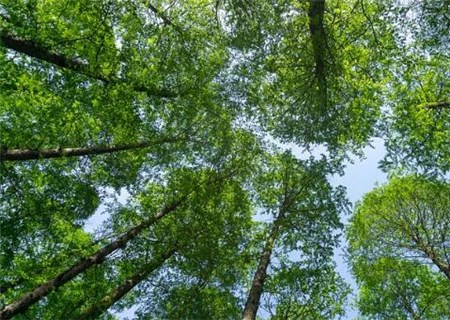
I. What Are the Planting Methods for Dawn Redwood?
Sowing: The suitable germination temperature is 18-25°C. It is best to sow in spring when the soil temperature reaches above 12°C. The sowing rate is 0.75-1.50 kg per mu.
Yield: One-year-old seedlings can reach a height of 40 cm, with a ground diameter of more than 0.8 cm. Under better growth conditions, seedling height can reach 70-100 cm.
Cuttage: Propagating by cuttings is an effective way to accelerate the reproduction of dawn redwood. Generally, in spring, hard-wood cuttings are taken from vigorous 1-year-old mature branches. The cuttings are 10-14 cm long, and 20,000-30,000 cuttings are planted per mu. Using branches from young mother trees for cuttings, the survival rate can reach more than 80%. Summer cuttings are taken in early summer using leafy green branches, which has the advantages of fast rooting, a high survival rate, and producing seedlings in the same year; however, because of the high temperatures, water management must be strengthened after cutting. In addition, in early autumn, cuttings can also be taken from the tips of semi-mature branches. At this time, the winter buds have already formed, and after cutting, no new branches will sprout that year; instead, the process of rooting, winter bud development, and lignification of the seedling stem is completed, and after transplanting the following spring, they are cultivated into seedlings.
Planting density: Because the dawn redwood grows rapidly, has a straight trunk, and has strong apical dominance, the afforestation density should not be too high. A spacing of 2×3 m can be used, with 110 trees per mu. By 10-15 years, the first thinning should be carried out. For single-row planting, a spacing of 2 m can be used. For afforestation seedlings, 2-year-old transplanted seedlings are best, with a height of 1-1.5 m and a ground diameter of 2-3 cm.
Planting can be done from late autumn to early spring, but late winter is best.
Diseases: There are relatively few pests and diseases. The main one is red blight, which damages the leaves between September and October, causing the leaves to turn yellowish-brown or reddish-brown, and in severe cases causing defoliation. It can be sprayed once a week with 160 times diluted 1:1 Bordeaux mixture, for a total of 3-4 times. The main pests include the bagworm moth, which damages leaves and young branch tips, and the larvae of the dawn redwood leaf roller moth, which damage the leaves.
II. What Medicinal Value Does Dawn Redwood Have?
First of all, not all dawn redwood trees have medicinal value. Among them, only the leaves of the golden dawn redwood have medicinal value, and it is the most precious variety in the genus Metasequoia of the family Taxodiaceae.
The leaves of the golden dawn redwood have the effects of “dispelling wind and drying dampness, promoting blood circulation and relieving pain.” The leaves and fruits have the effects of clearing heat and detoxifying, and reducing inflammation and relieving pain. Modern pharmacological studies have shown that the various flavonoid compounds it contains have effects against myocardial ischemia, arrhythmia, and myocardial hypertrophy. At the same time, it has the effects of inhibiting platelet aggregation in rats and improving blood rheology. The leaf volatiles of dawn redwood contain large amounts of active ingredients with antitussive, expectorant, antiasthmatic, and anti-inflammatory effects, mainly including a-pinene, trans-caryophyllene, and myrcene.
According to the “Chinese Materia Medica Resource Records,” dawn redwood leaves and seeds have the effects of clearing heat and detoxifying, and reducing inflammation and relieving pain, and are used for sores and swellings, lichen planus, and other conditions; “Mingyi Bielu” lists it as a middle-grade drug, saying that boiling it into a decoction for washing can treat ecthyma; “Supplement to the Compendium of Materia Medica” records: fir oil treats all stubborn tinea. In addition, its seed volatile oil has a certain inhibitory effect on 8 kinds of plant pathogenic fungi, and in garden plant arrangement, it can reduce to varying degrees and prevent the occurrence of some diseases in companion plants in the same garden. The various active ingredients and antibacterial effects contained in its leaf and seed volatile oils have broad application prospects in fields such as pharmaceutical chemicals and agricultural applications.
III. Is Dawn Redwood Suitable for Growing Indoors?
1. Bonsai dawn redwood cannot be placed in the bedroom. Bonsai dawn redwood has a yin nature in the five elements, and placing it in the bedroom is not favorable to the five elements. Bonsai dawn redwood can be placed on one side of the living room, carrying the meaning of wealth and prosperity, and bonsai dawn redwood can also be placed in the study. In addition, when placing bonsai dawn redwood, try to avoid placing a single plant. Placing a single bonsai dawn redwood easily forms the character “” with the house, so generally it is not suitable to place a single tree indoors.
2. Everyone knows that the kitchen belongs to fire, so when placing bonsai dawn redwood, do not place bonsai dawn redwood and the kitchen in a straight line, otherwise it is very likely to affect feng shui, and bonsai dawn redwood is also prone to drying up. If you want to place bonsai dawn redwood, it is best to place it according to the five elements and feng shui, and put the bonsai dawn redwood in the most suitable position.