Growing Methods for Spathoglottis in the Asparagales Order, with Notes on Fertilizing and Watering
Spathoglottis is a plant in the orchid family (Orchidaceae), genus Spathoglottis. So what are the growing methods and precautions for Spathoglottis? How do you fertilize it? How do you water it? According to available information, Spathoglottis generally grows on ancient cliff walls on the slopes of deep mountains and secluded valleys, in places with shade, short sunlight hours, or only scattered, dappled light. It likes shade by nature and dislikes direct sunlight. So it should be shaded appropriately and placed somewhere it can receive scattered light while avoiding direct sunlight.
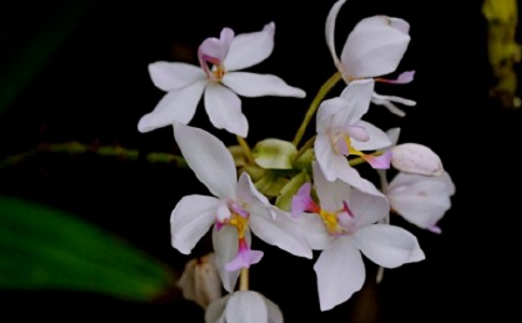
I. Growing methods and precautions for Spathoglottis
Light
Spathoglottis generally grows on ancient cliff walls on the slopes of deep mountains and secluded valleys, in places with shade, short sunlight hours, or only scattered, dappled light. It likes shade by nature and dislikes direct sunlight. So it should be shaded appropriately and placed somewhere it can receive scattered light while avoiding direct sunlight.
Temperature
Spathoglottis grows best at 15°C—30°C. Above 35°C it grows poorly, and severe cold below 5°C will affect its growth vigor, causing Spathoglottis to enter a dormant period.
Soil
Spathoglottis has fleshy roots, so it is suited to sandy loam rich in humus with good drainage. Typically, leaf mold or mountain soil, slightly acidic loose soil, or iron-containing soil is chosen, with a pH of 5.5—6.5 being ideal.
Watering
Summer is the period of vigorous growth for Spathoglottis; if it lacks water at this time, it will grow poorly.
Growing Spathoglottis should follow the principle of “water when dry, stop when wet, keep it slightly on the dry side,” and watering should soak through.
Fertilizing
Spathoglottis likes fertile soil. Farmyard manure needs to be piled and decomposed for more than one year before it can be applied. During the growth and development period it does not need much fertilizer; a dilute liquid fertilizer can be applied once every 10—15 days.
Precautions:
Control the temperature reasonably
If the temperature is too high, the leaves of Spathoglottis will be scorched or withered. At this time you should spray water around it to lower the ambient temperature and shade it appropriately.
If the temperature is too low, Spathoglottis will suffer frost damage. At this time you should promptly move Spathoglottis indoors.
Maintain air circulation
Spathoglottis is suited to being grown in an environment with air circulation, so ventilate often to maintain air humidity and circulation.
Avoid getting fertilizer on the leaves
When fertilizing, be careful not to get the fertilizer solution on the leaves, and do not get it on the roots of Spathoglottis either, to avoid causing rot of the leaves and roots.
II. How do you fertilize?
Spathoglottis in the development stage does not need much fertilizer. For vigorously growing Spathoglottis, you can choose to fertilize once every 10—15 days.
For Spathoglottis fertilizer, pay attention to the balance of nitrogen, phosphorus and potassium, and strictly control the concentration.
For variegated-leaf seedlings, the synthesis of chlorophyll must be controlled, so nitrogen fertilizer should not be applied, nor should fertilizers containing manganese or magnesium (such as calcium magnesium phosphate fertilizer, etc.), because manganese and magnesium accelerate chlorophyll synthesis; for flowering orchids, if cultivating large-petaled flowers, nitrogen fertilizer can be appropriately increased.
For ordinary home-grown Spathoglottis, you can use 1:1000 monopotassium phosphate and 1:1000 boron fertilizer, or aloe solution, because aloe solution contains large amounts of polysaccharides and amino acids and also contains many minerals, which can kill viruses and bacteria, so there is no need to apply pesticides for disease prevention.
III. How do you water?
1. When to water Spathoglottis
Watering is generally done in the early morning or evening; do not choose to water at noon.
In spring, autumn and winter, watering at around ten in the morning and around four in the afternoon is most suitable. In summer, never water under the blazing sun or during the high temperatures at noon.
2. How often to water Spathoglottis
The watering frequency for Spathoglottis should be set according to the different potting mixes.
If the potting mix is made of hard, free-draining materials such as volcanic rock, crushed red brick, or pumice, which do not hold water particularly well, you can choose to water once a day.
If the potting mix is made of materials with strong water absorption such as pond mud or humus soil, which hold water for a relatively long time, you can choose to water once every two to three days.
3. How to water Spathoglottis
For watering, it is best to use clean, pollution-free, slightly acidic water.
Watering Spathoglottis is generally done by spray watering, which both increases air humidity and washes away dust from the leaf surfaces along the way.
However, if Spathoglottis is in its flowering period, the soaking method should be used to supply water. The water must not rise above the rim of the pot; use the hole in the bottom of the pot to moisten the potting soil.
4. Precautions for watering Spathoglottis
Summer is the period of vigorous growth for Spathoglottis. At this time you should ensure it does not lack water, otherwise Spathoglottis will grow poorly.
In winter the temperature fluctuates greatly, so the difference between the water temperature and the soil temperature is relatively large. At this time you cannot water directly with cold water; you can leave the water at room temperature and water after a while, or simply water with warm water.
Watering should follow the principle of “water when dry, stop when wet, keep it slightly on the dry side.” Watering must soak through; do not water only halfway.
After Spathoglottis is planted, the first watering is called “settling water.” The settling water should be given generously and to the point of soaking through. After potting, water twice in succession: the first time, after water flows out from the hole in the bottom of the pot, water once again.